Trump and Warsh Plot Chaotic Stock Market Strategy for June
When Kevin Warsh was sworn in on May 22, 2026, to serve as the new Chairman of the Federal Reserve, much of the policy debate focused on whether Warsh would lower interest rates, as the Fed’s reluctance to cut rates…

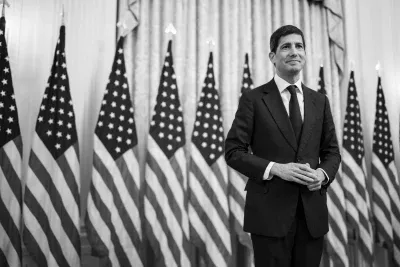
When Kevin Warsh was sworn in on May 22, 2026, to serve as the new Chairman of the Federal Reserve, much of the policy debate focused on whether Warsh would lower interest rates, as the Fed’s reluctance to cut rates had become a major point of contention between President Trump and departing Fed Chairman Jerome Powell.
Circumstances outside of Warsh’s control, including surging inflation and an unexpectedly robust May jobs report, will likely force an answer to the interest rate question in the near-term, as raising rates seems entirely off the table at the moment due to the economic data. However, this doesn’t mean that Warsh isn’t going to shake up the Fed in different, and equally important ways — some of which could profoundly impact the performance of the stock market and reshape investor behavior for the foreseeable future.
Specifically, Warsh has indicated he wants to make a major change to the way the Fed communicates with the public, and President Trump has expressed tacit support for the shift. The change could unfortunately make the stock market much more chaotic this month and beyond, even if the Fed sticks with the status quo on rates at its mid-June meeting, as is widely expected.
Chairman Warsh could make a market-changing decision as early as June
The proposed change that Warsh is likely to make could happen as early as the June meeting, and while it may seem like a minor shift, it could have a major impact. That’s because Warsh is potentially planning to limit forward guidance or forward signaling, which involves Fed officials expressing their expectations regarding future policy moves.
Currently, members of the Federal Open Market Committee (FOMC) use a dot plot to chart their projected rate path for the upcoming months. The dot plot was introduced in 2012 by Federal Reserve chairman Ben Bernanke, and it collects quarterly rate projections from 19 FOMC members, including board governors and bank reserve presidents.
Since the FOMC committee members vote to set interest rates, the dot plot is closely watched by investors, with shifts in the dots impacting the bond, equity, and currency markets. For consumers, the dot plot also impacts borrowing costs, as mortgage lenders, auto loan lenders, and credit card companies adjust financing costs based on anticipated changes.
Bernanke introduced the dot plot to enhance transparency in the aftermath of the 2008 financial crisis, prevent markets from prematurely tightening financial conditions, and allow investors to price in changes before they occur based on concrete information rather than trying to overanalyze vague post-meeting statements. It has been effective at promoting market stability, with fewer wild swings after Fed meetings since the outcome of the meetings rarely comes as a major surprise.
Why does Warsh want to overhaul or eliminate dot-plot rate forecasts?

The economy is already fairly volatile right now, with geopolitical uncertainty, surging inflation, and evolving tariff policy all creating significant uncertainty, so Warsh’s decision to limit forward guidance may seem like a counterintuitive choice.
However, Warsh has made clear that he believes publishing rate projections from policymakers can lock the Fed into stale views, cause policymakers to hold onto their forecasts longer than it makes sense to, and compound errors in policy when economic shifts occur. Warsh has also been critical of the fact that markets sometimes tend to treat the dot plot as a commitment, rather than a forward projection subject to change.
It remains to be seen if Warsh will follow through with changes to the way the Fed communicates at the June meeting, will wait until economic and political conditions are more stable before making such a major shift, or will stick with the status quo. If Warsh does make a major change, the stock market is almost certainly going to experience significantly more volatility at the end of June and beyond as we see sharper responses to Fed decisions and more investors pricing in uncertainty.
Contact [email protected] for any questions or corrections.
Christy Bieber has been a personal finance and legal writer since 2008. She has a JD from UCLA School of Law and a BA in English, Media and Communications with a certification in business from the University of Rochester.
Christy has been published by a wide variety of sites, including WSJ Buy Side, Forbes, Kiplinger, Fox Business, Credit Karma, Insurify, and Annuity.org. In addition to writing for the web, she has also ghostwritten textbooks on business and law and served as a subject matter expert for course design.