The Fed Holds Rates Steady. Did Kevin Warsh Stomp Out the Bull Market Anyway?
Wall Street got exactly what it expected from the Federal Reserve on Wednesday — and then sold off anyway. The Fed left interest rates unchanged at its June meeting, a decision that markets had largely priced in for weeks. Stocks…

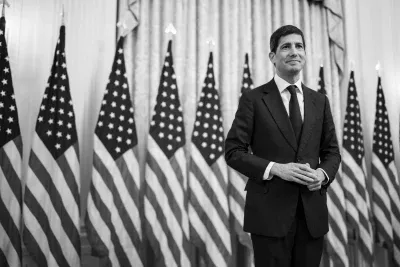
Wall Street got exactly what it expected from the Federal Reserve on Wednesday — and then sold off anyway.
The Fed left interest rates unchanged at its June meeting, a decision that markets had largely priced in for weeks. Stocks spent most of the trading session moving sideways as investors waited for the announcement. But when newly appointed Fed Chair Kevin Warsh stepped to the podium following his first Federal Open Market Committee meeting, the mood shifted. By the closing bell, the Dow Jones Industrial Average had fallen more than 500 points, while the S&P 500 and Nasdaq-100 posted losses of 1.2% and 1.4%, respectively.
The sell-off wasn’t driven by what the Fed did. It was driven by what investors suddenly realized the Fed might do next. Warsh’s comments, combined with the central bank’s latest economic projections, suggested that interest rate hikes remain very much on the table in 2026. For a stock market that had been counting on lower rates, that was a message worth paying attention to.
Warsh’s First FOMC Meeting Sends a Clear Signal
As widely expected, the FOMC voted unanimously to leave the federal funds rate unchanged at 3.50% to 3.75%. Futures markets had assigned roughly a 99% probability to a hold before the decision, so there was little surprise in the rate announcement itself.
The surprise came from everything surrounding it.
Warsh used his first press conference as Fed chair to emphasize that inflation remains elevated and that restoring price stability remains the central bank’s top priority. He also signaled a break from the Fed’s recent communication style, eliminating much of the forward guidance investors had grown accustomed to over the last decade. Rather than telegraphing future moves, Warsh repeatedly stressed uncertainty and cautioned markets against relying too heavily on Fed forecasts.
In practical terms, investors hoping for a roadmap to future rate cuts didn’t get one.
The Dot Plot Was the Real Story
The biggest market-moving development came from the Fed’s updated Summary of Economic Projections.
According to the June projections, nine of the 19 FOMC participants now believe at least one interest-rate hike will be necessary before the end of 2026. Just a few months ago, policymakers were still discussing the possibility of cuts. The shift represents a dramatic change in the Fed’s outlook.
Adding to the intrigue, Warsh reportedly declined to submit his own rate projection, reinforcing his view that forward guidance can distort markets.
Why Stocks Sold Off
Stocks spent most of Wednesday drifting sideways as investors waited for the Fed decision. Once the 2 p.m. announcement arrived and Warsh began speaking, sellers took control.
By the closing bell the major indexes had fallen 1% or more. The reaction wasn’t about current rates, but rather future rates.
Higher interest rates increase borrowing costs, reduce the present value of future earnings, and create tougher conditions for growth stocks. That’s especially important in today’s market, where AI-related companies have been driving much of the gains.
Investors entered the meeting hoping for confirmation that the next move would eventually be a cut. Instead, they received a Fed projecting higher inflation, little hope for rate cuts, and a growing possibility of hikes.
Key Takeaway
In short, Kevin Warsh probably didn’t end Trump’s bull market on Wednesday. One down day doesn’t erase a broader uptrend.
What he did do was remind investors that the Fed is no longer leaning toward easier policy. The June FOMC meeting established a new reality: inflation remains a problem, and nearly half of Fed policymakers now see higher rates as a possibility before year-end.
That doesn’t mean stocks can’t move higher from here. AI investment remains enormous, corporate earnings remain healthy, and economic growth continues. But investors should recognize that the Fed is no longer acting as a potential tailwind. Under Warsh, it may become a headwind instead.
Contact [email protected] for any questions or corrections.
After two decades of patrolling the dark corners of suburbia as a police officer, Rich Duprey hung up his badge and gun to begin writing full time about stocks and investing. For the past 20 years, he’s been cruising the markets looking for companies to lock up as long-term holdings in a portfolio while writing extensively on the broad sectors of consumer goods, technology, and industrials. Because his experience isn’t from the typical financial analyst track, Rich is able to break down complex topics into understandable and useful action points for the average investor. His writings have appeared on The Motley Fool, InvestorPlace, Yahoo! Finance, Money Morning, and, of course, 24/7 Wall St. He has been featured in both U.S. and international publications, including MarketWatch, Financial Times, Forbes, Fast Company, and USA Today.