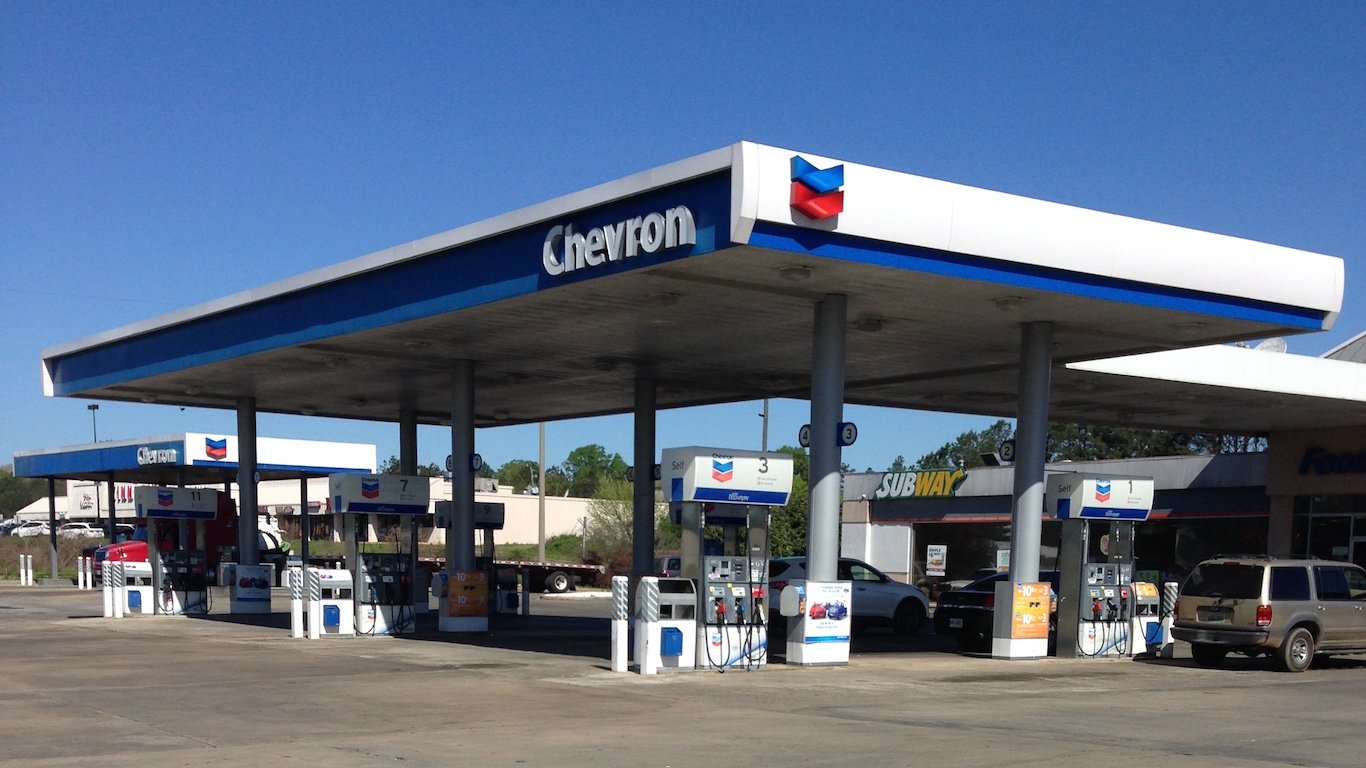
Energy Stocks Are Back From the Dead: IYE Up 27% YTD
If you bought iShares U.S. Energy ETF (NYSEARCA:IYE) on the last trading day of 2025 at about $47 and you are still holding it this morning at about $61, you are sitting on an about 29% gain in a little…


If you bought iShares U.S. Energy ETF (NYSEARCA:IYE) on the last trading day of 2025 at about $47 and you are still holding it this morning at about $61, you are sitting on an about 29% gain in a little over five months. The SPDR S&P 500 ETF Trust (NYSEARCA:SPY) is up about 8% over the same window. Energy, the sector everyone left for dead in 2024 and the back half of 2025, has been the trade of 2026 so far, and not by a little.
A $10,000 stake in IYE on December 31, 2025 is worth about $12,854 today. The same $10,000 in SPY is worth about $10,808. That gap, almost three to one, is the kind of spread you usually see in a thematic single-stock bet, not in two broad index products owned by retirement accounts. So the obvious question is what put it there, and the slightly less obvious question is whether any of it travels into the back half of the year.
The arithmetic, with a fair window
IYE finished 2025 around $47 and closed yesterday at $61. Over twelve months, the move is even larger, with the ETF up about 41% versus about 23% for SPY. The five-year picture, which captures the post-pandemic energy rerating and the soft patch that followed, has IYE up about 138%, modestly ahead of SPY at about 74% on a price basis.
One honest caveat. IYE pays a meaningful dividend, and the price-only number understates total return for any holder who reinvested distributions. The figures above are adjusted closes, which is the cleanest apples-to-apples available against SPY. The headline 27% in the title rounds down the 28.54% figure, which is fine for a magazine number, but anyone running this through a spreadsheet should use the longer figure.
What actually did the work
Three things, in roughly this order of importance. The first and biggest is crude.
WTI started 2026 near $57.26 a barrel and ran to a 52-week high of $114.58 on April 7. Brent did the same trip from $61.98 on January 2 to $138.21 on April 7. The trigger was the de facto closure of the Strait of Hormuz, which the EIA flagged in its May Short-Term Energy Outlook as the central reason it expected global oil inventories to fall by an average of 8.5 million b/d in 2Q26 and Brent to average around $106/b in May and June. When a chunk of the world’s seaborne crude cannot move, the marginal barrel reprices fast, and equities of companies that own the barrel reprice with it.
The second thing is what those companies did with the windfall. IYE is concentrated in a handful of large-cap U.S. producers. Exxon Mobil (NYSE:XOM | XOM Price Prediction) reported Q1 2026 adjusted EPS of $1.16 versus a $1.01 consensus, with underlying earnings rising to $8.77 billion from $7.58 billion a year earlier even as headline net income was distorted by a $3.88 billion derivative timing hit and a $706 million Middle East supply disruption loss. CEO Darren Woods told investors that “this quarter demonstrated that ExxonMobil is a fundamentally stronger company than it was just a few years ago, built to perform through disruption and across market cycles.” Exxon shares are up 25.4% year to date.

Chevron (NYSE:CVX) did even better against the bar. Q1 2026 adjusted EPS came in at $1.41 against a $0.97 consensus, a beat of about 46% and the company’s sixth straight, with worldwide production up 15% year over year on the Hess integration and a third consecutive quarter of U.S. output above 2 million barrels per day. CEO Mike Wirth framed it directly. “Despite heightened geopolitical volatility and related supply disruptions, Chevron delivered solid first quarter performance, underscoring the resilience of our portfolio and the value of disciplined execution.” Chevron is up about 25% YTD. ConocoPhillips (NYSE:COP) printed Q1 adjusted EPS of $1.89 versus $1.69 expected and is up about 27%.
The third piece is the part that gets undercovered. These companies started the year cheap and shareholder-friendly. Exxon is running a $20 billion buyback program in 2026 and extended its 43 consecutive years of dividend growth. Chevron returned $27.1 billion to shareholders in 2025 and raised its dividend for the 39th straight year. ConocoPhillips is targeting 45% of cash flow from operations back to shareholders. When the commodity spikes against that backdrop, you get a fund priced for a 2024 oil regime suddenly earning a 2026 oil regime’s cash flows, with the buyback already authorized to soak up the float.
The recent wobble
The last month has been quieter. IYE is up only about 3% over the past 30 days and down about 1% on the week, with WTI pulling back from its April peak to $95.96 by June 1. That is consistent with the EIA’s working assumption that the strait reopens in late May and shut-in production gradually returns. The energy trade has stopped getting easier.
What you actually need to watch from here
The mechanism that drove IYE’s 28.54% YTD is regime-dependent, not structural. The EIA’s own forecast has Brent falling to an average of $89/b in 4Q26 and $79/b in 2027 as Middle East barrels return. If they are right, the back half of 2026 looks materially harder for energy equities than the front half did, because the marginal price of crude that powered Q1 earnings will not be there to power Q3 and Q4.
Three things are worth tracking, and all are observable without a Bloomberg terminal. One, Strait of Hormuz tanker traffic, which the EIA publishes and the major shipping trackers update daily. A durable reopening is the single biggest bear case for IYE from here. Two, the Brent forward curve, which currently embeds the EIA’s glide path lower. If futures roll back into the $100s and stay there, the energy trade still has legs. If they drift toward $80, the easy money is behind you. Three, capital discipline at the majors. Exxon’s $27 to $29 billion 2026 capex guide and Chevron’s structural cost program are the reason these stocks compound through cycles rather than just spike through them. If either company breaks discipline and starts chasing the price with the drill bit, the long-term thesis weakens regardless of where crude prints.

The honest read is that IYE has done what it does. It owns a concentrated basket of oil-and-gas majors, and when crude triples off a December low because a strategic chokepoint closes, the basket triples-adjacent. The capital return story underneath those stocks is durable. The crude price that delivered a 28.54% YTD in five months is probably not. If you missed the run, the right question is whether you want sector exposure for the next geopolitical surprise (the case for owning some IYE through the cycle), or whether you are reaching for a tape that the world’s energy agencies are openly forecasting to cool. Pick one. The ETF will not pick for you.
Contact [email protected] for any questions or corrections.
Austin Smith is a financial publisher with over two decades of experience as an investor, analyst, and advisor. He covers stocks, ETFs, Artificial intelligence and personal finance for 24/7 Wall St. Previously, he spent over a decade at The Motley Fool as a senior editor for Fool.com, portfolio advisor for Millionacres, and launched The Ascent to help reader take control of their personal finances.
His work has been featured on Fool.com, NPR, CNBC, USA Today, Yahoo Finance, MSN, AOL, Marketwatch, and many other publications. He is as an advisor to private companies, and co-hosts The AI Investor Podcast with Eric Bleeker.
When not looking for investment opportunities, he can be found skiing, running, or playing soccer with his children. Learn more about Austin's investment approach here.