Defying Trump’s Hopes of a Rate Cut, Warsh Holds Rates Steady at 3.75%
On Wednesday, June 17, the Federal Reserve held interest rates steady at a benchmark rate of 3.50% to 3.75%. Most observers had predicted rates would remain unchanged at this Fed meeting, the first under the leadership of new Fed chair…

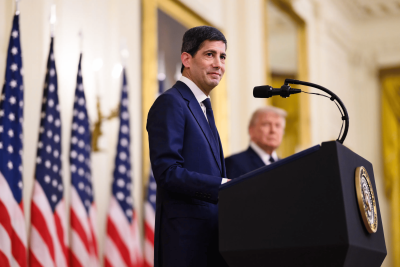
On Wednesday, June 17, the Federal Reserve held interest rates steady at a benchmark rate of 3.50% to 3.75%. Most observers had predicted rates would remain unchanged at this Fed meeting, the first under the leadership of new Fed chair Kevin Warsh.
Here’s why the Fed held rates steady, along with why this decision may set the stage for conflict with President Trump.
Fed holds rates steady, despite the President sending a clear message
The Fed decided to hold rates steady in June because, while many key economic indicators could potentially support a rate cut, considerable uncertainty surrounds the current direction of the economy.
Inflation surged to a three-year high in May, as the Bureau of Labor Statistics reported a 4.2% year-over-year increase in the Consumer Price Index for All Urban Consumers (CPI-U). But rising energy costs drove the bulk of the increase, accounting for around 60% of the monthly jump. Core CPI (all items less food and energy) rose a more modest 2.9% year over year. While this still sits well above the Fed’s target 2.00% inflation rate, it suggests that the more disturbing top-line numbers may largely reflect the ongoing conflict in Iran — a conflict that may resolve as early as this week.
Further, while the May employment report showed employers adding 172,000 non-farm payroll jobs, long-term unemployment remains a persistent issue, and hiring and quit rates remain below norms, suggesting potential underlying problems in the labor market.
By keeping rates steady, the Fed gains the opportunity to wait and see both how the Iran deal plays out and how the employment picture evolves, without introducing a rate change into an economy in flux.
The decision sets the stage for conflict with President Trump
Although the Fed has clear grounds to take a wait-and-see approach, the decision also sets the stage for conflict with President Trump.
Trump has had a rough relationship with the Federal Reserve since taking office for the second time. The President has repeatedly advocated for a reduction in the benchmark interest rate, which led to clashes with former Federal Reserve Chairman Jerome Powell, whom Trump had appointed during his first term. With Powell’s term as chairman ending this year, President Trump nominated Kevin Warsh, a former Fed governor who had served during the global crises and who, in recent years, had advocated for both shrinking the Fed’s balance sheet and reducing interest rates. Now, however, Warsh has presided over his first meeting as Fed chair, and the long-anticipated rate cut did not come.
Warsh took office as the new Fed chair on May 22, and while the chairman doesn’t unilaterally set rates, he can influence policy and shape the central bank’s overall direction. President Trump has sent clear signals in recent weeks to Warsh and other Committee members that he still favors keeping rates low, telling “Meet the Press” moderator Kristen Welker on June 7, “It’s unfair that whenever you do great, they want to raise interest rates. It should be the opposite.”
While the Fed’s inaction today may displease Trump, given his clear preference for a rate cut, the president may hold his fire temporarily rather than striking out at Warsh directly, as he also commented on Meet the Press: “Kevin is fantastic, and I want him to do whatever he wants. I don’t want to have a big influence on him.”
Despite these claims of favoring Fed independence, the President has spoken out vocally against central bank officials when they’ve made decisions he disagreed with. Since the Fed kept things stable this time rather than raising rates, the President may show more patience with Warsh and give him more time to move toward a rate drop — especially because the economic data clearly doesn’t justify more easing right now.
Still, if inflation persists and the labor market stays strong, a future rate increase late in the year or early in 2027 seems inevitable. The question then becomes: will the President still support Warsh’s ability to “do whatever he wants,” or will he eventually find his new appointee as disappointing as his last?
Contact [email protected] for any questions or corrections.
Christy Bieber has been a personal finance and legal writer since 2008. She has a JD from UCLA School of Law and a BA in English, Media and Communications with a certification in business from the University of Rochester.
Christy has been published by a wide variety of sites, including WSJ Buy Side, Forbes, Kiplinger, Fox Business, Credit Karma, Insurify, and Annuity.org. In addition to writing for the web, she has also ghostwritten textbooks on business and law and served as a subject matter expert for course design.