Fed Chair Kevin Warsh Faces Trump Throwdown as Inflation Soars
Toward the end of his tenure as chair of the Federal Reserve, there was no love lost between Jerome Powell and President Trump. Trump made his opinions of Powell and his stance on interest rate pauses very clear. Or, to…

This post may contain links from our sponsors and affiliates, and Flywheel Publishing may receive compensation for actions taken through them.

Toward the end of his tenure as chair of the Federal Reserve, there was no love lost between Jerome Powell and President Trump.
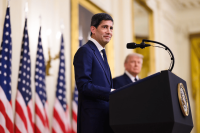
Trump made his opinions of Powell and his stance on interest rate pauses very clear. Or, to put it more accurately, Trump repeatedly blasted the former Fed chair publicly for not lowering interest rates. And now, recently appointed Fed chair Kevin Warsh is walking into one of the most politically charged economic environments in years.
Trump puts the pressure on as the Fed faces a tough decision
Trump has long argued that the Federal Reserve should be more aggressive in cutting interest rates, framing lower borrowing costs as a way to stimulate economic growth and ease financial pressure on Americans.
In recent months, consumer confidence has plunged and Americans have been forced to cut back on spending to conserve funds and cope with higher costs. Trump’s stance is that lower interest rates could help struggling consumers, and that action needs to be taken sooner rather than later.
Although inflation isn’t nearly as rampant now as it was in the years immediately following the pandemic, it’s still stubbornly high. Much of that has stemmed from a rapid rise in oil prices spurred by the Iran conflict.
But when oil prices rise, consumers don’t just pay more at the pump. They pay more for just about everything.
In April, the Consumer Price Index increased 3.8% on a year-over-year basis. That’s notably above the 2% inflation level the Fed likes to target on a long-term basis.
So now, Warsh has a problem. Energy costs remain volatile and inflation isn’t showing any signs of normalizing. That makes rate cuts very risky.
If the Fed cuts rates too quickly, it could drive inflation upward. But if the Fed moves too slowly, it risks a decline in consumer spending that could slow the economy on a whole. And the pressure from Trump isn’t helping matters given that it’s a delicate line to toe.
Trump may need to sit tight
Trump’s aggressive push for lower interest rates adds a layer of complexity to an already big problem. The White House has a clear incentive to see borrowing costs fall, particularly if economic growth begins to slow.
But Warsh needs to focus on the data more so than the noise. And his credibility will hinge on how firmly he manages to maintain the Fed’s data-driven approach while avoiding economic and market turbulence.
All told, Warsh is entering the fold at a moment when monetary policy is once again at the center of political debate. Trump’s stance on rate cuts is clear, but inflation’s trajectory is murky. Much will depend on the conflict overseas — notably, how long it continues to drag on.
In time, the Fed is likely to cut rates, and consumers are likely to get relief on the borrowing front. The question is, will the Fed be able to ease into rate cuts gradually without risking a broad economic slump in the interim?
Trump clearly wants to avoid the latter. Whether he gets his way is up in the air.
Contact [email protected] for any questions or corrections.
Maurie Backman has more than a decade of experience writing about financial topics, including retirement, investing, Social Security, and real estate. Her work has appeared on sites that include The Motley Fool, USA Today, U.S. News & World Report, and Kiplinger.
Prior to becoming a full-time financial writer, Maurie worked in the financial industry trading distressed debt. She then changed course and spent a few years designing electronic toys. After a stint in content marketing and UX, she shifted back into writing and has since covered everything from the housing market to estate planning to Medicare.
When she's not busy writing, Maurie can be found hiking, walking her dogs, driving her kids to their various sports practices and games, and curling up with a good book. She cooks on occasion and bakes way too often.