Kevin Warsh Completes His First Fed Meeting Today — the Odds of a Rate Hike in 2026 Are Collapsing
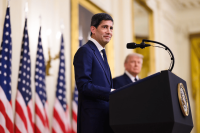
Federal Reserve chairman Kevin Warsh wraps up his first meeting today. While investors will undoubtedly still pay close attention to what he says afterward, they’ll be focused less on what the Fed does now and more on what it might…

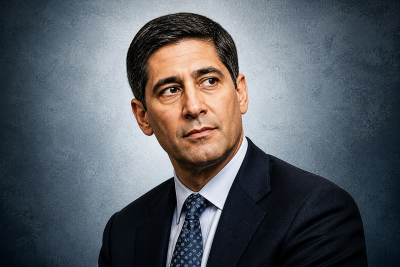
Federal Reserve chairman Kevin Warsh wraps up his first meeting today. While investors will undoubtedly still pay close attention to what he says afterward, they’ll be focused less on what the Fed does now and more on what it might do next.
Just a few weeks ago, markets were increasingly convinced the central bank would need to raise interest rates again in 2026. Inflation was running hot, oil prices were surging, and fears of a broader Middle East conflict threatened to push energy costs even higher.
That outlook has changed quickly. Prediction market participants who once saw a rate hike as the most likely outcome are now pulling back. While inflation risks haven’t disappeared, some of the biggest catalysts behind those fears have faded, causing expectations for future Fed tightening to collapse.
The Market’s View Has Shifted Dramatically
Earlier this month, bettors on prediction market Polymarket assigned a 62% probability that the Federal Reserve would raise interest rates at some point during 2026. Today, those odds have fallen to 31%.
That’s a remarkable reversal in just a matter of weeks. The shift reflects a broader reassessment of inflation risks. Markets aren’t suddenly expecting aggressive rate cuts. Instead, investors increasingly believe the Fed may be able to keep rates steady rather than tighten policy further.
Here’s what the numbers on Polymarket currently show:
| Fed Outlook | Probability |
| No 2026 Rate Hike | 69% |
| At Least One 2026 Rate Hike | 31% |
For investors, the market isn’t pricing in a dramatically weaker economy; it’s simply pricing in less inflation pressure than appeared likely earlier this month.
Oil and Iran Changed the Conversation
The biggest factor behind the declining rate-hike odds is oil. As crude prices remained well above $80 per barrel earlier this month, investors worried energy costs could reignite inflation throughout the economy. Higher gasoline prices filter into transportation, manufacturing, and consumer spending, making the Fed’s inflation fight more difficult.
That threat has eased. Oil has fallen back below the $80-per-barrel threshold, reducing concerns that energy prices will create another inflation spike. While oil remains elevated compared to levels seen earlier this year (but still below the highs above $110 in early April), the market no longer appears to be pricing in a prolonged supply shock.
At the same time, expectations have shifted regarding Iran. Earlier fears centered on the possibility of a wider regional conflict that could disrupt global energy markets. Recent developments suggest there may be a real end to the conflict at hand, removing another major source of inflation uncertainty.
If energy prices stabilize and geopolitical tensions ease, inflation can cool without the Federal Reserve needing to raise rates further. That’s precisely what markets are beginning to price in.
Warning Signs Haven’t Disappeared
That said, investors shouldn’t assume the inflation battle is over. Recent inflation readings remain above the Fed’s long-term 2% target. Labor markets also remain relatively healthy, limiting the amount of economic slack that typically helps bring inflation down.
Surprisingly, prediction markets now place slightly better odds on a rate cut at the Fed’s next meeting than a rate hike:
- No change: 93%
- Rate cut: 4%
- Rate hike: 3%
Sure, markets overwhelmingly expect Warsh and his colleagues to hold rates steady for now, but the rate-cut story looks better now than it did earlier this month when the narrative almost completely vanished.
Granted, inflation could reaccelerate if oil prices rebound, tariffs push import costs higher, or economic growth remains stronger than expected. The Fed has repeatedly emphasized that future decisions will depend on incoming data.
Key Takeaway
In short, the collapse in 2026 rate-hike odds isn’t about investors suddenly expecting easy money. It’s about the market recognizing that two of the biggest inflation threats — surging oil prices and a widening Iran conflict — have become less severe.
The probability of a 2026 rate hike has fallen from 62% to 31%, while markets overwhelmingly expect no change at the Fed’s next meeting. For now, that’s a favorable backdrop for stocks, bonds, and rate-sensitive sectors.
Ultimately, investors should watch energy prices and inflation reports more closely than Fed headlines. If oil stays below $80 per barrel and geopolitical tensions continue easing, the case for another rate hike may keep shrinking.
Contact [email protected] for any questions or corrections.
After two decades of patrolling the dark corners of suburbia as a police officer, Rich Duprey hung up his badge and gun to begin writing full time about stocks and investing. For the past 20 years, he’s been cruising the markets looking for companies to lock up as long-term holdings in a portfolio while writing extensively on the broad sectors of consumer goods, technology, and industrials. Because his experience isn’t from the typical financial analyst track, Rich is able to break down complex topics into understandable and useful action points for the average investor. His writings have appeared on The Motley Fool, InvestorPlace, Yahoo! Finance, Money Morning, and, of course, 24/7 Wall St. He has been featured in both U.S. and international publications, including MarketWatch, Financial Times, Forbes, Fast Company, and USA Today.