Why I Can’t Stop Buying This Unstoppable Dividend Juggernaut
I hit the buy button on AbbVie (NYSE:ABBV | ABBV Price Prediction) again last week, and I will hit it again the next time June’s macro noise hands me a discount. While short-term traders chase headlines around sticky 4.2% inflation…

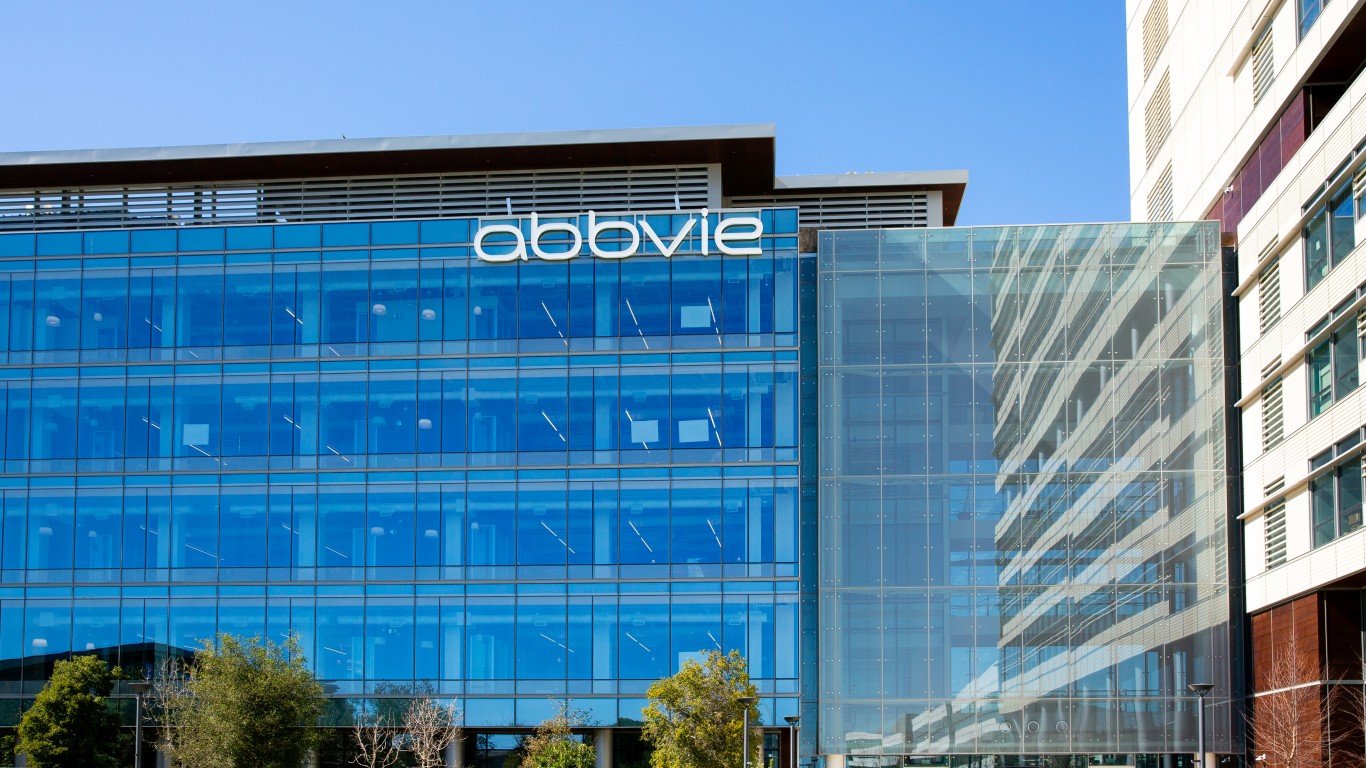
I hit the buy button on AbbVie (NYSE:ABBV | ABBV Price Prediction) again last week, and I will hit it again the next time June’s macro noise hands me a discount. While short-term traders chase headlines around sticky 4.2% inflation and a softening jobs picture, I keep adding shares of a cash machine that does not care which way the next data release breaks.
The thesis is straightforward. AbbVie has rebuilt itself around two next-generation immunology drugs that are growing fast enough to bury the old Humira narrative, and the market is finally paying for that work. Skyrizi posted $4.48 billion in Q1 2026 revenue, up 30.9% year over year. Rinvoq added $2.12 billion, up 23.3%. The full immunology franchise grew 16.4% to $7.29 billion, even with Humira down 38.6% against biosimilars. That is the replacement story playing out on the income statement in real time.
Then there is the dividend, which is the real reason I keep showing up. The quarterly payout sits at $1.73, after a 5.5% increase in January 2026. Stretch back ten years and the quarterly check has climbed from $0.57 in 2016 to $1.73 today, layered on top of AbbVie’s 52-year history of consecutive dividend increases dating back to its Abbott roots. The yield has compressed to roughly 2.95% because shares ran 31.95% over the past year and 147% over five years. I treat that compression as confirmation the thesis is working.
The economics behind the payout look just as durable. AbbVie carries a 70.2% gross margin and a 32.85% operating margin, and Q1 2026 revenue came in at $15.00 billion, up 12.4% year over year and beating consensus by 1.93%. Management used the strength to raise full-year adjusted EPS guidance to $14.08 to $14.28. CEO Robert A. Michael told investors, “AbbVie’s key growth drivers continue to deliver strong performance and support our enhanced full-year outlook.” Against that guide, the forward earnings multiple of 16 is hardly demanding for a business compounding revenue at double digits with a beta of 0.309.
The real risk is the patent cliff that never quite goes away. Humira keeps bleeding, Imbruvica fell 24.7% in the quarter, and some analysts are already flagging concerns about growth past 2028. Negative shareholders’ equity from years of buybacks and acquisitions sits on the balance sheet as a reminder that this is a leveraged compounder. I have weighed all of it. The reason I keep buying anyway is that Skyrizi and Rinvoq are tracking ahead of the original replacement timeline, neuroscience grew 26.0% with Qulipta up 53.6%, and the pipeline keeps producing wins like the FDA approval of Venclexta plus acalabrutinib for previously untreated CLL.
Add in a $100 billion U.S. R&D and capex commitment over the next decade, a $1.4 billion manufacturing campus going up in Durham, and a 62.15% return on equity, and the picture is a defensive compounder priced like an ordinary drug stock. June’s jobs wobble does not change any of that. It just gives me cheaper share prices on the way to a bigger quarterly check, and that is the only confession of conviction I owe.
Contact [email protected] for any questions or corrections.
Alex Sirois is a financial writer with experience spanning both retail and institutional investing. He has written for InvestorPlace and held roles at BNY Mellon and Bernstein, giving him a perspective that bridges Main Street portfolios and Wall Street analysis.
Alex holds an MBA from George Washington University and has built his career across multiple industries, including e-commerce, education, and translation — a breadth of experience that informs how he breaks down complex financial topics for everyday investors. His writing is conversational, actionable, and grounded in long-term, buy-and-hold investing principles.
At 247 Wall St., Alex focuses on delivering analysis that is both accessible and useful, with a clear emphasis on helping readers make more informed decisions with their money.