Melius Research: “Buy the chip dip, skip hyperscalers” until AI payoff becomes clear
Melius Research’s head of tech research, Ben Reitzes, told CNBC to lean into chip-stock weakness and stay clear of the cloud giants paying for the buildout. “I’m telling them to buy on the dip. These have been opportunities in the…

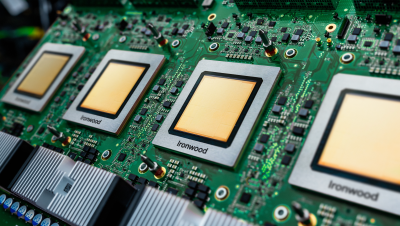
Melius Research’s head of tech research, Ben Reitzes, told CNBC to lean into chip-stock weakness and stay clear of the cloud giants paying for the buildout. “I’m telling them to buy on the dip. These have been opportunities in the past, and we just don’t really see any change,” Reitzes said. His list of buys covers Nvidia, Broadcom, Micron, AMD, and Dell, while Microsoft, Oracle, and Google are on hold until their AI monetization model becomes legible.
The framing matters because the broader debate has shifted from whether AI demand exists to whether the spenders can ever earn it back. Reitzes argues the answer is to own the sellers of compute. “The world is shifting towards compute… It’s been three years into this, and we’re probably in a 20-year trend. Compute is really the fuel. It’s the oil, and it’s going to be bigger than oil ever was,” he said.
The chip side of the trade
Nvidia (NASDAQ: NVDA) | NVDA Price Prediction anchors the call. The Q1 FY27 earnings report showed revenue of $81.61 billion, up 85.2% year over year, with Data Center revenue of $75.25 billion and an $80 billion additional buyback authorization disclosed in the company’s SEC 8-K filing. Shares trade at a forward P/E of 24, with shares up 12.01% year to date.
Broadcom (NASDAQ: AVGO) delivered $10.8 billion in AI semiconductor revenue, up 143% year over year, in its Q2 FY26 report. The stock is up 13.72% year to date and carries a forward P/E of 36.
Micron Technology (NASDAQ: MU) is the cleanest expression of the “single-digit multiple” pitch. Forward P/E sits at 11, despite an FQ2 26 print of $23.86 billion in revenue and $12.20 in non-GAAP EPS, beating consensus by 39.74%. CEO Sanjay Mehrotra said, “In the AI era, memory has become a strategic asset for our customers.” The stock has run 324.63% year to date.
AMD (NASDAQ: AMD) posted Q1 FY26 revenue of $10.25 billion, up 37.9% year over year, with Data Center revenue of $5.78 billion, up 57%. CEO Lisa Su flagged the Meta partnership to deploy up to 6 GW of AMD Instinct GPUs. Shares are up 157.58% year to date.
Dell Technologies (NYSE: DELL) sits on Reitzes’ buy list as the lone hardware name. AI-optimized server revenue hit $16.13 billion, up 757% year over year, on $24.4 billion of AI orders booked. Gross margin compressed to 17.8% from 21.1%, illustrating the cost of being a reseller in this cycle.
Why is he skipping the hyperscalers?
Reitzes’ capital-allocation argument is direct. “Why bother owning hyperscalers? They’re handing money to my other companies… They don’t generate cash. They may not generate cash next year, and they don’t buy back stock,” he said.
Microsoft is the cautionary tale. CapEx surged to $30.88 billion, up 84.4% year over year, in Q3 FY26. Satya Nadella said, “Our AI business surpassed an annual revenue run rate of $37 billion, up 123% year-over-year.” Yet the stock is down 23.7% year to date. A Polymarket contract gives a 69% probability that Anthropic plus OpenAI will exceed Microsoft’s valuation by December 31, 2026.
Alphabet shows the same pattern. CapEx ran $35.67 billion, up 107.4% year over year, and free cash flow fell 46.6% year over year to $10.12 billion. Google Cloud grew 63% to $20.03 billion with backlog nearly doubling to over $460 billion, but shares dropped 6% on June 23 after John Jumper departed for Anthropic and Noam Shazeer for OpenAI.
What to watch next
Reitzes’ wait-and-see line was blunt. “Call me when they figure it out. I don’t want to invest in that stuff while they’re figuring out the consumption versus subscription. What a mess you got,” he said. The next checkpoints arrive with hyperscaler July earnings, where CapEx guidance and any AI revenue disclosures will determine whether the picks-and-shovels gap keeps widening. Until then, the data favors the sellers.
Contact [email protected] for any questions or corrections.
Ian Cooper is a veteran market analyst and investment strategist with more than 20 years of experience covering stocks, commodities, and macro trends. Since 1999, he has helped investors identify market opportunities using a blend of technical analysis, fundamental research, and market sentiment.
He is the creator of the ADD News Flow Strategy, which focuses on trading market reactions to major news events and investor psychology. Cooper was also among the analysts who warned about the 2008 financial crisis and major financial institution collapses ahead of the broader market.
Before joining 247 Wall St., Cooper wrote extensively for InvestorPlace and other financial publications, covering market trends, trading strategies, and investment opportunities.