Why U.S. AI Restrictions Could Give China an Unexpected Advantage Following the Android Playbook
CNBC’s Deirdre Bosa explained a counterintuitive thesis on the AI cold war in a recent CNBC segment. Paradoxically, she argued that U.S. efforts to wall off access to the most advanced American AI models could unintentionally accelerate China’s rise in…

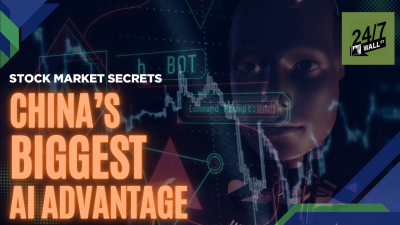
CNBC’s Deirdre Bosa explained a counterintuitive thesis on the AI cold war in a recent CNBC segment. Paradoxically, she argued that U.S. efforts to wall off access to the most advanced American AI models could unintentionally accelerate China’s rise in AI. The concern is that policies designed to protect America’s lead may instead encourage developers around the world to build on Chinese open-source models.
How U.S. Restrictions Could Backfire
“America is slowing just as China is speeding up,” Bosa argues, with Chinese labs now pushing toward the capability frontier itself, beyond cost-based competition. According to the segment, limiting customer access to OpenAI’s and Anthropic’s most powerful models has given Chinese labs an opening, and developers have responded. Bosa notes that a number of U.S. companies, including Coinbase (NASDAQ:COIN | COIN Price Prediction), Airbnb (NASDAQ:ABNB), and Shopify (NASDAQ:SHOP), have shifted at least some workloads to open-source Chinese models.
She also points to capability parity in sensitive domains. Chinese labs have matched U.S. capabilities in areas like cybersecurity, with Bosa referencing a bug-finding tool from Chinese company 360 Security as comparable to leading U.S. equivalents. If accurate, that closes a gap many U.S. policymakers assumed export controls would keep open.
Why Open Source Could Decide the AI Race
The systemic risk Bosa describes is that if Chinese open-source models become the default foundation the way Android became the default mobile operating system, China could gain influence over the standards, defaults, and rules of the next AI stack, as well as end users. Then, these models have the potential to build switching costs as developers fine-tune the model family.
Bosa notes that China treats open-source AI dominance as a strategic national ambition, while U.S. frontier labs like OpenAI and Anthropic depend on charging for API access and usage. Open source is hard to monetize, which is precisely why state-backed strategies can sustain it longer than venture-funded ones can.
How the U.S. Is Responding
Bosa mentions NVIDIA (NASDAQ:NVDA) and Reflection AI pursuing open-source strategies to counter Chinese models, an acknowledgment that at least parts of the U.S. ecosystem are responding to the same dynamic she describes.
That response is happening against a hardening export-control backdrop. NVIDIA’s AI chip sales in China are struggling under U.S. export controls and China’s push for self-sufficiency, with local chipmakers including Huawei taking market share, and Chinese companies are actively collaborating with Huawei to adapt AI models to domestic hardware.
Taiwanese authorities have raided Super Micro (NASDAQ:SMCI) offices in an expanding probe over alleged smuggling of Nvidia chips to China, signaling that enforcement is intensifying alongside rule-making. Analysts at The National Interest have argued that export controls are dividing the global compute ecosystem into rival blocs, with Taiwan’s alignment behind U.S. restrictions a pivotal moment.
On the demand side, U.S. policy is leaning in hard. The Department of War’s FY 2027 budget request earmarks $58.5 billion for AI and Combined Joint All-Domain Command and Control, including $46.0 billion in a multi-year mandatory investment in a sovereign AI Arsenal, framed around the directive that “it is the policy of the United States to sustain and enhance America’s global AI dominance.”
The Policy Dilemma
Bosa frames her takeaway as a genuine dilemma. Tight controls protect near-term national security interests related to weapons-relevant compute and sensitive model capabilities. The same controls may push global developers toward Chinese open-source alternatives that the U.S. cannot influence once entrenched. Investors watching the AI supply chain, from foundries to model providers to the application layer, should treat the open-source standards battle as a parallel front to the chip war, with a longer time horizon and arguably higher stakes for who writes the rules of the next platform.
Contact [email protected] for any questions or corrections.
Thomas Richmond is a financial writer and content strategist with 5+ years of experience covering stocks and financial markets. He has published over 250 articles focused on individual stock analysis, helping investors better understand business fundamentals, stock valuations, and long-term opportunities.
Thomas previously served as a Content Lead at TIKR, a stock research platform, where he helped scale the company’s blog to hundreds of articles per month and contributed to a weekly newsletter reaching more than 100,000 investors.
He specializes in breaking down complex companies into clear, actionable insights for everyday investors, with a focus on fundamentals-driven research.
His work has also been featured on platforms including Seeking Alpha and Sure Dividend.
Outside of work, Thomas enjoys weight lifting and soccer.