The Collapse Of America’s AI Bubble Is In China
There is no chance we are in an AI bubble, according to the heads of companies like Nvidia (NASDAQ: NVDA) and Alphabet (NASDAQ: GOOG). If the US is completely at the center of the AI universe, that might be true.…


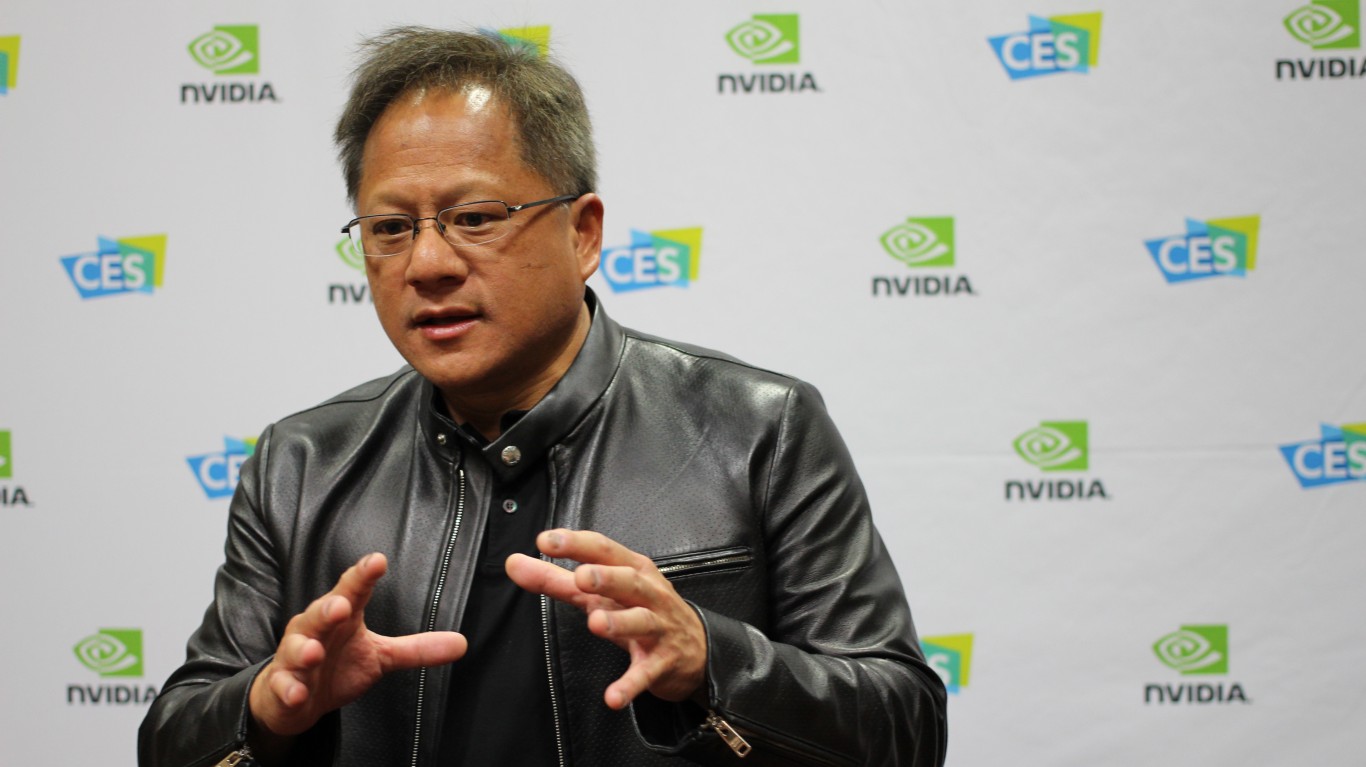
There is no chance we are in an AI bubble, according to the heads of companies like Nvidia (NASDAQ: NVDA | NVDA Price Prediction), Alphabet (NASDAQ: GOOG), and OpenAI. If the US is completely at the center of the AI universe, that might be true. It isn’t.
The original alarm was sounded by DeepSeek, whose R1 reasoning model landed in January 2025 claiming near-industry-leading performance for less than $6 million in reported compute costs. Marc Andreessen called it “AI’s Sputnik moment.” That framing no longer seems like an overreaction. Stanford’s 2026 AI Index found that the performance gap between the best American and Chinese AI models has collapsed to just 2.7%, down from 17.5 to 31.6 percentage points across major benchmarks in early 2023. The US and Chinese models have traded the top leaderboard spot multiple times since early 2025.
DeepSeek Keeps Moving
For a time after R1’s debut, it looked as though China’s AI industry had delivered a single dramatic punch and then gone quiet. That picture has changed. In April 2026, DeepSeek released a preview of its V4 model series, including the 1.6-trillion-parameter V4-Pro and the 284-billion-parameter V4-Flash, both under the MIT open-source license. DeepSeek said V4-Pro beats all rival open models on math and coding benchmarks, trailing only Google’s Gemini 3.1-Pro in world knowledge. Since the original R1 release, players like Alibaba and ByteDance have also released new models, intensifying competition inside China’s own AI sector.
The V4 release carries a chip story that matters as much as the benchmark numbers. When DeepSeek trained R1, it used Nvidia hardware. V4 was built in partnership with Huawei, whose “Supernode” technology clusters its Ascend 950 chips to supply the compute. One analyst at Counterpoint Research noted that running a frontier model on domestic Chinese chips “allows AI systems to be built and deployed without relying solely on Nvidia.” That shift could ultimately matter more for the long-term competitive picture than any single benchmark score.
The Chip Gap Is Narrowing, But Real
The article on chips requires some updating. Huawei’s Ascend 910C, long dismissed as a distant second to Nvidia’s hardware, has proven more capable than early skeptics expected. Research from DeepSeek’s own team suggests the 910C delivers roughly 60% of the H100’s inference performance on a single chip. At cluster scale, Huawei’s CloudMatrix 384 system, stacking 384 Ascend 910C processors, has reportedly beaten Nvidia’s GB200 NVL72 in certain workloads, though it does so at significantly higher power consumption because the individual chips are less efficient.
The gap in training frontier models from scratch remains a harder problem. Huawei’s chips are built on SMIC’s 7nm process, compared to the 4nm TSMC node Nvidia uses for its Blackwell generation. On raw compute per chip, each 910C delivers roughly one-third the throughput of Nvidia’s B200, according to one analysis, meaning Chinese developers compensate by running far larger clusters. US export controls have blocked China from purchasing Nvidia’s most advanced chips, including the entire Blackwell line, pushing Chinese AI companies further toward domestic silicon. Huawei is targeting production of roughly 600,000 Ascend 910C chips in 2026, nearly double 2025 output.
The Energy Advantage Is Growing
China’s largest structural advantage over the US in AI may not be found in a lab at all. By the end of 2025, China’s total installed power generation capacity reached 3.89 terawatts, up 16% from the prior year, and the country now produces more than twice as much electricity as the United States. That gap was nonexistent two decades ago: in 2005, the US generated roughly twice as much power as China. The reversal has been rapid and shows no sign of slowing. In a single year, China added the equivalent of 40% of the entire US grid’s capacity, according to the Brookings Institution.
That energy scale translates directly into data center economics. Chinese data centers reportedly pay roughly half the electricity rates that American centers do, a structural cost advantage that compounds over time. American AI companies, by contrast, are scrambling for power. Energy infrastructure shortages have blocked more than 75 data center build-outs worth $130 billion in the US in the first three months of 2026 alone. AI companies are reportedly scouring global markets for used turbine engines to build their own natural gas plants. Where China excels in energy infrastructure, the US is still arguing about permitting.
The Broader Picture
Stanford’s 2026 AI Index adds important context beyond model performance. China leads the US in AI patents (nearly 70% of global filings), publication volume, and industrial robot installations, where China deployed 295,000 units in 2024 versus 34,200 in the US. Meanwhile, the number of AI researchers and developers moving to the United States has dropped 89% since 2017, with an 80% decline in the single year leading up to the report. The US still spends far more on private AI investment ($285.9 billion in 2025 versus China’s $12.4 billion), but that spending advantage has not prevented the performance gap from nearly closing.
The debate over whether the US is in an AI bubble is, in a sense, the wrong question. The more pressing question is whether the assumptions underpinning the trillions of dollars being invested in American AI infrastructure, that the US holds a durable technological and energy lead over China, are still valid. On current data, those assumptions deserve scrutiny.
Editor’s note: This update adds DeepSeek’s April 2026 V4 model release (trained on Huawei Ascend chips rather than Nvidia hardware), the Stanford 2026 AI Index finding that the US-China AI performance gap has narrowed to 2.7%, updated Huawei Ascend 910C chip performance figures showing roughly 60% of H100 inference capability, and current data on China’s electricity capacity reaching 3.89 terawatts by end of 2025.
Contact [email protected] for any questions or corrections.
Douglas A. McIntyre is the co-founder, chief executive officer and editor in chief of 24/7 Wall St. and 24/7 Tempo. He has held these jobs since 2006.
McIntyre has written thousands of articles for 24/7 Wall St. He is an expert on corporate finance, the automotive industry, media companies and international finance. He has edited articles on national demographics, sports, personal income and travel.
His work has been quoted or mentioned in The New York Times, The Wall Street Journal, Los Angeles Times, The Washington Post, NBC News, Time, The New Yorker, HuffPost USA Today, Business Insider, Yahoo, AOL, MarketWatch, The Atlantic, Bloomberg, New York Post, Chicago Tribune, Forbes, The Guardian and many other major publications. McIntyre has been a guest on CNBC, the BBC and television and radio stations across the country.
A magna cum laude graduate of Harvard College, McIntyre also was president of The Harvard Advocate. Founded in 1866, the Advocate is the oldest college publication in the United States.
TheStreet.com, Comps.com and Edgar Online are some of the public companies for which McIntyre served on the board of directors. He was a Vicinity Corporation board member when the company was sold to Microsoft in 2002. He served on the audit committees of some of these companies.
McIntyre has been the CEO of FutureSource, a provider of trading terminals and news to commodities and futures traders. He was president of Switchboard, the online phone directory company. He served as chairman and CEO of On2 Technologies, the video compression company that provided video compression software for Adobe’s Flash. Google bought On2 in 2009.