The 2 Hidden Winners in the $9 Trillion Humanoid Robotics Opportunity
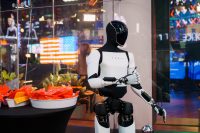
The race to build humanoid robots is accelerating from science fiction to industrial reality. RBC Capital Markets expect the market to grow into a $9 trillion opportunity by 2050, once software, services, and maintenance are included. Most investor attention has…

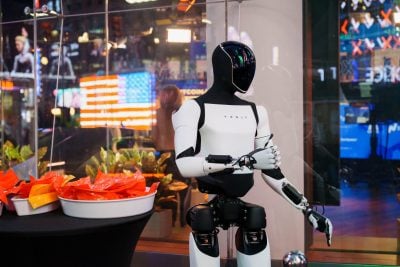
The race to build humanoid robots is accelerating from science fiction to industrial reality. RBC Capital Markets expect the market to grow into a $9 trillion opportunity by 2050, once software, services, and maintenance are included. Most investor attention has centered on companies building the robots themselves. Yet history suggests the biggest long-term winners are often the businesses supplying the tools that every competitor depends on.
In the humanoid robotics boom, that makes semiconductor equipment makers ASML Holding (NASDAQ:ASML | ASML Price Prediction) and Lam Research (NASDAQ:LRCX) two of the most compelling investments.
The Robot Builders Need More Than Great Chips
The companies developing humanoid robots are easy to identify. Nvidia (NASDAQ:NVDA) has become the dominant supplier of AI processors and software through its Isaac robotics platform, while Taiwan Semiconductor Manufacturing (NYSE:TSM) manufactures many of those advanced chips. On the hardware side, Tesla (NASDAQ:TSLA), Hyundai, and Xiaomi are investing billions to bring humanoid robots from research labs into factories, warehouses, and eventually homes.
Those companies could enjoy enormous revenue growth. They will also compete fiercely on price, features, and manufacturing scale. The automotive industry offers a useful comparison. Car sales expanded dramatically over the last century, yet many automakers struggled to earn consistent profits because competition steadily compressed margins.
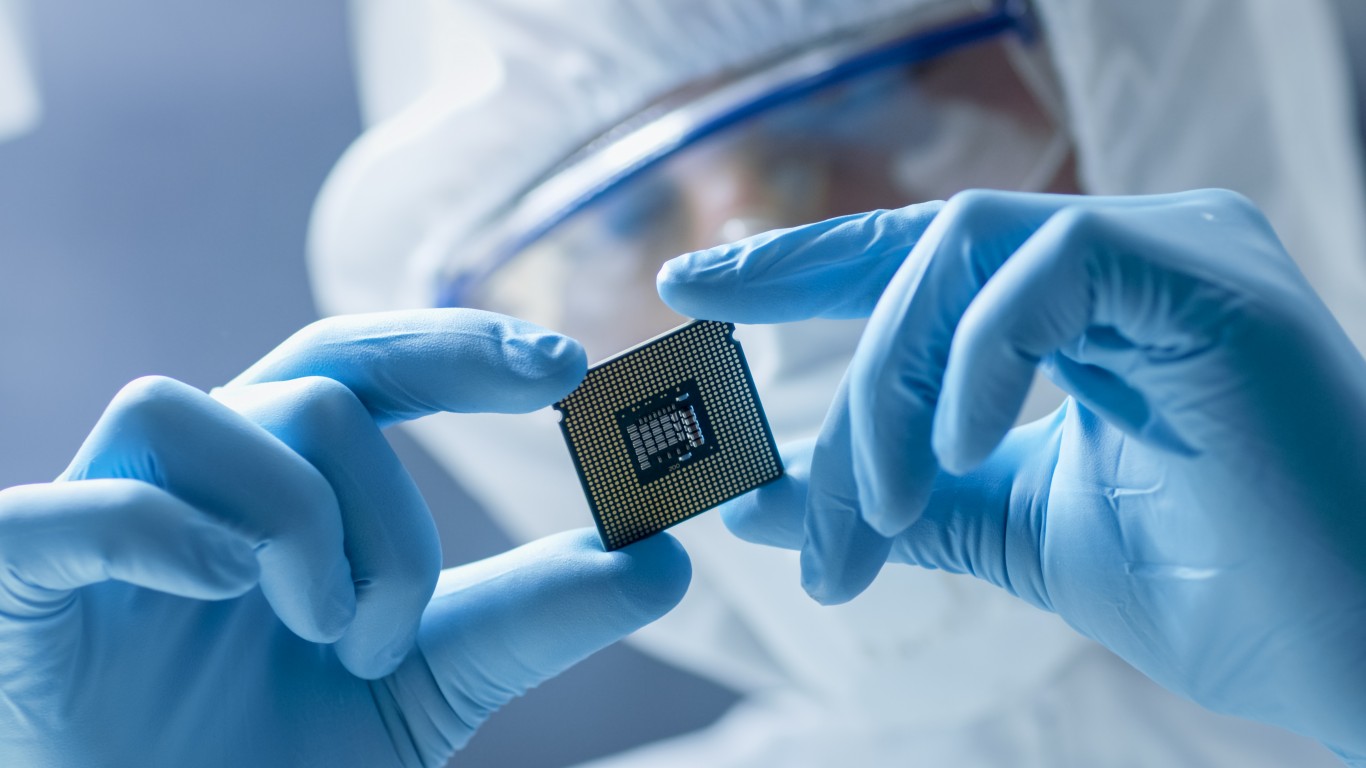
But looking one step further upstream, while every robot needs cutting-edge AI chips, every one of those chips requires highly specialized manufacturing equipment before it ever reaches a production line. That is where ASML Holding and Lam Research stand apart.
The Picks and Shovels Players
ASML generated 32.7 billion euros (almost $37 billion) in net sales for full-year 2025, up 15% from the year before, while shipping the extreme ultraviolet (EUV) lithography systems that no competitor currently offers. Each machine can cost more than $350 million and enables chipmakers to produce the most advanced processors available. Without those systems, leading-edge AI chips simply cannot be manufactured.
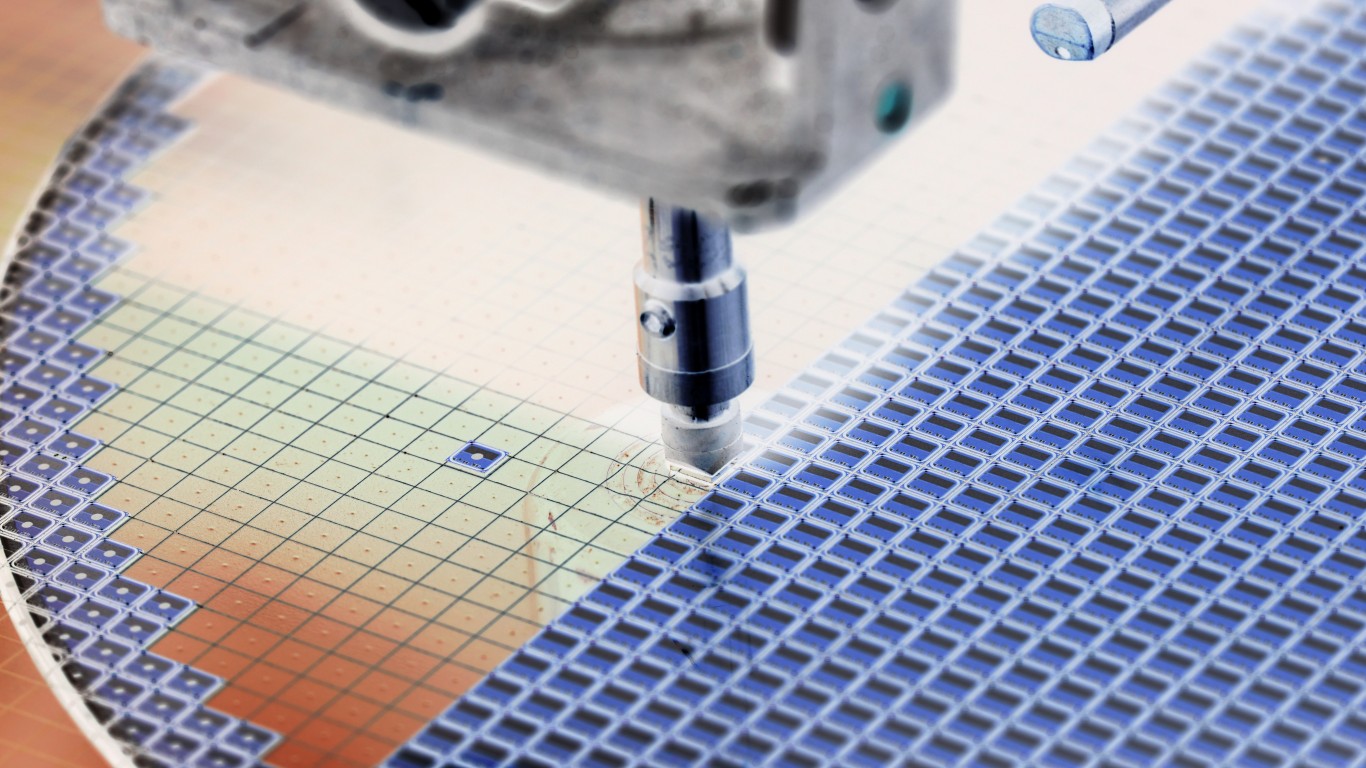
Lam Research fills another indispensable role. The company specializes in wafer etching and deposition equipment that creates the microscopic structures inside every advanced semiconductor. Lam reported trailing 12-month revenue of almost $21.7 billion while continuing to benefit from growing investments in AI chip production.
Regardless of which robot manufacturer ultimately captures the largest market share, nearly every advanced processor will pass through ASML’s and Lam Research’s equipment during production.
The Real Bottleneck Isn’t Robots — It’s Chip Capacity
Surprisingly, the biggest constraint on humanoid robotics may not be demand but semiconductor manufacturing capacity.
Robot brains require enormous computing power to process vision, movement, speech, and decision-making in real time. That increases demand for advanced logic chips and high-bandwidth memory, benefiting companies such as Micron Technology (NASDAQ:MU) and SK hynix. Yet neither memory nor processors can be produced without semiconductor fabrication plants packed with ASML and Lam Research equipment.
That creates a classic picks-and-shovels investment opportunity. Instead of betting on which robot brand consumers or businesses eventually prefer, investors should own companies supplying virtually every participant across the industry.
Key Takeaway
In short, humanoid robotics could become one of the largest technology markets ever created, but the safest long-term investments may not be the companies assembling the robots. Nvidia and Taiwan Semiconductor remain essential pieces of the ecosystem, while Tesla, Hyundai, and Xiaomi are racing to commercialize the machines.
Ultimately, however, ASML and Lam Research occupy the industry’s chokepoint. Every next-generation AI chip depends on their equipment before it can power a single humanoid robot, giving both companies durable competitive advantages that could endure long after today’s robotics leaders change.
Contact [email protected] for any questions or corrections.
After two decades of patrolling the dark corners of suburbia as a police officer, Rich Duprey hung up his badge and gun to begin writing full time about stocks and investing. For the past 20 years, he’s been cruising the markets looking for companies to lock up as long-term holdings in a portfolio while writing extensively on the broad sectors of consumer goods, technology, and industrials. Because his experience isn’t from the typical financial analyst track, Rich is able to break down complex topics into understandable and useful action points for the average investor. His writings have appeared on The Motley Fool, InvestorPlace, Yahoo! Finance, Money Morning, and, of course, 24/7 Wall St. He has been featured in both U.S. and international publications, including MarketWatch, Financial Times, Forbes, Fast Company, and USA Today.