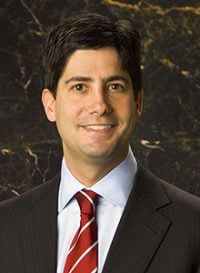
Kevin Warsh Just Signaled the Fed’s $6.7 Trillion Balance Sheet Isn’t Going Anywhere Fast
For months, investors viewed Kevin Warsh as the candidate most likely to reshape the Federal Reserve. The expectation wasn’t just that he would lower interest rates after taking over as Fed chair. Many also believed he would aggressively unwind the…

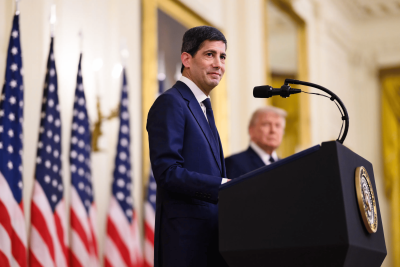
For months, investors viewed Kevin Warsh as the candidate most likely to reshape the Federal Reserve. The expectation wasn’t just that he would lower interest rates after taking over as Fed chair. Many also believed he would aggressively unwind the Fed’s balance sheet, which has hovered around $6.7 trillion after ballooning during years of quantitative easing.
That combination promised a dramatic shift in monetary policy. Yet only weeks into his tenure, the narrative has changed. Interest rates may not fall after all, and Warsh’s latest comments suggest the Fed’s balance sheet will shrink far more slowly than many reform advocates anticipated.
Warsh’s Priorities Have Become Much Clearer
Warsh spoke this week at the European Central Bank Forum, where he outlined how he views monetary policy after serving as a Fed governor through 2011.
His central message was straightforward. Interest rates — not the Fed’s balance sheet — should be the primary tool for setting monetary policy.
As Warsh explained, he has advocated since leaving the Fed for using interest rates as “the dominant means through which we make monetary policy.” By contrast, he described the Fed’s massive securities portfolio as something that increasingly resembles fiscal policy because it influences asset prices and works through signaling effects rather than directly changing the cost of money.
Many investors assumed a Warsh-led Fed would immediately reverse years of quantitative easing by selling Treasury and mortgage-backed securities. Instead, his comments suggest shrinking the balance sheet is more of a long-term institutional project than an urgent policy objective.
Just as important, Warsh has also become less dovish on interest rates than many expected. Persistent inflation pressures have made additional rate cuts less certain, and some market observers now believe rates could even move higher if inflation reaccelerates.
The Balance Sheet Will Shrink — But Very Slowly
Warsh did offer one remark that initially sounded encouraging for balance sheet hawks. He said:
“It took us 18 years to find our way into this big balance sheet…It won’t take 18 weeks to bring it down to size.”
Granted, that statement acknowledged the Fed should eventually reverse course. But the rest of his comments painted a much more plodding pace. According to Warsh, reducing the balance sheet will not be a top-down decision made by the chair alone. Instead, it will be a multi-stage process:
- Study group review. The process begins with research, not immediate action.
- Consensus building. Multiple policymakers must agree before changes occur.
- Public discussions. Markets will receive advance communication before major moves.
- Financial market support. Financial stability takes priority over speed.
Taken together, those remarks point toward an extended review process rather than rapid quantitative tightening.
That shouldn’t surprise seasoned investors. The Fed has spent nearly two decades expanding its balance sheet through successive financial crises. Unwinding those positions without disrupting Treasury markets, mortgage financing, or broader financial conditions was always going to be politically and economically difficult.
Little Market Incentive to Back Faster Reductions
Perhaps the biggest obstacle is that today’s financial system has adapted to abundant liquidity. Large Fed asset holdings have supported higher bond prices, lower long-term interest rates, and richer valuations across many asset classes. Any effort to remove that liquidity too quickly risks creating tighter financial conditions and lower asset prices.
Those outcomes would almost certainly encounter resistance from investors, financial institutions, and even policymakers worried about market stability.
Warsh’s emphasis on building consensus before acting recognizes that reality. The process may ultimately produce meaningful reform, but it also suggests any reduction will unfold gradually enough to avoid surprising financial markets.
Key Takeaway
In short, investors hoping Warsh would rapidly shrink the Federal Reserve’s balance sheet may need to reset their expectations. Indeed, the balance sheet is $189 billion larger than where it stood last December.
His latest comments indicate that interest rates — not balance sheet reductions — will remain the Fed’s primary policy tool. Meanwhile, any effort to unwind roughly $6.7 trillion in assets will move through study groups, public debate, consensus-building, and extensive market preparation before meaningful action occurs.
That doesn’t mean balance sheet reform has been abandoned. It means the timetable appears measured in years rather than months. For investors expecting a swift return to a smaller Federal Reserve, the realization that any change will move at a glacial pace may prove every bit as important as the future path of interest rates.
Contact [email protected] for any questions or corrections.
After two decades of patrolling the dark corners of suburbia as a police officer, Rich Duprey hung up his badge and gun to begin writing full time about stocks and investing. For the past 20 years, he’s been cruising the markets looking for companies to lock up as long-term holdings in a portfolio while writing extensively on the broad sectors of consumer goods, technology, and industrials. Because his experience isn’t from the typical financial analyst track, Rich is able to break down complex topics into understandable and useful action points for the average investor. His writings have appeared on The Motley Fool, InvestorPlace, Yahoo! Finance, Money Morning, and, of course, 24/7 Wall St. He has been featured in both U.S. and international publications, including MarketWatch, Financial Times, Forbes, Fast Company, and USA Today.