Amazon Hasn’t Repurchased a Single Share in 4 Years. That’s Exactly Why You Should
For much of the past decade, Wall Street rewarded companies that funneled excess cash into stock buybacks. That playbook is changing. The world’s largest technology companies are now directing hundreds of billions of dollars toward artificial intelligence infrastructure instead of…

This post may contain links from our sponsors and affiliates, and Flywheel Publishing may receive compensation for actions taken through them.
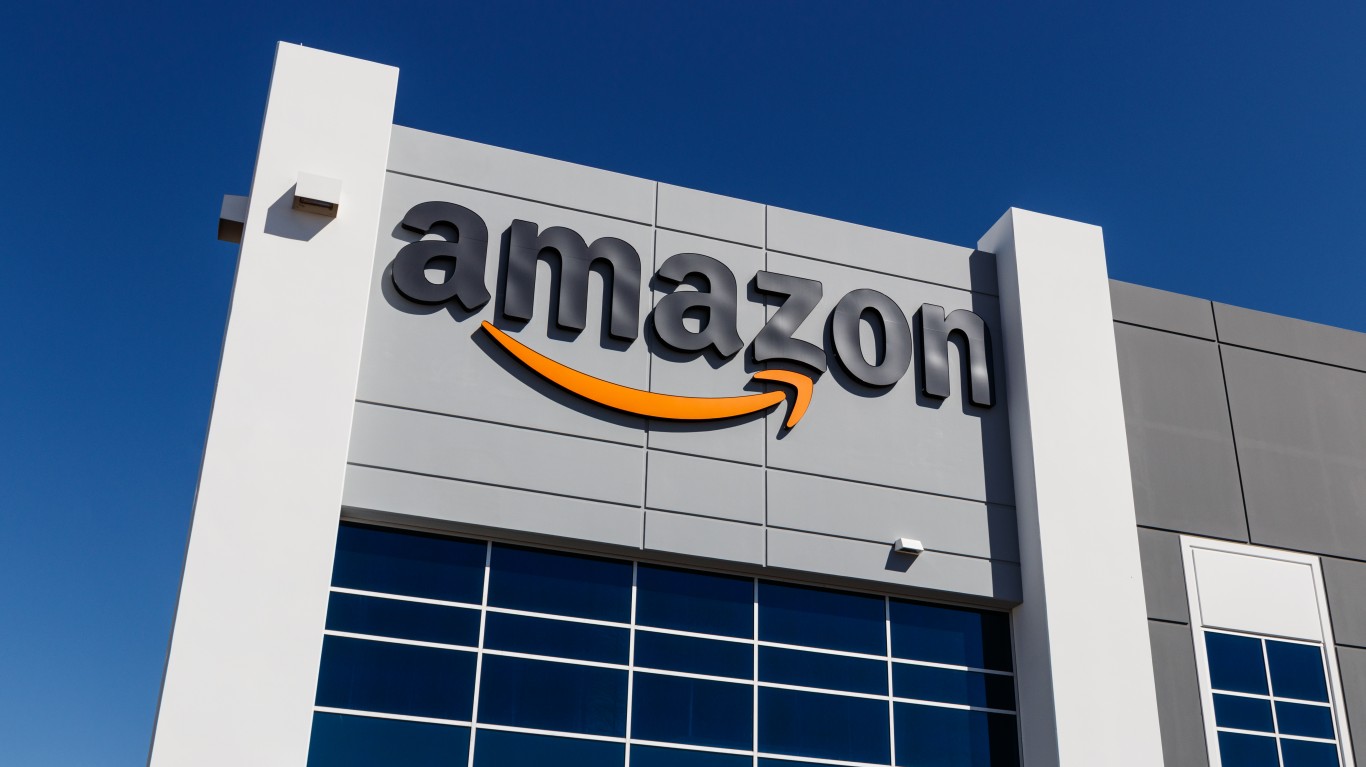
For much of the past decade, Wall Street rewarded companies that funneled excess cash into stock buybacks. That playbook is changing. The world’s largest technology companies are now directing hundreds of billions of dollars toward artificial intelligence infrastructure instead of repurchasing shares.
At first glance, that has disappointed investors looking for immediate capital returns. Yet the shift reflects something far more important: management teams believe the return on AI investment exceeds the return on buying back their own stock. Amazon (NASDAQ:AMZN | AMZN Price Prediction) may be one of the clearest examples of why patient investors should pay attention.
Amazon Is Buying Chips Instead of Its Own Stock
A recent BofA Global Research report comparing hyperscalers and semiconductor companies on a 12-month forward free cash flow basis illustrates the market’s current divide. Hyperscalers have seen free cash flow pressured as capital expenditures surge, while semiconductor companies are enjoying expanding cash generation as demand for AI chips continues climbing.
The relationship is straightforward. The largest technology companies have largely stopped buying their own shares because they’re buying AI hardware instead.
Amazon hasn’t repurchased any of its stock since the second quarter of 2022. Instead, the company has poured capital into expanding Amazon Web Services (AWS), building AI data centers, developing its Trainium and Inferentia AI chips, and expanding the infrastructure needed to support generative AI.
That spending isn’t unique to Amazon. Alphabet (NASDAQ:GOOG), Microsoft (NASDAQ:MSFT), and Meta Platforms (NASDAQ:META) are all committing record sums to AI infrastructure. The immediate winners have been semiconductor companies supplying the chips powering that buildout.
Ironically, that’s exactly why chipmakers have outperformed.
The Investment Payoff Is Still Ahead
Some investors have started asking why they should own Amazon if management isn’t even buying back its own stock. But investors should flip that argument around.
Management isn’t avoiding buybacks because it lacks confidence. It’s skipping buybacks because executives believe investing billions into AI infrastructure today will generate higher returns tomorrow.
Those investments won’t remain expenses forever. They become revenue-producing assets through AWS cloud services, AI model hosting, custom silicon sales, enterprise software, advertising improvements, and retail automation.
Amazon also has multiple growth engines working simultaneously:
| Growth Driver | Opportunity |
| AWS | Enterprise cloud and AI workloads continue expanding |
| Custom AI Chips | Trainium and Inferentia reduce customer costs while competing with third-party accelerators |
| Retail | AI improves fulfillment efficiency and customer recommendations |
| Advertising | Higher-margin business continues growing across Amazon’s ecosystem |
| Space | Project Kuiper adds another long-term platform opportunity |
As those investments mature, free cash flow should begin catching up with today’s elevated capital spending.
The Valuation Looks Hard to Ignore
This is where the numbers get compelling. Amazon currently trades around 29 times earnings, one of its lowest valuation multiples historically, as shares often trade for 50x or more. Despite rebounding roughly 23% from its trough earlier this year, the valuation remains historically depressed.
Even after the recovery, Amazon shares still trade roughly 14% below their 52-week high. Meanwhile, Wall Street analysts project 22% average annual earnings growth over the next five years.
Granted, heavy capital spending always carries execution risk. If AI demand cools or enterprise customers slow adoption, those returns could take longer to materialize. But Amazon has repeatedly demonstrated its ability to turn large infrastructure investments into highly profitable businesses, from AWS to its logistics network.
Key Takeaway
In short, Amazon’s lack of buybacks shouldn’t be mistaken for a lack of confidence. It’s a deliberate capital allocation decision. The company believes every dollar invested in AI infrastructure today can earn more than a dollar spent shrinking the share count.
Semiconductor companies are benefiting first because they’re selling the picks and shovels. Amazon’s payoff should arrive later as those AI investments begin generating higher revenue, expanding margins, and stronger free cash flow.
For investors with a medium- to long-term time horizon, that creates an attractive setup. A company expected to grow earnings roughly 22% annually, trading near some of its lowest valuations ever, while building multiple new AI-driven businesses, doesn’t come along often. Ultimately, today’s muted valuation could prove to be one of the better entry points Amazon has offered in years.
Contact [email protected] for any questions or corrections.
After two decades of patrolling the dark corners of suburbia as a police officer, Rich Duprey hung up his badge and gun to begin writing full time about stocks and investing. For the past 20 years, he’s been cruising the markets looking for companies to lock up as long-term holdings in a portfolio while writing extensively on the broad sectors of consumer goods, technology, and industrials. Because his experience isn’t from the typical financial analyst track, Rich is able to break down complex topics into understandable and useful action points for the average investor. His writings have appeared on The Motley Fool, InvestorPlace, Yahoo! Finance, Money Morning, and, of course, 24/7 Wall St. He has been featured in both U.S. and international publications, including MarketWatch, Financial Times, Forbes, Fast Company, and USA Today.