Jim Cramer: SK Hynix Is the Last Big IPO of 2026 Unless a Hyperscaler Shocks Us
Jim Cramer says the SK Hynix mega-listing clears the biggest threat hanging over AI stocks in 2026, but one scenario could blow that thesis apart before summer ends.


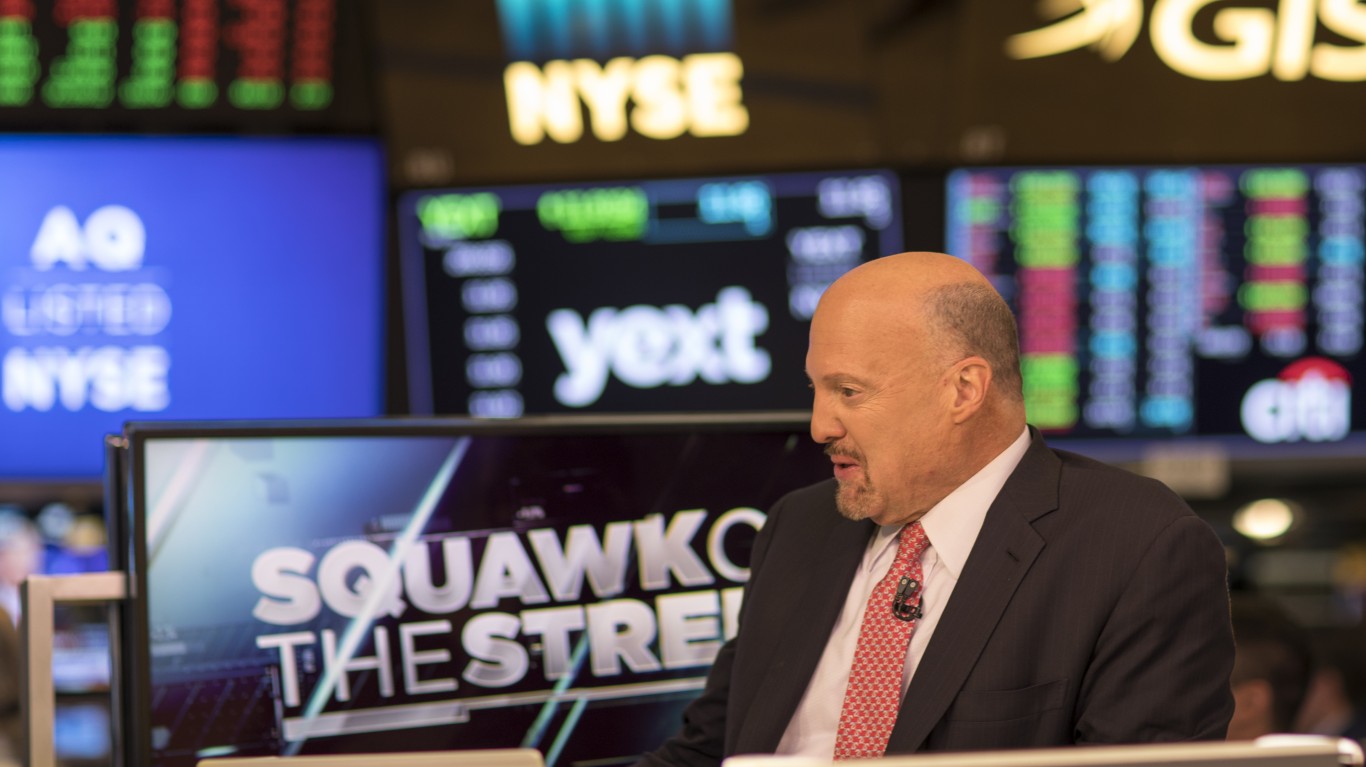
CNBC’s Jim Cramer landed on a market-structure call that speaks to concerns about tech valuations facing fresh equity issuance. In a July 10 post on X, Cramer stated, “We get this SK Hynix out of the way successfully (underwriters gamed it better) then we have nothing left in terms of big supply unless a hyperscaler shocks us with a secondary.”
The context: SK Hynix just closed the largest foreign U.S. listing ever, raising $26.5 billion by selling 177.9 million ADRs priced at $149 each, more than 7 times oversubscribed. Shares of SK Hynix opened at $170, 14% above the offer price, topping SpaceX‘s (NASDAQ:SPCX | SPCX Price Prediction) debut.
Cramer’s read is that once this deal is absorbed by institutional buyers, no other scheduled offering in the 2026 calendar is large enough to soak up meaningful capital. Whether that holds depends on whether a mega-cap AI spender taps the equity market.
The SK Hynix Debut and the SKHYV Wrinkle
SK Hynix is the world’s second-largest memory chipmaker and dominant supplier of high-bandwidth memory that sits next to NVIDIA (NASDAQ:NVDA) GPUs in AI servers. Institutional appetite for AI memory exposure was intense enough to make this offering more than 7 times oversubscribed, a rare signal for a deal this size.
One quirk for retail investors: the stock trades under a temporary when-issued symbol, SKHYV, that converts to the permanent SKHY around July 13, with settlement July 14. That’s why some brokerage accounts might not yet display SKHY stock as tradable.
Supply Overhang in Plain English
A supply overhang occurs when new share issuance pulls investor cash into fresh paper, siphoning demand from existing stocks. Clearing a $26.5 billion deal like SK Hynix removes one large drain on liquidity, which is Cramer’s point.
For investors, supply pressure is only one variable. Interest rates, earnings revisions, and macro shocks can still move tech stocks regardless of the IPO calendar.
The Hyperscaler Wild Card
Cramer’s exception is a hyperscaler surprise. The five AI infrastructure spenders dominating the conversation are Amazon (NASDAQ:AMZN), Microsoft (NASDAQ:MSFT), Meta Platforms (NASDAQ:META), Alphabet (NASDAQ:GOOGL), and Oracle (NYSE:ORCL). None has announced a secondary offering.
The capital demands are real, though. Amazon guided full-year 2026 CapEx toward $200 billion, Alphabet set 2026 CapEx at $175 billion to $185 billion, and Meta Platforms raised its 2026 CapEx target to $125 billion to $145 billion. Oracle disclosed $638 billion in remaining performance obligations and plans to raise around $40 billion in FY2027 through debt or equity.
Still, the valuation math works. Microsoft carries a $2.85 trillion market cap and a 39% profit margin, while Alphabet’s operating margin sits at 36%. Any of these balance sheets could absorb an opportunistic raise without material shareholder dilution.
The Bull and Bear Cases
The bull case is straightforward. If Cramer is right that no meaningful supply remains after SK Hynix, and if AI CapEx from Amazon, Microsoft, Meta, Alphabet, and Oracle keeps translating into cloud revenue, mega-cap tech can keep bidding on incoming flows. Alphabet’s Q1 2026 revenue growth of 22% and Google Cloud’s 63% year over year (YoY) growth illustrate the demand backdrop.
The bear case is that supply is one input among many. Alphabet stock is up 14% year to date (YTD), yet Microsoft stock is down 21% YTD and Oracle stock is off 27.5% YTD. Rates, guidance revisions, or inflation could still pressure these names heading into second-quarter earnings.
The Practical Takeaway
The SK Hynix debut signals strong AI memory demand and strength in the broader semiconductor complex. Strong institutional participation at $149 per ADR suggests deep-pocketed buyers still want exposure to the memory bottleneck powering AI training clusters (a dynamic that our team unpacks further in the Next NVIDIA Playbook).
For portfolio construction, supply is one variable among several. Investors can watch for whether Amazon, Microsoft, Meta, Alphabet, or Oracle signals capital needs beyond current cash flow, and should consider keeping their position sizes modest across single-name AI exposure given volatility in Oracle and Microsoft stock.
Cramer’s framing offers useful shorthand: with SK Hynix absorbed, calendar risk to AI-adjacent stocks shifts back to fundamentals and rates. That’s a cleaner backdrop, though it doesn’t guarantee higher prices from here.
Contact [email protected] for any questions or corrections.
David Moadel is financial writer specializing in stocks, ETFs, options, precious metals, and Bitcoin. David has written well over 1,000 articles for leading online publications, helping investors understand markets, income strategies, and risk.
His work has appeared in The Motley Fool, InvestorPlace, U.S. News & World Report, TipRanks, ValueWalk, Benzinga, Market Realist, TalkMarkets, Finmasters, 24/7 Wall St., and others.
With a master’s degree in education, David has taught at the elementary, high school, and college levels. That teaching background shapes his writing style: clear, educational, and practical. David has also built a loyal social-media audience by providing trustworthy financial content on YouTube, X/Twitter, and StockTwits.