After Iran Says Strait of Hormuz Is Closed Again, Oil’s Risk to Economy Rises Once More
Iran shut the Strait of Hormuz, triggering what the IEA calls the largest oil supply disruption in history. Here is what the closure means for inflation, corporate profits, and investors watching the market.

This post may contain links from our sponsors and affiliates, and Flywheel Publishing may receive compensation for actions taken through them.
For much of 2026, investors kept their attention on artificial intelligence, earnings growth, and record stock prices. Energy markets stayed relatively calm despite persistent geopolitical tensions. That calm has now shattered.
President Trump declared the ceasefire with Iran over as the U.S. resumed strikes against targets inside Iran after Tehran began targeting vessels transiting the Strait of Hormuz. Iran announced the Strait of Hormuz closed “until further notice.” The conflict has since grown into a broader military confrontation, and the world’s most important oil chokepoint has become the defining variable in global energy markets.
Why the Strait of Hormuz Matters So Much
According to the U.S. Energy Information Administration (EIA), roughly 20 million barrels of crude oil and petroleum products passed through the Strait of Hormuz each day before the conflict began. The Congressional Research Service, citing 2025 data, puts the strait’s share of world maritime crude and petroleum trade at about 25%, with roughly 19% of global liquefied natural gas (LNG) also flowing through the passage. There are few alternative shipping routes capable of absorbing that volume, which is why even a partial disruption sends shockwaves across the global economy.
| Metric | Figure |
| Oil flowing through Strait of Hormuz (pre-conflict) | ~20 million barrels/day |
| Share of world maritime crude and petroleum trade | ~25% |
| Share of global LNG trade | ~19% |
Sources: U.S. Energy Information Administration; Congressional Research Service (2026)
The disruption has already proven historic in scale. The International Energy Agency (IEA) formally classified the crisis as the largest oil supply disruption in the history of the global oil market, surpassing even the 1973 OPEC embargo that originally prompted the IEA’s creation. Global oil supply plummeted by 10.1 million barrels per day in March alone, as attacks on Middle Eastern energy infrastructure and near-total tanker restrictions through the strait forced Gulf producers to slash output by at least 10 million barrels per day. By early September 2026, oil product shipments through Hormuz had recovered only to around 1 million barrels per day, a fraction of the roughly 4 million barrels per day that moved through the strait before the war.
Uncertainty about how long the closure will persist has kept crude prices well above the levels seen earlier in 2026. Oil prices had briefly retreated toward the mid-$60 to $70 a barrel range after a temporary ceasefire, but the resumption of hostilities pushed prices sharply higher. As of early September 2026, Brent crude had climbed back toward $97 a barrel, while West Texas Intermediate (WTI), the U.S. benchmark, rose to roughly $92. At the peak of the crisis in March, Brent surged above $114 a barrel before retreating on reports of potential U.S. military intervention to reopen the strait.
Higher Oil Prices Reach Far Beyond the Gas Pump
Oil rarely stays confined to the energy sector. It works its way into transportation costs, manufacturing, agriculture, airline operations, and consumer prices across the economy. The consequences of the Hormuz disruption are already showing up in official data rather than just in analyst forecasts.
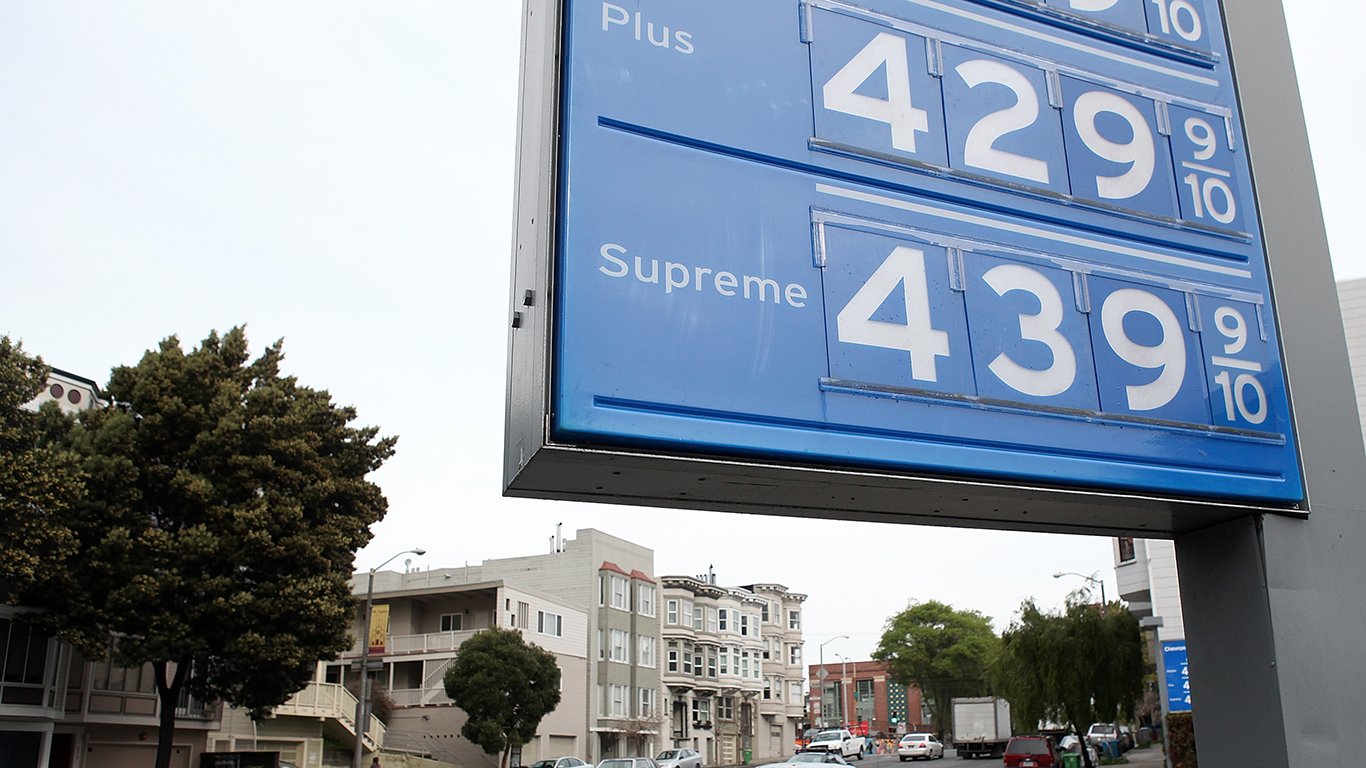
The U.S. Bureau of Labor Statistics reported that energy prices rose 15.7% year-over-year through June 2026, with gasoline prices surging 26.7% over the same period. Energy was also the largest contributor to the August CPI reading, rising 2.1% in a single month. That inflation is unfolding against a backdrop in which many economists had expected price pressures to keep easing through the second half of 2026. Instead, the all-items CPI stood at 3.4% year-over-year in August, with energy acting as a persistent upside driver.
Brent crude has already crossed the $100 per barrel threshold that was treated as a worst-case scenario earlier in the year. If prices push toward the $130 to $170 range that some analysts have projected for a prolonged closure, businesses would face severe input cost pressures while consumers absorb higher costs for gasoline, diesel, jet fuel, and utilities. That combination risks converting what began as a geopolitical shock into a broader economic slowdown.
Oil-producing companies have been clear beneficiaries so far. Integrated producers such as Exxon Mobil (NYSE:XOM | XOM Price Prediction) and Chevron (NYSE:CVX) generate stronger cash flow when crude prices rise, and oil service companies have seen drilling activity increase as elevated prices have persisted. U.S. crude exports have also responded, soaring more than 60% from pre-war levels to a record high of nearly 6.5 million barrels per day, according to the EIA. The flip side is real pain for airlines, cruise operators, trucking companies, and industrial manufacturers whose profit margins narrow as fuel expenses climb.
Policymakers have tried to cushion the blow. On March 11, 2026, IEA member countries agreed to release 400 million barrels of oil from emergency reserves, the largest coordinated stock release in the agency’s 52-year history. Still, reserve drawdowns can provide only a temporary buffer. The IEA itself noted that “resuming flows through the Strait of Hormuz remains the single most important variable in easing the pressure on energy supplies, prices and the global economy.”
Key Takeaway
This is no longer simply a geopolitical headline. The Strait of Hormuz is the world’s most critical energy artery, and the ongoing U.S.-Iran conflict has already produced the largest oil supply disruption on record. Inflation has reaccelerated, crude has broken above $100 a barrel, and the IEA has deployed its largest-ever emergency reserve release to slow the damage. The question facing investors is no longer whether the Strait of Hormuz disruption will have economic consequences; it is how severe and how long-lasting those consequences will prove to be.
Delegates at the Asia Pacific Petroleum Conference in September 2026 reached a sobering consensus: the standoff is likely to persist through the end of President Trump’s current term, meaning markets may need to treat the current supply disruption as a structural baseline rather than a temporary premium. For investors, tracking crude oil benchmarks is now every bit as important as watching quarterly earnings reports, and possibly more so.
Editor’s note: This article was updated to reflect current oil price levels (Brent near $97, WTI near $92 as of early September 2026, up sharply from the $76 and $71 figures cited at publication), the IEA’s classification of the Hormuz closure as the largest oil supply disruption in history (10.1 million barrels per day lost in March), the agency’s record 400-million-barrel emergency reserve release, Bureau of Labor Statistics data showing energy prices up 15.7% year-over-year through June 2026, and the Congressional Research Service’s updated figure that 25% of world maritime crude and petroleum trade transited the strait in 2025.
Contact [email protected] for any questions or corrections.
After two decades of patrolling the dark corners of suburbia as a police officer, Rich Duprey hung up his badge and gun to begin writing full time about stocks and investing. For the past 20 years, he’s been cruising the markets looking for companies to lock up as long-term holdings in a portfolio while writing extensively on the broad sectors of consumer goods, technology, and industrials. Because his experience isn’t from the typical financial analyst track, Rich is able to break down complex topics into understandable and useful action points for the average investor. His writings have appeared on The Motley Fool, InvestorPlace, Yahoo! Finance, Money Morning, and, of course, 24/7 Wall St. He has been featured in both U.S. and international publications, including MarketWatch, Financial Times, Forbes, Fast Company, and USA Today.