Just a Handful of AI Stocks Are Carrying Everything. History Says It Doesn’t Have to End Badly
Nearly half of Nasdaq 100 stocks are already in correction territory while the index hovers near record highs, and that contradiction is forcing investors to confront an uncomfortable question about who actually gets hurt when the AI trade finally stumbles.

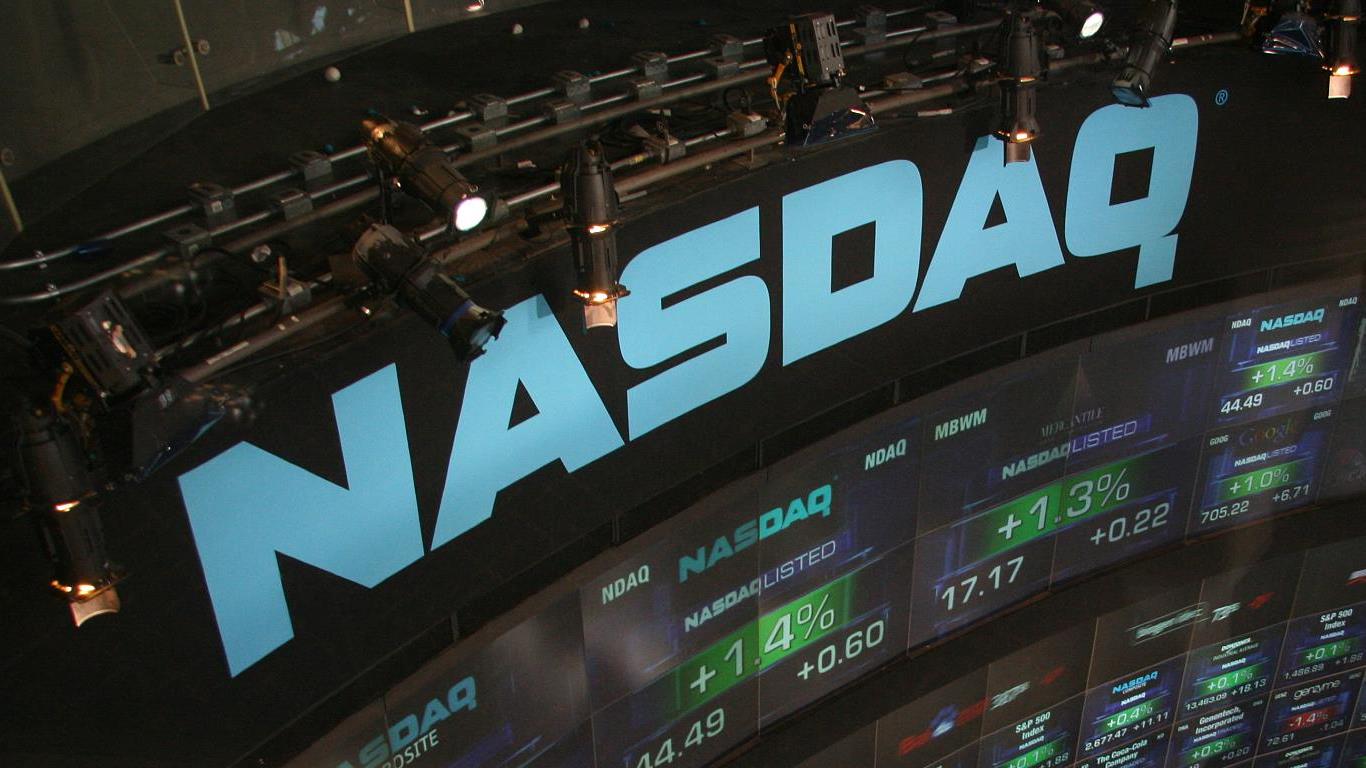
For much of the past three years, artificial intelligence has been the market’s defining investment theme. Companies building AI chips, cloud infrastructure, memory, and software have driven earnings growth while many other stocks have struggled to keep pace. That leadership is becoming even more concentrated.
Fresh market data suggests fewer companies are responsible for pushing the Nasdaq higher, raising understandable concerns about how durable this bull market really is. Yet market history also shows that narrow leadership doesn’t automatically signal the end of a rally. Sometimes it’s simply the price investors pay for owning the market’s fastest-growing businesses.
Market Breadth Is Sending Mixed Signals
According to data from SentimentTrader, 48% of Nasdaq 100 stocks now trade at least 20% below their previous highs. That figure has doubled over the past 12 months and marks the highest reading since the February-March selloff.
On the surface, that’s a warning sign. Nearly half of the index is already in correction territory despite the Nasdaq hovering near record levels.
At the same time, another statistic tells a very different story — 64% of Nasdaq 100 companies remain above their 200-day moving average, one of the strongest readings of the year. Before the market bottomed on March 30, only 38% traded above that long-term trend line.
Those figures don’t describe a market that’s broadly collapsing. Instead, they point to one where leadership is narrowing while the overall trend remains positive.
AI Leaders Continue To Carry The Load
The market’s biggest winners continue to produce the strongest fundamental results. Nvidia (NASDAQ:NVDA | NVDA Price Prediction), Microsoft (NASDAQ:MSFT), Meta Platforms (NASDAQ:META), Amazon (NASDAQ:AMZN), and Broadcom (NASDAQ:AVGO) are still investing tens of billions of dollars — some, hundreds of billions — into AI infrastructure while reporting revenue and earnings growth that most companies can only envy.
Those investments also reinforce one another. Massive cloud spending fuels demand for Nvidia’s AI accelerators, which increases orders for advanced memory from suppliers like Micron Technology (NASDAQ:MU) and SK hynix. The AI ecosystem continues feeding itself.
That helps explain why investors keep returning to the same handful of companies even as many smaller technology stocks lag.
Granted, concentration always raises risk. When fewer companies account for a larger share of index gains, disappointing earnings, slower AI spending, or delayed returns on AI investments could trigger a sharper correction. Narrow rallies have often become vulnerable once investor sentiment changes.
History supports that caution. Market breadth frequently weakens before broader corrections emerge.
Narrow Doesn’t Necessarily Mean Finished
Ironically, today’s conditions still look healthier than true bear markets. During the 2022 decline, roughly 80% of Nasdaq 100 stocks traded at least 20% below their highs. Today’s 48% reading is elevated but nowhere near those levels.
Perhaps more importantly, corporate fundamentals remain much stronger than they were three years ago. AI capital spending continues expanding, enterprise adoption is accelerating, and earnings estimates for many technology leaders continue moving higher rather than lower.
Markets can remain narrow for surprisingly long periods. Much of the rally since 2023 has followed this exact pattern without preventing the Nasdaq from reaching new highs.
Key Takeaway
In short, weakening market breadth deserves attention, but it doesn’t yet outweigh the forces supporting this bull market. The biggest AI companies continue generating the strongest earnings growth, and 64% of Nasdaq 100 stocks remain above their 200-day moving averages, indicating the broader trend is still intact.
Ultimately, the greater risk isn’t that narrow leadership automatically ends the rally. It’s that investors become too dependent on a handful of companies delivering near-perfect execution. As long as AI spending, data center construction, and corporate earnings continue growing, this bull market may have more room to run — even if fewer stocks are doing most of the work. Smart investors should monitor breadth closely, but today’s data suggests caution, not panic.
Contact [email protected] for any questions or corrections.
After two decades of patrolling the dark corners of suburbia as a police officer, Rich Duprey hung up his badge and gun to begin writing full time about stocks and investing. For the past 20 years he’s been cruising the markets looking for companies to lock up as long-term holdings in a portfolio while writing extensively on the broad sectors of consumer goods, technology, and industrials. Because his experience isn’t from the typical financial analyst track, Rich is able to break down complex topics into understandable and useful action points for the average investor. His writings have appeared on The Motley Fool, InvestorPlace, Yahoo! Finance, and Money Morning. He has been featured in both U.S. and international publications, including MarketWatch, Financial Times, Forbes, Fast Company, and USA Today.