Jim Cramer: South Korea Is Mispricing SK Hynix. Here’s Why He’s Still Bullish on AI Memory
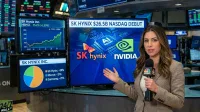
SK Hynix crashed into bear-market territory in Seoul just days after a blockbuster U.S. debut, and Jim Cramer thinks Korean investors are missing something fundamental about where AI memory demand is actually headed.

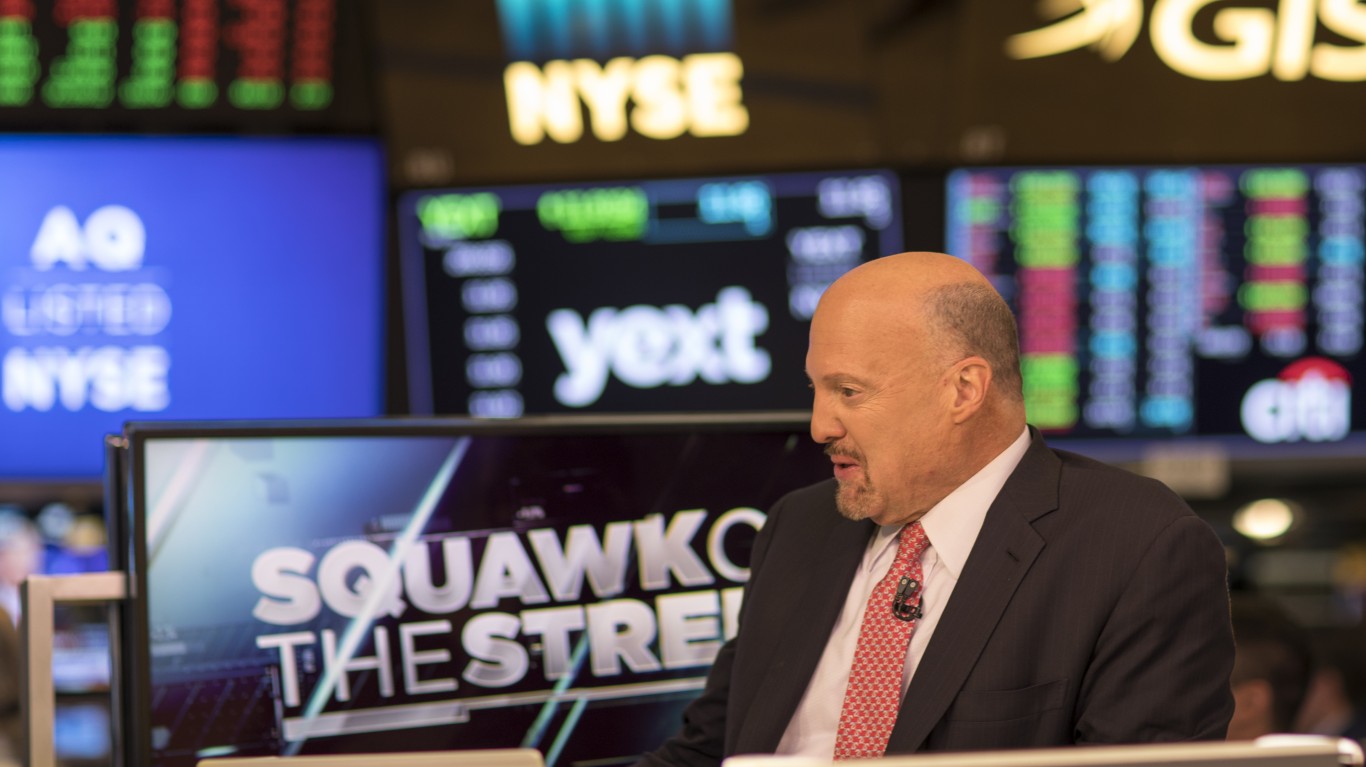
Jim Cramer used Monday’s Squawk on the Street to explain why SK Hynix’s sharp overnight decline in South Korea may not signal a change in the company’s underlying outlook.
The Korean chipmaker, which is the world’s largest supplier of high-bandwidth memory to NVIDIA, delivered a strong U.S. market debut on Friday before falling into bear-market territory in Seoul. Cramer argued that the selloff reflects short-term trading psychology rather than weakening demand for HBM.
South Korea’s Market Is “Divorced” From the Fundamentals
Speaking with David Faber, Cramer questioned how Korean investors price SK Hynix. “I would say that their market seems to lack a true pricing discovery in that it seems… I’m not saying it’s fixed. I do think that there is a mob that buys it, a mob that sells it,” Cramer said. He went further: “I just say, you know what? I have come to believe that that market is divorced from anything I’ve seen. It doesn’t seem to be related to anything.”
Cramer pointed to the shift toward multi-year contracts as evidence the memory cycle may have structurally changed. “I continue to think it is secular because you’re getting longer-term agreements. That’s what Micron’s got. That’s exactly what Sanjay Mehrotra, CEO of Micron, said on my show,” he said.
Micron Is the Clearest U.S. Winner From the HBM Boom
In Micron Technology’s (NASDAQ:MU | MU Price Prediction) fiscal Q3 2026 report filed June 24, 2026, Micron posted revenue of $41.46 billion, up 345.7% year over year, and non-GAAP EPS of $25.11. Non-GAAP gross margin reached 84.9%, and management guided Q4 revenue to $50.0 billion plus or minus $1.0 billion.
Mehrotra tied the results directly to the contract structure Cramer referenced: “We believe our multi-year Strategic Customer Agreements will significantly enhance the durability and predictability of Micron’s strong financial performance.”

NVIDIA Creates the Demand, While Broadcom Expands the Opportunity
NVIDIA (NASDAQ:NVDA) sits on the other side of every HBM stack SK Hynix ships. In Q1 FY2027, NVIDIA reported revenue of $81.62 billion, up 85.2% year over year, with Data Center revenue of $75.25 billion, up 92%. Total supply-related commitments hit $119.0 billion, the clearest signal that hyperscaler orders extend well into 2027. CEO Jensen Huang framed it as “the largest infrastructure expansion in human history.”
Broadcom (NASDAQ:AVGO) rounds out the AI silicon complex. Its most recent quarter delivered AI semiconductor revenue of $10.8 billion, up 143% year over year, with CEO Hock Tan guiding Q3 AI revenue to $16.0 billion. Shares are up 46.3% over the past year.
Our Free Report: 7 Stocks Powering the AI Boom showcases some of the picks-and-shovels companies besides chip companies supplying the AI gold rush.
SK Hynix’s U.S. Listing Gives Investors Another Way to Invest in AI
SK Hynix’s $26.5 billion U.S. listing gives American investors direct access to one of the world’s largest suppliers of high-bandwidth memory. While NAND prices declined slightly over the past week, demand for DRAM, including HBM used in AI chips, remains strong.
The key point is that SK Hynix’s overnight moves in South Korea may reflect short-term market sentiment more than changes in AI demand. Micron’s long-term contracts, NVIDIA’s supply commitments, and Broadcom’s growing AI business offer a clearer view of the underlying market. Micron’s fiscal fourth-quarter report in September will provide the next major update.
Contact [email protected] for any questions or corrections.
Thomas Richmond is a financial writer and content strategist with 5+ years of experience covering stocks and financial markets. He has published over 500 articles focused on individual stock analysis, helping investors better understand business fundamentals, stock valuations, and long-term opportunities.
Thomas previously served as a Content Lead at TIKR, a stock research platform, where he helped scale the company’s blog to hundreds of articles per month and contributed to a weekly newsletter reaching more than 100,000 investors.
Outside of work, Thomas enjoys weight lifting and soccer.