Keurig Dr Pepper Vs. Coca Cola: Buy Keurig Dr Pepper’s Upside Over Coca-Cola’s Expensive Low-Growth Premium
Both KDP and Coca-Cola just beat Q1 estimates, but one is breaking itself apart while the other defends a fortress, and the valuation gap between them tells a story that income investors may be misreading.

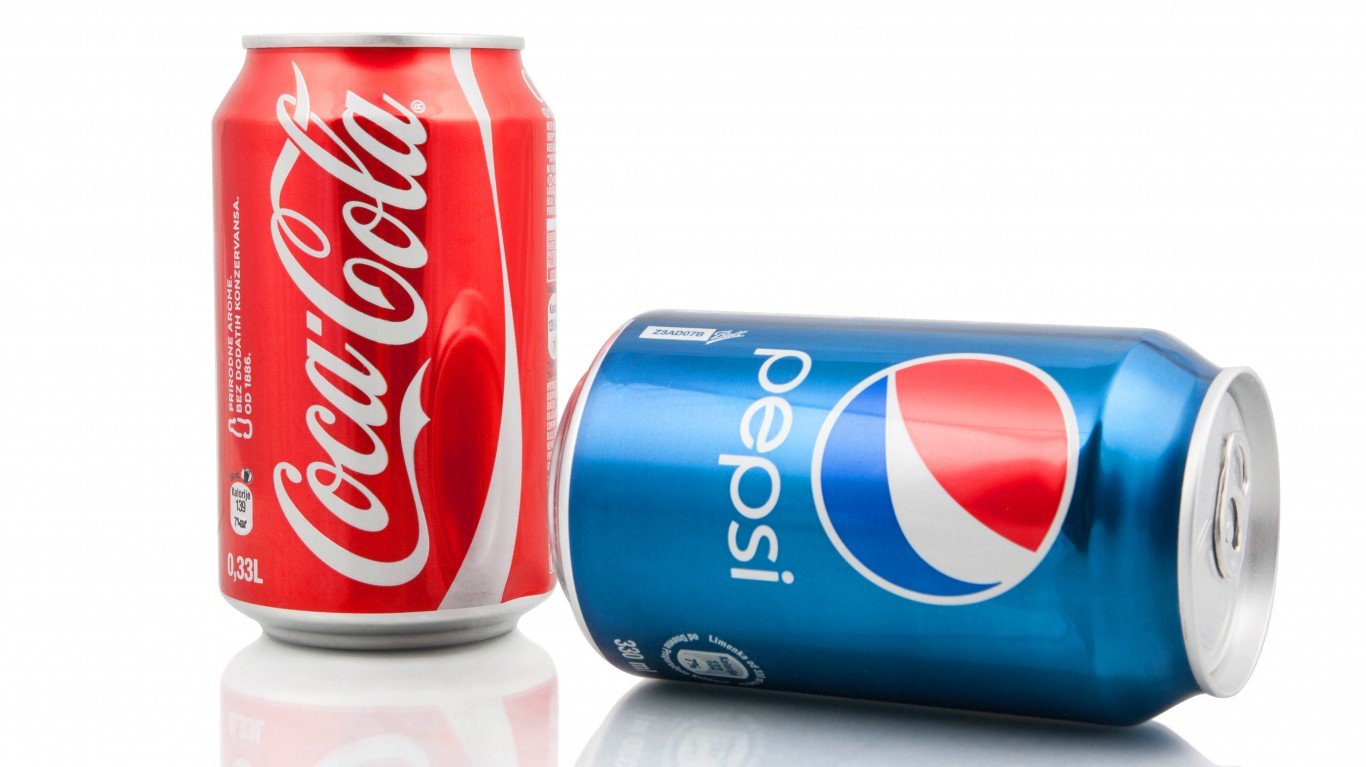
Keurig Dr Pepper (NASDAQ: KDP | KDP Price Prediction) and Coca-Cola (NYSE: KO) both delivered Q1 2026 beats, but the businesses are moving in opposite directions. KDP just absorbed JDE Peet’s on April 1, 2026 and is preparing to split in two. Coke is defending a fortress.
Cold Beverages Carry KDP. Zero Sugar Carries Coke.
Keurig Dr Pepper posted $3.98 billion in revenue, up 9.4% YoY, with adjusted EPS of $0.39. U.S. Refreshment Beverages grew 11.9% on Dr Pepper, GHOST energy, and sports hydration share gains. U.S. Coffee volume fell 8.2%, which is why management wants to isolate it in a separate coffee company.
Coca-Cola pulled $12.47 billion in revenue, +12.1% YoY, and EPS of $0.86, its fourth straight beat. Coca-Cola Zero Sugar grew volume 13% across every geography, and comparable operating margin expanded 70 bps to 34.5%. Global unit case volume rose only 3%, and Q1 benefited from six extra calendar days.
| Business Driver | KDP | KO |
| Main growth engine | Cold beverages, GHOST energy | Zero Sugar, premium packaging |
| Weakest link | U.S. Coffee volume (-8.2%) | Asia Pacific OI (-17%) |
| Forward P/E | 14 | 26 |
Transformation Story Versus Fortress Story
KDP is the more interesting business right now. CEO Tim Cofer called the quarter a milestone toward “standing up two pure-play companies”, backed by roughly $400M in projected cost savings. Principal debt sits at $25.9B, with interest expense nearly doubling to $281M. Any integration stumble bites hard.
Coke is executing what it already knows. Fairlife is accelerating, innocent and Santa Clara just joined the billion-dollar club, and 2025 marked the 63rd consecutive year of dividend increases. Trefis flagged a concern: management is shifting from aggressive pricing to a “balanced” approach, hinting that pricing power has a ceiling. The CFO also warned that consumers earning under $50K-$60K are strained.
What Decides the Next Six Months
For KDP, watch GHOST-driven energy share (currently 8%, targeting 10%+) and whether the coffee spin timeline stays clean. Barclays flagged a potential 40% undervaluation post-financing. For Coke, the swing factor is volume in China and India holding up while the ~4% M&A headwind from the Africa divestiture flows through.
Why KDP Screens Better Than Coke Right Now
Paying 14 times forward earnings for a business shedding its weakest segment and guiding to low-double-digit constant currency EPS growth looks like better math than paying 26 times for Coke’s 8-9% guided EPS growth. KDP is up 21.76% YTD, roughly matching KO’s 21.97%, so the discount has not closed yet. For investors seeking structural alpha at a cheaper multiple, KDP screens more favorably on valuation, provided the debt load behaves.
Contact [email protected] for any questions or corrections.
Alex Sirois is a financial writer with experience spanning both retail and institutional investing. He has written for InvestorPlace and held roles at BNY Mellon and Bernstein, giving him a perspective that bridges Main Street portfolios and Wall Street analysis.
Alex holds an MBA from George Washington University and has built his career across multiple industries, including e-commerce, education, and translation — a breadth of experience that informs how he breaks down complex financial topics for everyday investors. His writing is conversational, actionable, and grounded in long-term, buy-and-hold investing principles.
At 247 Wall St., Alex focuses on delivering analysis that is both accessible and useful, with a clear emphasis on helping readers make more informed decisions with their money.