New Study Reveals Strongest State Economies, Only 1 State Was Better Than Texas
CNBC's 20th annual state business rankings handed the overall crown to Ohio for the first time ever, but in the critical economy sub-category it was a two-state race: North Carolina led the nation and Texas came in second, even as…


CNBC’s America’s Top States for Business 2026, the 20th edition of the annual study by Scott Cohn published July 9, 2026, scored all 50 states across 138 metrics in 10 weighted categories. For the first time in the study’s history, Ohio claimed the overall top spot. North Carolina finished second overall but ranked first in the all-important Economy category. Texas ranked second in Economy and fourth overall, dragged down by a 49th-place Quality of Life score. The article below focuses on the Economy sub-ranking, where the contest was a two-state race.
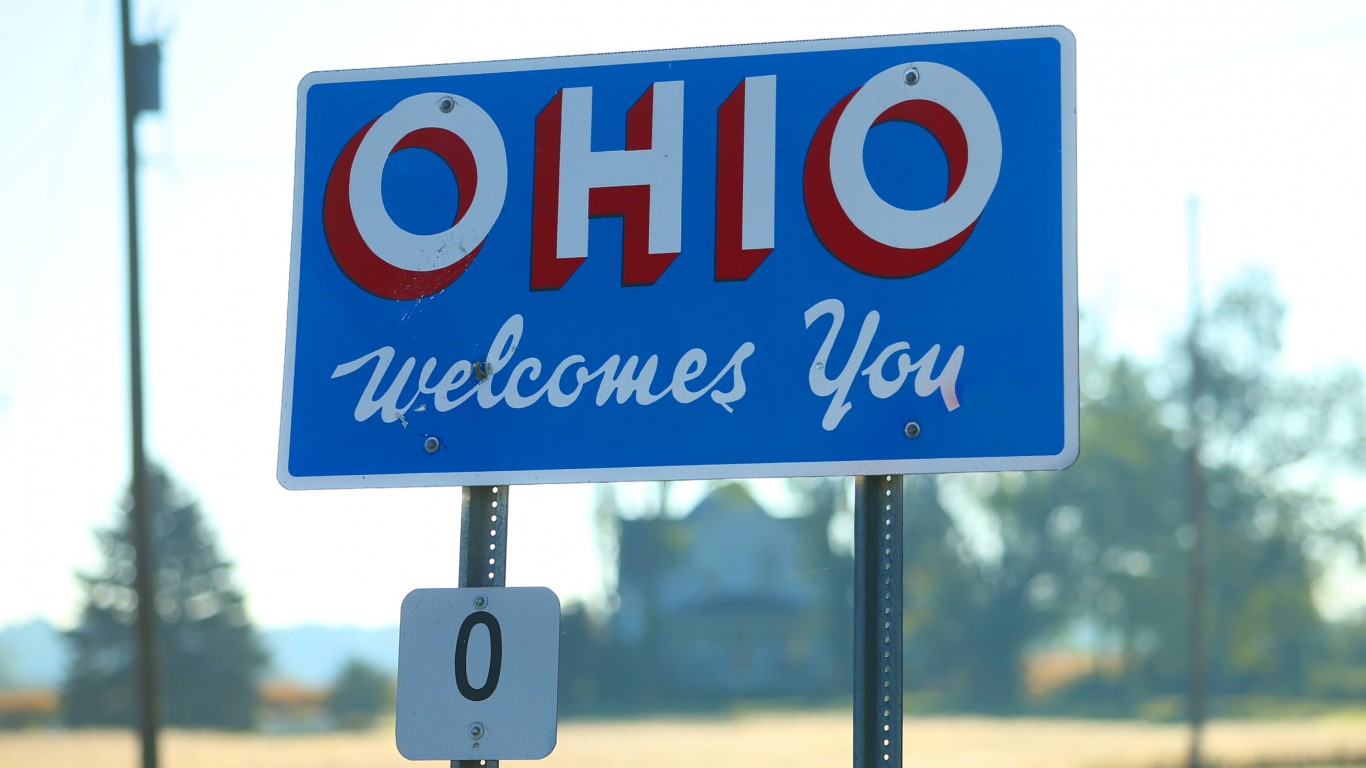
Ohio Takes the Overall Crown
Ohio (NYSE:OH) does not have a listed stock, but the state’s ascent is worth framing before diving into the economy leaders. Ohio climbed from fifth in 2025 to first in 2026, capping five straight years of improvement and a rise of 33 spots since 2010, when the Buckeye State ranked 34th. The win rested on two pillars: the best infrastructure score in the nation and the lowest cost of doing business. More than 143 million people live within a day’s drive of Ohio, a logistics advantage no other state can match. Ohio also holds a Triple-A bond rating from all three major credit agencies, reflecting decades of fiscal discipline.
Infrastructure displaced Economy as the top-weighted category in 2026 for the first time, accounting for nearly 18% of each state’s total score. CNBC also added ease of permitting as a brand-new metric this year, a direct response to corporate frustration with regulatory delays on data center and advanced manufacturing projects.
North Carolina: Best Economy in the Nation
North Carolina ranked first in the Economy category despite its legislature failing to pass a budget for more than a year. The state ran on its prior spending plan until Governor Josh Stein signed the new budget in early July 2026. The economic numbers underneath that political dysfunction are hard to argue with: 2025 GDP of $682.4 billion, up 2.7%, a Moody’s Aaa credit rating, $5.26 billion in foreign direct investment in 2024, and a net gain of 84,100 residents in 2025, the most of any state in the country. The Tar Heel State has now finished first or second in CNBC’s overall rankings for six consecutive years, missing a repeat overall win in 2026 by just nine points out of a possible 2,500.
The corporate anchors are defensive and cash-generative. Bank of America (NYSE:BAC | BAC Price Prediction), Duke Energy, and Labcorp are all headquartered in Charlotte or the Research Triangle. The one visible soft spot: nearly 40% of state spending depends on federal funding, the 12th-highest exposure in the country, a risk that takes on added weight as Washington trims its budget footprint. North Carolina ranked 34th for Quality of Life and 35th for Cost of Living, meaning the strong economy has pushed costs higher for everyday residents even as it draws business investment.
Texas: The Economic Juggernaut With a Housing Problem
CNBC called Texas “an economic juggernaut year after year.” The state posted 2025 GDP of $2.27 trillion, up 2.5%, and pulled in $22.1 billion in foreign direct investment in 2024, the largest haul of any top-10 state and roughly four times North Carolina’s total. Texas leads the nation in workforce quality, ranking first in that category, and second in both Economy and Access to Capital. The headquarters roster keeps growing: Oracle (NYSE:ORCL) in Austin, Tesla (NASDAQ:TSLA) at Gigafactory Texas, and AT&T (NYSE:T) in Dallas. In June 2026, NVIDIA’s Jensen Huang broke ground on an advanced manufacturing facility in Sherman, Texas, adding another marquee name to the state’s growing industrial corridor.
The housing market is a different story. Texas prices posted year-over-year declines for 12 consecutive months through mid-2026, according to the Texas Real Estate Research Center, as inventory climbed well above balanced-market norms and homes sat on the market for an average of 82 days. Austin and Dallas-Fort Worth have seen the sharpest corrections, though TRERC characterizes the overall dynamic as normalization rather than distress. Tariff exposure is a separate risk: international goods trade equals 29.3% of Texas’s nominal GDP, the highest share among top-10 economy states, at roughly $850 billion, still subject to duties that remain contested. Quality of Life ranked 49th out of 50, which is the primary reason Texas finished fourth overall despite the second-ranked economy.
The Actual Top 10 Overall
The full CNBC overall rankings tell a story quite different from the economy sub-ranking. Virginia finished third overall, though federal budget and personnel cuts pushed its Economy score down to 23rd, from 14th the year before. Minnesota rounded out the top five, earning fourth place in Quality of Life thanks to strong healthcare, worker protections, and inclusive state laws, even as its high taxes weighed on business-cost scores. Michigan came in sixth, Georgia seventh, Florida eighth, Tennessee ninth, and Indiana tenth. California, New York, and Washington all fell outside the top 10 in the overall study, even though California holds the nation’s largest GDP. The most improved state award went to Arkansas, which rose 13 spots to 28th overall.
What to Do With It
The macro backdrop is more supportive than a year ago. BofA Global Research’s December 2025 outlook projected US real GDP growth of 2.4% on a fourth-quarter-over-fourth-quarter basis for 2026, above consensus at the time of publication, and a year ago more than half of economists surveyed in the CNBC Fed Survey predicted a recession that never materialized. The shift of Infrastructure to the top-weighted category in 2026 reflects corporate demand for power, water, and shovel-ready sites to run data centers and advanced manufacturing plants.
For businesses weighing a state, Texas remains the strongest pure economic case: a $2.27 trillion GDP, Aaa credit, no state income tax, and the most foreign investment of any state in the study. For real estate owners in Texas, the current buyer’s market and persistent price softness represent a meaningful shift from the prior decade’s pattern. For anyone considering relocation, North Carolina offers the top-ranked economy in the country, an Aaa credit rating, and the largest net in-migration of any state. Ohio’s first-ever overall win signals that infrastructure capacity and business-cost discipline, not just GDP size, are now the decisive variables in where companies choose to put down roots.
Editor’s note: This update corrects the article’s characterization of the overall CNBC 2026 Top States for Business rankings. Ohio ranked first overall, not North Carolina; North Carolina ranked second overall and first only in the Economy sub-category. Virginia ranked third overall. The “Rest of the Top 10” section has been fully replaced to reflect the actual CNBC overall standings, which include Minnesota, Michigan, Georgia, Florida, Tennessee, and Indiana, rather than California, New York, and other states cited in the original. Texas housing market figures have been updated with Texas Real Estate Research Center data through mid-2026, and the BofA GDP growth forecast has been corrected to 2.4%.
Contact [email protected] for any questions or corrections.
I've spent more than 15 years inside enterprise software, working alongside the finance, sales operations, and HR leaders who run the revenue engines at some of the largest tech companies in the country.
My day job is helping enterprise executives make smarter decisions about retention, compensation, and growth. These are the same operational levers that show up in every earnings report investors actually read. That perspective shapes my writing for 24/7 Wall St.
The headline numbers are easy. The interesting stuff is underneath: how companies make money, what executives are worried about, and what any of it means for the person checking their 401(k) on a Sunday afternoon. I write about personal finance and business as someone who has spent her career inside the rooms where these decisions get made.