Why I Can’t Stop Buying Amazon Stock
Every time Wall Street panics over Amazon's massive capital spending tab, one investor hits the buy button again. Here is the contrarian case that the loudest critics are confusing a bill for a bet they cannot afford to miss.

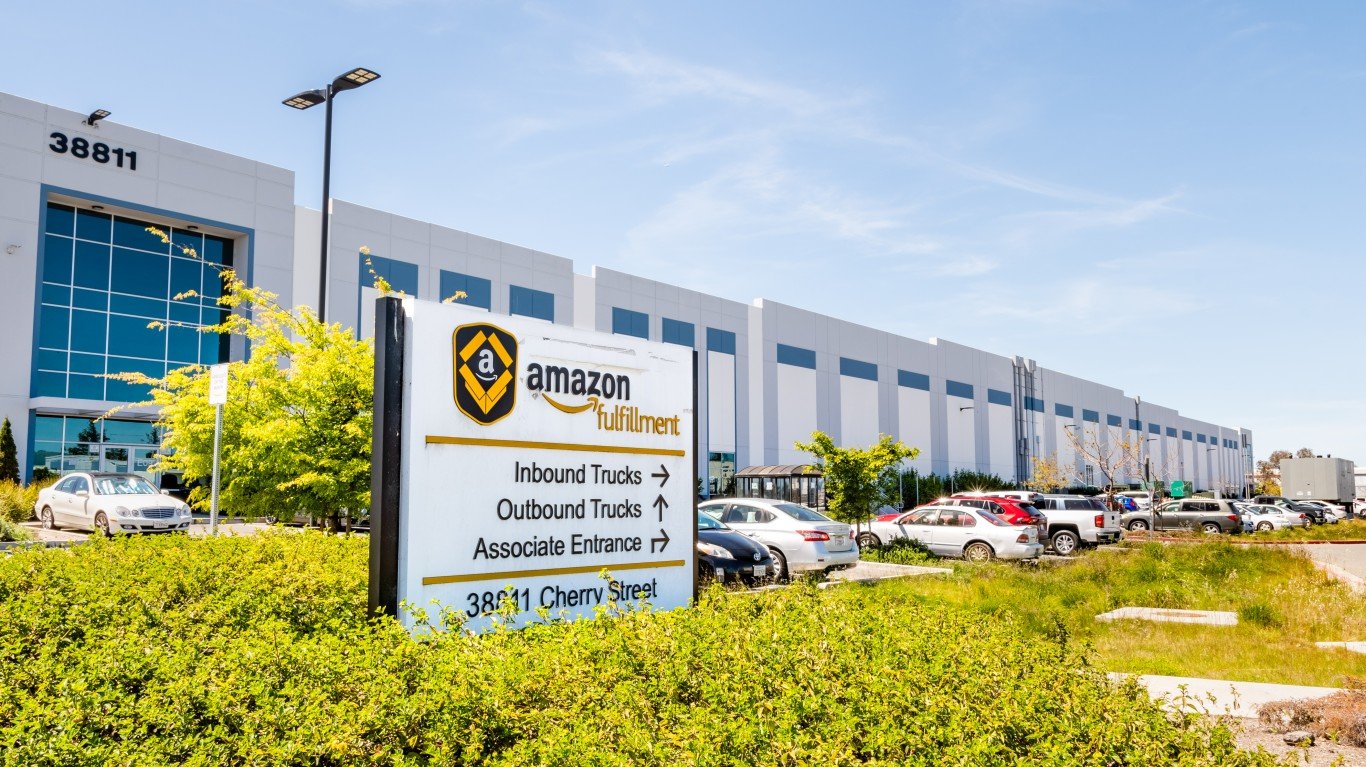
I hit the buy button on Amazon (NASDAQ:AMZN | AMZN Price Prediction) again last week, and I plan to do it again this month. The louder the crowd complains about the $200 billion capex bill, the more convinced I am they are staring at the receipt while ignoring the meal being served.
Amazon is using its retail and logistics cash engine to fund a cloud infrastructure moat that competitors cannot easily replicate, and the enterprise AI commitments already stacked on top of it read like a decade of pre-paid revenue.
The Data Behind the Conviction
AWS revenue reached $37.6 billion in Q1 2026, growing 28% year over year, the fastest pace in 15 quarters, on a base now running at $150 billion annualized. The AWS backlog sits at $364 billion, excluding the recent $100+ billion Anthropic deal. Those are signed contracts in the queue.
Amazon’s chips business (Graviton, Trainium, Nitro) crossed a $20 billion annual revenue run rate in Q1 2026 with triple-digit growth. OpenAI committed to roughly 2 GW of Trainium capacity starting 2027, and Anthropic secured up to 5 GW. CEO Andy Jassy called the unit “one of the top three data center chip businesses in the world”, with Trainium commitments alone over $225 billion.
Advertising crossed $70 billion in TTM revenue, unit growth in Stores hit 15%, and consolidated operating margin reached 13.1%, the highest ever. Return on equity sits at 24.3%, with interest coverage at 35x.
Why Not Microsoft or Alphabet
Microsoft (NASDAQ:MSFT) and Alphabet (NASDAQ:GOOGL) are obvious alternatives. Amazon is out-committing them on infrastructure while demand is already contracted. FactSet consensus pegs 2026 capex at $127.55 billion for Amazon versus $95.99 billion for Microsoft and $92.9 billion for Alphabet. AWS growth at 28% outpaces peer cloud growth. The hyperscaler pouring the most concrete when the customer roster already includes OpenAI, Anthropic, Meta, Uber, U.S. Bank, and the U.S. Army stands out on the infrastructure thesis.
The Real Risk
Trailing twelve-month free cash flow collapsed to $1.2 billion, a roughly 95% drop, and long-term debt climbed to $119.1 billion from $65.6 billion. Jassy addressed it directly: “in times of very high growth like now, where the CapEx growth meaningfully outpaces the revenue growth, the early years’ free cash flow is challenged until these initial tranches of capacity are being monetized.” Data centers carry 30-plus year useful lives, and chips and servers run five to six years. I am comfortable waiting for the monetization curve to meet the spending curve.
What Keeps the Buy Button Active
The stock trades at $247.04, up only 7.03% year to date and 11.01% over the past year. Wall Street’s consensus target sits at $312.91, with 47 buy and 15 strong buy ratings against 4 holds and zero sells. A P/E near 32 for a company compounding operating cash flow at 20%+ with structural pricing power in the fastest-growing tier of enterprise computing is a bargain I keep taking.
For deeper reading on where the AI buildout money lands beyond chipmakers, our team’s 7 Stocks Powering the AI Boom (That Aren’t Chipmakers) report walks through picks I keep on my watchlist alongside this one.
I keep buying Amazon because the capex the market fears today is the exact invoice for the revenue the market has not yet learned to count.
Contact [email protected] for any questions or corrections.
Alex Sirois is a financial writer with experience spanning both retail and institutional investing. He has written for InvestorPlace and held roles at BNY Mellon and Bernstein, giving him a perspective that bridges Main Street portfolios and Wall Street analysis.
Alex holds an MBA from George Washington University and has built his career across multiple industries, including e-commerce, education, and translation — a breadth of experience that informs how he breaks down complex financial topics for everyday investors. His writing is conversational, actionable, and grounded in long-term, buy-and-hold investing principles.
At 247 Wall St., Alex focuses on delivering analysis that is both accessible and useful, with a clear emphasis on helping readers make more informed decisions with their money.