If the AI Boom Is So Strong, Why Are Memory Stocks Crashing?
Tech giants are pouring hundreds of billions into AI infrastructure, yet memory chipmakers are watching their stock prices crater. The reason Wall Street is selling has almost nothing to do with demand, and everything to do with what comes next.


Artificial intelligence remains the biggest force driving the stock market in 2026. The world’s largest technology companies are on pace to spend more than $700 billion this year building AI infrastructure, according to company guidance and earnings releases. New data centers continue breaking ground, Nvidia (NASDAQ:NVDA | NVDA Price Prediction) can’t build enough cutting-edge GPUs to satisfy demand, and cloud providers are racing to expand capacity.
Yet one corner of the AI supply chain is telling a very different story. Memory stocks have stumbled despite AI demand showing few signs of slowing. That disconnect looks puzzling on the surface, but the numbers suggest the market is already looking beyond today’s boom and pricing in tomorrow’s risks.
Memory Stocks Are Falling for Different Reasons
Here’s what recent performance looks like:
| Company | Recent Decline |
| Micron Technology (NASDAQ:MU) | Down about 30% from its late-June all-time high |
| SK hynix (NASDAQ:SKHY) | Trading below its July 10 IPO price |
| Sandisk (NASDAQ:SNDK) | Down 35% after a roughly 600% rally earlier this year |
Those declines aren’t being driven by collapsing AI demand. Quite the opposite. Micron’s latest earnings release showed record revenue, while management said high-bandwidth memory (HBM) remains sold out well into future production. SK hynix has likewise reported strong HBM demand fueled by Nvidia’s latest AI accelerators.
Here is what Wall Street is really worried about. Memory has always been a cyclical business. Unlike software, where each additional sale carries high margins, DRAM and NAND chips behave much more like commodities. Prices rise when supply is tight, then fall once manufacturers expand production.
That’s exactly where investors think this cycle is heading.
The Market Is Pricing Tomorrow, Not Today
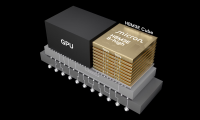
Over the past two years, AI created an unprecedented shortage of HBM, the specialized memory used alongside Nvidia’s GPUs. Tight supply allowed Micron, Samsung, and SK hynix to command premium pricing while expanding margins. That shortage, however, is expected to begin easing.
Each major manufacturer is ramping HBM production through new fabrication capacity and better manufacturing yields. More supply is good news for customers, but it isn’t always good news for shareholders.
A memory company can sell 30% more chips and still earn less money if average selling prices decline 20%. Historically, pricing has mattered more than shipment volume. Ironically, AI demand can remain healthy while memory profits begin shrinking.
AI Spending Is Also Changing
Another reason investors have become cautious is that AI spending itself is evolving.
During the first wave of generative AI, spending centered on GPUs and HBM memory because those were the biggest bottlenecks. Today, hyperscalers are directing more capital toward:
- Power infrastructure
- Data center construction
- Liquid cooling
- Optical networking
- Custom AI chips
Memory remains indispensable, but it represents a smaller share of incremental AI investment than it did two years ago.
Granted, the bullish case hasn’t disappeared. Every new AI server still requires far more HBM than traditional enterprise servers, and larger AI models continue increasing memory requirements. Company earnings releases from Micron and SK hynix indicate much of their premium HBM production is already committed to customers.
The debate is no longer about whether AI demand exists. It’s about whether supply growth eventually catches up.
Key Takeaway
In short, the recent sell-off says more about expectations than it does about AI itself.
Wall Street isn’t betting that the AI boom is ending. It’s betting that memory pricing may have already peaked. If HBM and DRAM prices remain firm while hyperscalers continue investing hundreds of billions of dollars, today’s weakness could prove to be an attractive buying opportunity. Conversely, if new capacity pushes prices lower, memory stocks may struggle even while Nvidia and the broader AI ecosystem continue growing.
Ultimately, smart investors shouldn’t judge memory companies by AI headlines alone. The numbers that matter most are memory pricing, production capacity, and inventory levels. In this industry, those figures usually determine where the stocks go next.
Contact [email protected] for any questions or corrections.
After two decades of patrolling the dark corners of suburbia as a police officer, Rich Duprey hung up his badge and gun to begin writing full time about stocks and investing. For the past 20 years, he’s been cruising the markets looking for companies to lock up as long-term holdings in a portfolio while writing extensively on the broad sectors of consumer goods, technology, and industrials. Because his experience isn’t from the typical financial analyst track, Rich is able to break down complex topics into understandable and useful action points for the average investor. His writings have appeared on The Motley Fool, InvestorPlace, Yahoo! Finance, Money Morning, and, of course, 24/7 Wall St. He has been featured in both U.S. and international publications, including MarketWatch, Financial Times, Forbes, Fast Company, and USA Today.