U.S. Interest Payments on the Debt Just Surpassed Defense Spending — And They’re Accelerating
Military budgets are ballooning, yet a silent line item has quietly overtaken defense spending and shows no sign of slowing down. Understanding what this means for your finances matters more than most Americans realize.

With the United States being involved in direct conflict in the Middle East, you may have guessed that there has been a sharp rise in military spending, and you’d be right. However, even this sharp increase in military spending wasn’t enough to Trump debt servicing.
Net interest payments on national debt are higher than what the military spends. Not only that, there’s no light at the end of the tunnel. Debt is only expected to accelerate.
A June report by the U.S. Government Accountability Office noted that the Federal government’s debt owed to the public crossed $31.3 billion and is now equal to the size of the U.S. economy. For fiscal year 2026, monthly interest is expected to reach nearly $87 billion, with the full-year total north of $1 trillion.
Interest payments will run higher than military spending
The military could receive up to $1.15 trillion for FY2026, but that’s no reason to celebrate. The monthly interest expense at $87 billion will actually rise if military spending rises, as both lines are intertwined. Thus, both debt and interest payments will rise faster and faster, especially if any other spending increases. This obviously includes the military.
The ongoing conflict in the Middle East will only pile on more debt. And even if you don’t factor in a massively higher military budget for the coming years, debt is expected to grow twice as fast as the economy over the next decade. In 30 years, it will “likely” be 2.5 times the size of the economy.
You may not feel debt now, but it’s less of a problem that shows up overnight, and more of something that chips away at Americans’ finances. It’s dangerous partly because it is a creeping problem that people end up blaming something else for.
Pain now, or pain in the future
The government doesn’t have much of a choice when it comes to debt. Administrations are happy to kick the can down the road until it turns into a snowball. It’s not tough to see why, because balancing the budget means austerity. Spending cuts will inevitably slow down the economy and bring pain as the government works to restore discipline.
Unfortunately, there’s no way to avoid that pain. CRFB has net interest at $345 billion in FY2020 versus $970 billion in FY2025. It has nearly tripled, and for most Americans, life hasn’t gotten meaningfully better.
Spending would eventually have to be reined in by the government, and all that pent-up pain will hit harder when that happens. But again, not everyone thinks the worst-case scenario is inevitable.
The best-case and worst-case scenarios are equally extreme
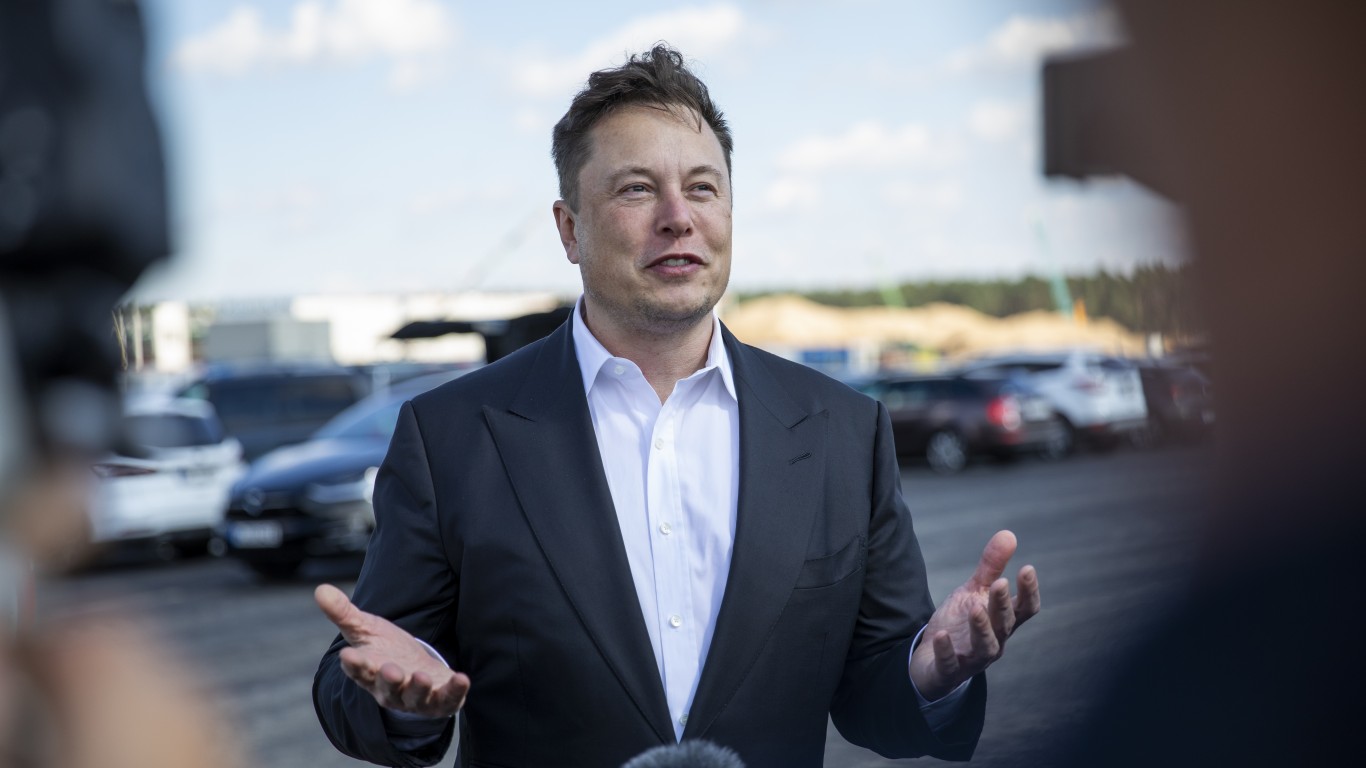
No one thinks there’s a “best-case” to this extreme debt pile, but many (such as Elon Musk) would argue otherwise. People like Musk don’t talk about debt directly, but they believe AI will eventually bring a wave of deflation that will make everything cheap to a point where real purchasing power rises rapidly and makes fixed national debts easier for the government to carry.
On the other hand, the worst-case scenario is just as extreme. If the utopian AI scenario does not play out, someone would eventually have to rip the bandaid off. Ironically, reducing spending and balancing the budget will lead to deflation, but mostly because it will destroy demand for goods instead of increasing the supply of goods.
What you can do to benefit
The best way to benefit from rising debt is to ride the wave. If the government remains uninterested in balancing the budget and stays fiscally irresponsible, it ends up benefiting investors who are more bold.
Why?
For instance, if you buy U.S. Government Treasuries (which is essentially lending to the government) today, the government has every incentive to make sure you’re not the one benefiting from that transaction in the long run. That means keeping interest rates low enough that inflation keeps chipping away at your bonds.
Investing that money somewhere more productive is a better idea. You could buy stocks or ETFs instead. These assets are riskier in the short term, but you’ll end up with far better results in the long run. When you buy a stock, you have a stake in a business that raises prices during inflation and keeps you well-insulated.
Contact [email protected] for any questions or corrections.
Omor Ibne Ehsan is a writer at 24/7 Wall St. He is a self-taught investor with a focus on growth, cyclical, and dividend equities that have strong fundamentals, value, and long-term potential. He also has an interest in high-risk, high-reward investments such as penny stocks.