AMD’s Microsoft Partnership Validates This Transition So I’m Loading Up
AMD has quietly transformed from a chip underdog into a rack-scale platform, and the hyperscalers placing the biggest bets in AI infrastructure are already voting with their wallets. Here is why one investor keeps loading up even at a triple-digit…


I keep buying Advanced Micro Devices (NASDAQ:AMD | AMD Price Prediction) because every quarter confirms the same thing: this company has moved from selling chips to selling full AI systems, and the biggest customers on earth are lining up to buy them. That is the sentence that keeps my finger on the buy button, even after the stock has run 135.14% year to date.
The Thesis in One Line
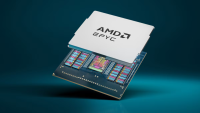
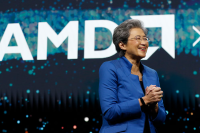
AMD’s Helios rack, pairing Instinct GPUs with EPYC Venice CPUs and Pensando networking, has become the open-standard alternative to NVIDIA (NASDAQ:NVDA)’s closed stack, and Microsoft (NASDAQ:MSFT), Meta (NASDAQ:META), and OpenAI are underwriting that transition. Helios structurally expands AMD’s total addressable market and revenue per server rack, positioning the company to be re-rated from a second-source chip supplier into a rack-scale platform. Lisa Su put it plainly on the Q1 call: “These results mark a clear inflection in our growth trajectory and a structural shift in our business.”
Three Reasons the Money Keeps Going In
First, the numbers behind the story. Q1 2026 revenue hit $10.253 billion, up 37.85% year over year, with the Data Center segment alone doing $5.775 billion at 57% growth. Net income jumped 95.06% and free cash flow reached $2.566 billion, up 252.96%. Q2 guidance calls for ~$11.2 billion in revenue, roughly 46% YoY growth.
Second, the customer roster. Meta committed to up to 6 gigawatts of AMD Instinct GPUs, with the first 1-GW built on the custom MI450 design. OpenAI signed on as a core preferred partner for another 6 gigawatts. Su raised the server CPU TAM forecast from 18% annual growth to greater than 35% annually, reaching over $120 billion by 2030, and told investors she sees “a clear path to exceed our long-term financial targets, including delivering more than $20 in EPS over the strategic time frame.”
Third, the balance sheet backing the ambition. Net debt to EBITDA sits at -0.16 (net cash), interest coverage is 28.2x, and debt-to-equity is 0.071. Non-GAAP gross margin expanded 170 basis points to 55%, heading toward 56% in Q2.
Why Not NVIDIA or Intel
The obvious counter is NVDA, and I own some. I keep adding to AMD instead because it is the challenger in a market where NVIDIA holds roughly 85% share, meaning AMD has room to take points while NVIDIA has room to give them. Intel (NASDAQ:INTC) is the other name investors reach for, and I pass because AMD’s 57% Data Center growth and greater than 50% YoY server CPU revenue growth are running on a roadmap Intel cannot match. Su was blunt about the x86 gap: “Venice widens our competitive advantage, delivering substantially higher performance per socket and per watt versus competitive x86 offerings.”
The Risk I Own
The valuation is rich, with a trailing P/E of 164 and a forward P/E of 69, and China export controls already cost the company ~$800 million in Q2 2025 inventory charges. Neither has changed my thesis because quarterly earnings grew 91.2% YoY against that P/E, and the 6 gigawatts of Meta plus 6 gigawatts of OpenAI commitments are dollars that do not depend on China.
What Keeps the Buy Button Active
Su said the quiet part on the call: “I think we have very good visibility now into the deployments that are on track for 2027. When I say good visibility, it’s visibility down to which data centers the GPUs are going to be installed in.” When the CEO can name the buildings, I keep buying the stock.
Contact [email protected] for any questions or corrections.
Alex Sirois is a financial writer with experience spanning both retail and institutional investing. He has written for InvestorPlace and held roles at BNY Mellon and Bernstein, giving him a perspective that bridges Main Street portfolios and Wall Street analysis.
Alex holds an MBA from George Washington University and has built his career across multiple industries, including e-commerce, education, and translation — a breadth of experience that informs how he breaks down complex financial topics for everyday investors. His writing is conversational, actionable, and grounded in long-term, buy-and-hold investing principles.
At 247 Wall St., Alex focuses on delivering analysis that is both accessible and useful, with a clear emphasis on helping readers make more informed decisions with their money.