CleanSpark Trades at a Discount: Which Tech Giant Could Be the Buyer?
CleanSpark sits on a gigawatt-scale Texas power footprint that hyperscalers are racing to secure, yet its stock price tells a very different story. Five potential acquirers line up with very different odds, balance sheets, and strategic motives.

This post may contain links from our sponsors and affiliates, and Flywheel Publishing may receive compensation for actions taken through them.
CleanSpark (NASDAQ:CLSK | CLSK Price Prediction) shares closed at $14.52 on July 24, 2026, up 43.5% year to date, yet still trading at a meaningful discount to what its infrastructure would likely fetch if sold as a private data center portfolio. CleanSpark reported Q2 FY26 revenue of $136.41 million, a 24.9% decline year over year, with the net loss driven largely by a $224.11 million unrealized bitcoin fair-value hit. Shareholders’ equity has compressed to $986.16 million from $2.18 billion at fiscal year-end 2025, against a still-stable $2.91 billion asset base.
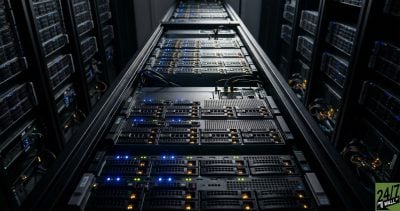
CleanSpark controls 585 MW of ERCOT-approved capacity, including 300 MW newly approved in Brazoria, inside a portfolio that exceeds 1.8 GW of power, land, and data centers. Hyperscaler capex is racing to secure exactly that kind of gigawatt-scale, ERCOT-connected footprint. Below is a ranked list of plausible strategic acquirers, ordered from the longest shot to the cleanest fit.
5. MARA
MARA Holdings (NASDAQ:MARA) is the longest shot here. It is running its own AI/HPC pivot, with a pending 505 MW Long Ridge acquisition and a Starwood joint venture that covers roughly 90% of its non-hosted mining capacity. With a market cap of $4.6 billion and Q1 revenue of $174.60 million, which missed expectations, MARA lacks the balance sheet to swallow CleanSpark cleanly.
4. Riot Platforms
Riot Platforms (NASDAQ:RIOT) is further along than any miner in the data center pivot, generating $33.15 million in debut data center revenue and securing a $636 million, 10-year AMD lease at Rockdale. Riot’s $8.5 billion market cap and reported $311 million in liquidity give it the size to consider a stock-and-cash roll-up. Regulatory scrutiny of miner-on-miner combinations is the sticking point.
3. Microsoft
Microsoft (NASDAQ:MSFT) at a $2.8 trillion market cap could buy CleanSpark outright with rounding-error cash. Azure grew 40% in Q3 FY26, and Microsoft’s AI business surpassed a $37 billion annual run rate. Microsoft has largely preferred long-term power purchase agreements and third-party colocation contracts over acquiring miners directly.
2. Amazon
Amazon (NASDAQ:AMZN) is the cleaner hyperscaler fit. AWS grew 28% in Q1, its fastest in 15 quarters, and capex hit $44.20 billion. OpenAI has committed to roughly 2 GW of Trainium capacity from 2027, and Anthropic up to 5 GW. AWS already builds bespoke campuses, and ERCOT-approved MW at scale is scarce. A CleanSpark deal at a healthy premium would be a rounding error against a $2.5 trillion cap.
1. Alphabet
Alphabet (NASDAQ:GOOGL) is the cleanest strategic fit. Google Cloud accelerated to 82% growth in Q2, with capex up 100% to $44.92 billion and a combined roughly $70 billion equity-plus-debt raise earmarked for AI infrastructure. Gemini App reached 950 million monthly active users. Alphabet’s demand for power is running well ahead of its secured supply, and CleanSpark’s Texas footprint and its Sandersville, Georgia, buildout map directly to Google’s active expansion regions.
Where Private Equity Fits
An LBO angle is credible. CleanSpark carries $1.79 billion in long-term debt against a market cap of roughly $3.7 billion. Infrastructure sponsors including Blackstone, KKR, Brookfield, and Stonepeak have announced multi-billion-dollar AI-data-center vehicles. A sponsor could take CleanSpark private, treat bitcoin mining as a cash-flowing tail, and market the 1.8 GW portfolio as a build-to-suit hyperscaler platform.
What to Watch
Look for a first signed AI/HPC tenant lease at Sandersville or Brazoria, which would immediately reprice the equity. A 13D filing or unusual call activity would signal interest. The CleanSpark full-chain put/call ratio is 0.29, skewed toward calls, though nothing yet suggests organized accumulation. Analysts are bullish, with a $22.35 mean price target that is nearly 54% higher than the current price. That is the setup: a strategically scarce asset, a depressed equity, and a hyperscaler capex cycle desperate for gigawatts.


Contact [email protected] for any questions or corrections.
Trey has been an editor and author at 24/7 Wall St. for more than a decade, where he has published thousands of articles analyzing corporate earnings, dividend stocks, short interest, insider buying, private equity, and market trends. His comprehensive coverage spans the full spectrum of financial markets, from blue-chip stalwarts to emerging growth companies.
Beyond 24/7 Wall St., Trey has created and edited financial content for Benzinga and AOL's BloggingStocks, contributing additional hundreds of articles to the investment community.
Trey's editorial expertise extends across multiple publishing environments. He served as production editor at Dearborn Financial Publishing and development editor at Kaplan, where he helped shape financial education materials. Earlier in his career, he worked as a writer-producer at SVE. His freelance editing portfolio includes work for prestigious clients such as Sage Publications, Rand McNally, the Institute for Supply Management, the American Library Association, Eggplant Literary Productions, and Spiegel.
Outside of financial journalism, Trey writes fiction and has been an active member of the writing community for years, moderating workshop sessions at regional conventions.