Earnings Misses: Between Tesla and Alphabet, Only One Deserved Punishment
Alphabet and Tesla both missed expectations on the same day and both got sold off, but the fundamentals behind those two drops could not be more different. One company is bleeding. The other is spending by choice.


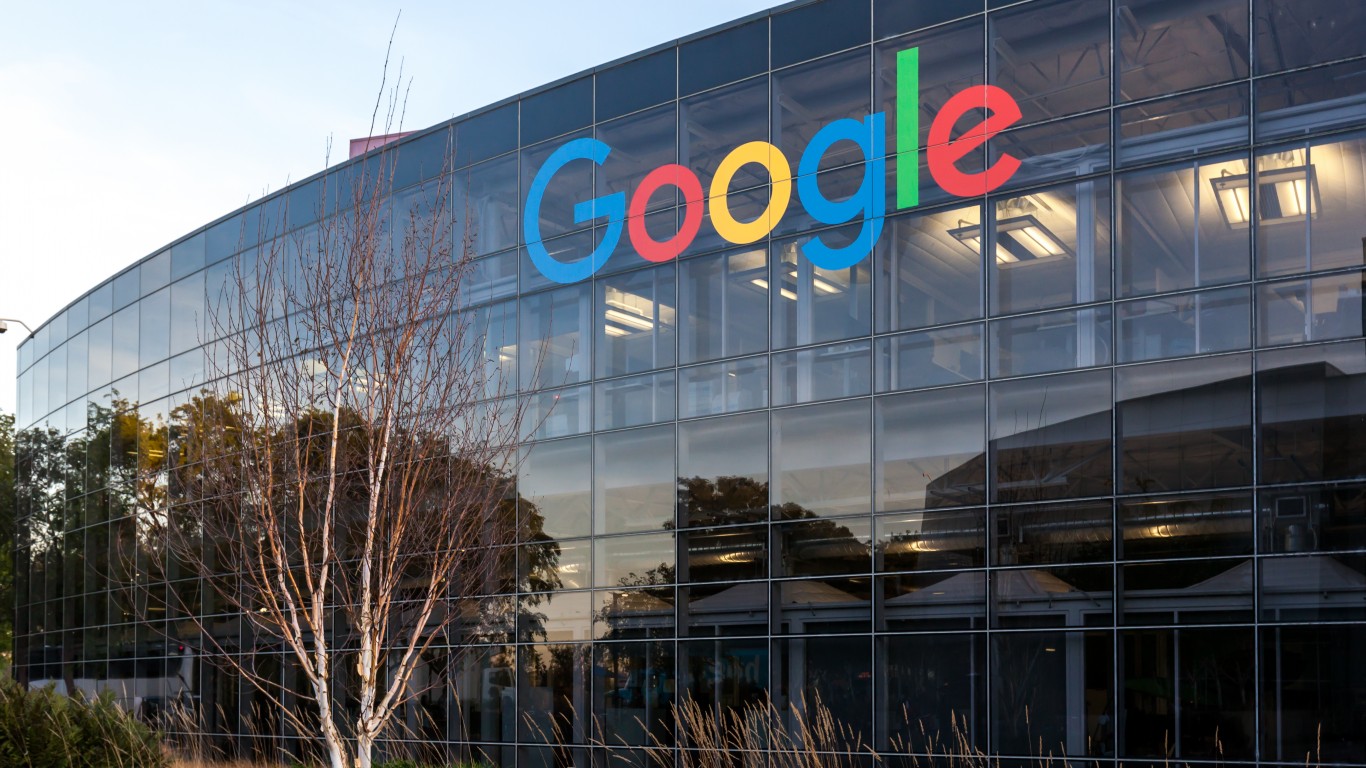
Alphabet (NASDAQ: GOOGL | GOOGL Price Prediction) and Tesla (NASDAQ: TSLA) both reported Q2 results on July 22, 2026, and both got sold. Only one earned it. Google crushed estimates with Cloud accelerating to 82% growth. Tesla missed EPS by nearly 38.51% as operating margin collapsed. Same market reaction, opposite fundamentals.
One Beat Was Historic. The Other Miss Was Ugly.
Alphabet posted EPS of $9.11 against a $3.0427 estimate, its 11th straight beat. Revenue hit $119.796 billion, up 24.23% YoY. Google Cloud jumped to $24.768 billion on enterprise AI demand. Sundar Pichai noted that “nearly 90% of the Fortune 100” now use Gemini Enterprise. Operating margin expanded to 34%. That is a high-margin cash engine widening its moat.
Tesla told a different story. EPS came in at $0.33 versus a $0.5367 estimate. Deliveries were a record 480,126 vehicles, yet operating income fell to just $398 million, a 56.88% drop. CFO Vaibhav Taneja said automotive margins excluding credits “declined sequentially from 19.2% to 16.3%”. Volume grew. Profit did not follow.
| Business Driver | Alphabet | Tesla |
| Headline Growth Engine | Cloud +82% YoY | Deliveries +25% YoY |
| Operating Margin | 34%, +2 pts | 1.4%, compressed |
| EPS Surprise | +199.41% | -38.51% |
Same Cash Drain, Very Different Reasons
Both printed negative free cash flow, and that is where the market conflated them. Alphabet reported FCF of -$5.855 billion because CapEx doubled to $44.924 billion. Operating cash flow still grew 40.8% to $39.069 billion. The drain is a choice, funded by a machine that already prints cash.
Tesla’s -$1.092 billion in FCF is a squeeze. OpEx jumped 47% to $4.35 billion, CapEx rose 141.81%, and the core auto business is delivering thinner unit economics. Elon Musk framed it as “the best CapEx returns that we’ve ever seen”. The market disagreed. TSLA dropped 16.30% in two days, while GOOGL fell 6.53%. One drop looks like an overreaction. The other looks like a repricing.
What I’m Watching Into the Back Half
For Alphabet, the question is whether Cloud can hold this trajectory to justify the $70 billion capital raise and the suspended buyback. A retail thread on r/stocks captured the concern plainly: “How do they plan to fund $180-190B in capex?” For Tesla, I want to see automotive ASPs stabilize before Cybercab and Optimus start pulling meaningful weight.
Why I Lean Alphabet Until Tesla’s Margins Recover
On the fundamentals, Alphabet looks structurally stronger here. A high-margin business choosing to spend aggressively differs fundamentally from a low-margin business forced to. Tesla’s punishment fits the earnings report. If you are a turnaround investor who believes Robotaxi and Optimus reroute the P&L, TSLA at -30.39% YTD reflects that thesis. The cash engine funding its own moat carries a cleaner risk profile today.
Contact [email protected] for any questions or corrections.
Alex Sirois is a financial writer with experience spanning both retail and institutional investing. He has written for InvestorPlace and held roles at BNY Mellon and Bernstein, giving him a perspective that bridges Main Street portfolios and Wall Street analysis.
Alex holds an MBA from George Washington University and has built his career across multiple industries, including e-commerce, education, and translation — a breadth of experience that informs how he breaks down complex financial topics for everyday investors. His writing is conversational, actionable, and grounded in long-term, buy-and-hold investing principles.
At 247 Wall St., Alex focuses on delivering analysis that is both accessible and useful, with a clear emphasis on helping readers make more informed decisions with their money.