“I Feel Like I’ve Been Fired by America”: Cracker Barrel’s CEO Steps Down a Year After Its $100 Million Logo Disaster
Julie Masino told a conservative radio host she felt fired by America, then survived a shareholder vote to keep her job. So why is she leaving Cracker Barrel now, a year after the logo that shook a company and a…

On Monday, roughly a year after the rebrand that made her a culture-war target, Julie Masino, the CEO of Cracker Barrel Old Country Store (NASDAQ:CBRL) is stepping down.
In November 2025 interview with conservative radio host Glenn Beck, months after Cracker Barrel’s logo debacle had blown over Masino said, “I feel like I’ve been fired by America.”
Cracker Barrel announced on July 27, 2026 that Masino is stepping down as CEO and from the company’s board, effective August 10, 2026, with a transitional advisory role until October 9, 2026. The company did not publicly state a specific reason for her departure.
The Rebrand That Ate a Turnaround
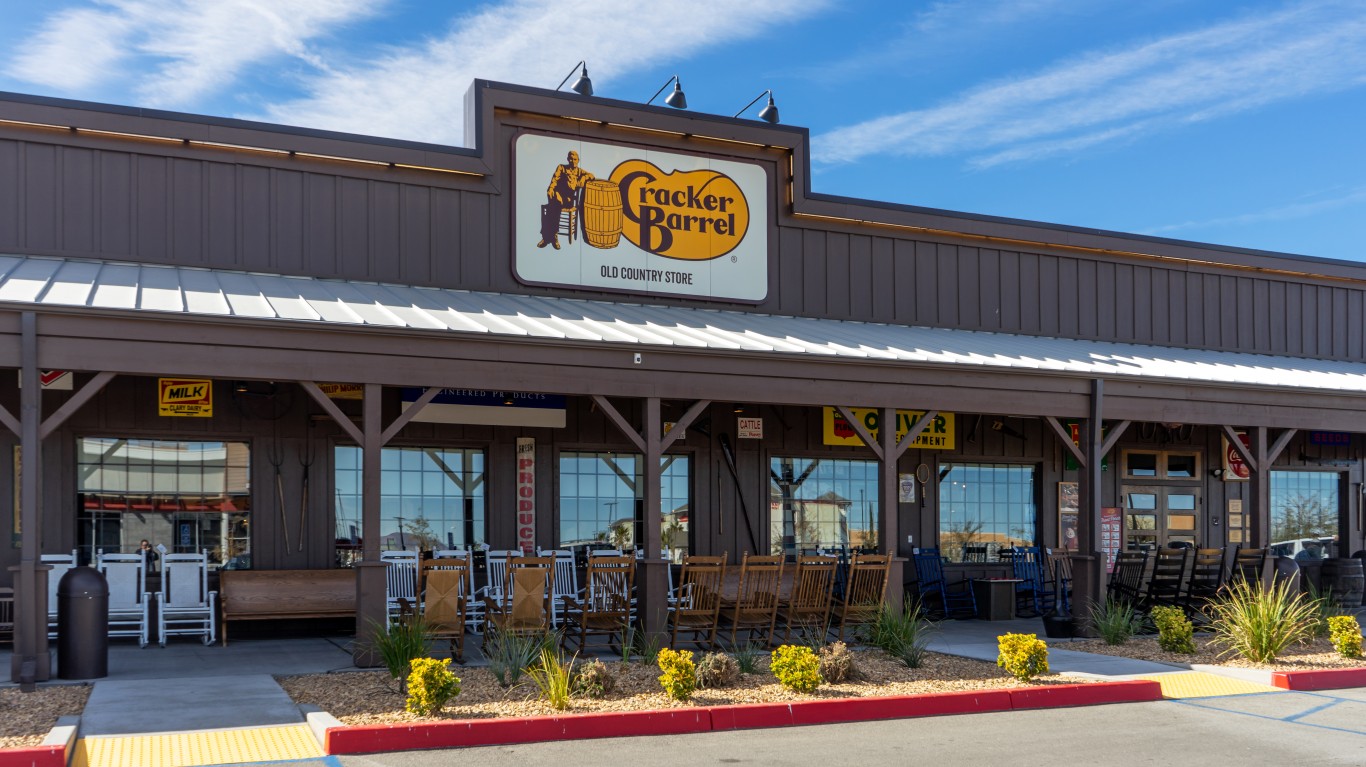
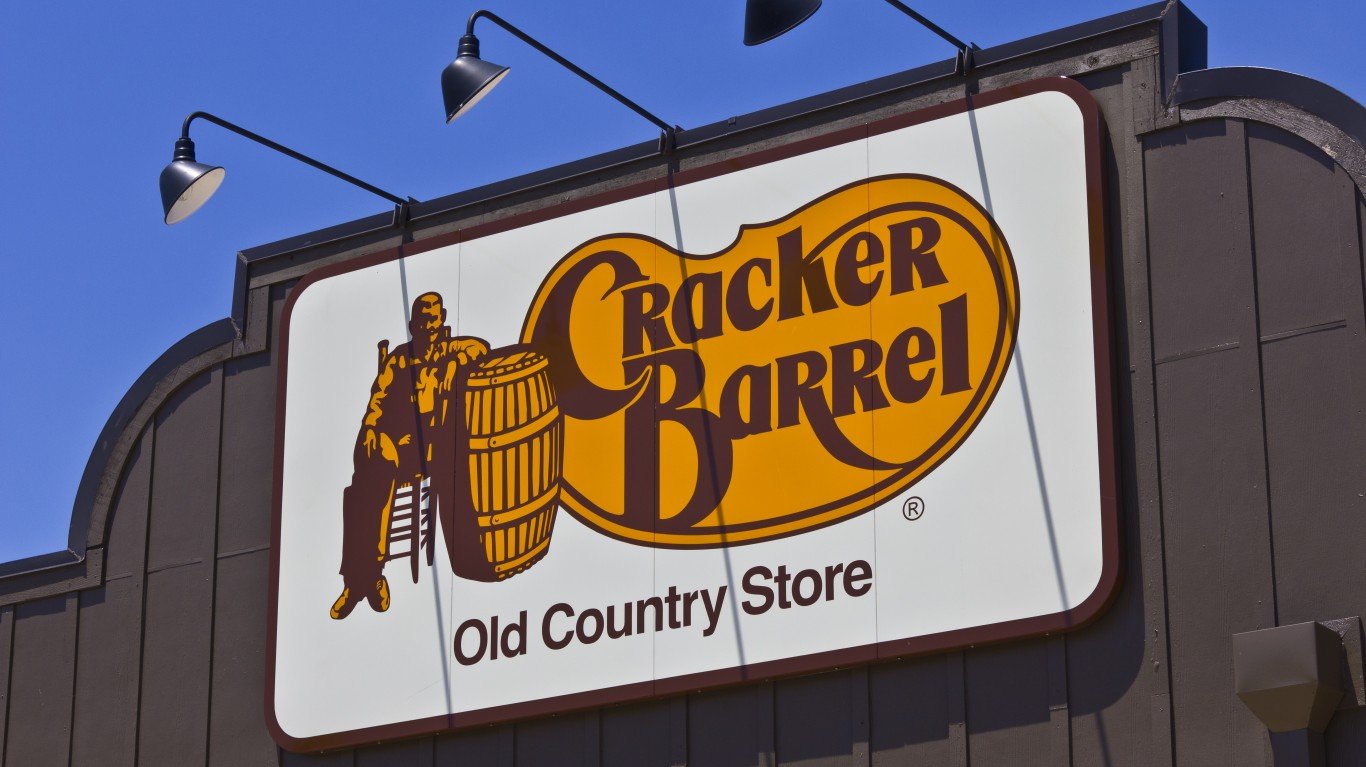
On August 18, 2025, Cracker Barrel unveiled a new logo, removing “Uncle Herschel” (the man in a rocking chair beside a barrel, part of the brand identity since the 1970s) in favor of a minimalist wordmark, as part of a broader “All the More” modernization campaign. Backlash was immediate. Within 48 hours, terms like “generic,” “soulless,” and “bland” were trending, and the redesign became a right-coded flashpoint.
Financial damage followed quickly. Cracker Barrel’s stock dropped nearly 12-14% in the days following the announcement, wiping out close to $100 million in market capitalization. The company had also allocated between $600 million and $700 million toward the rebranding/modernization effort over a three-year period, of which the logo was one visible piece.
Trump Weighs In
President Donald Trump amplified outrage on Truth Social, writing that “Cracker Barrel should go back to the old logo, admit a mistake based on customer response (the ultimate Poll), and manage the company better than ever before.” On August 26, 2025, Cracker Barrel announced it was reversing course and returning to its original branding, canceling planned restaurant remodels. Trump posted a victory lap: “Congratulations, ‘Cracker Barrel,’ on changing your logo back to what it was… Make lots of money and, most importantly, make your customers happy again!”
Survived the Vote, Then Left Anyway
The operational hangover was steep. Traffic slid 8% after the rollout, and by the December quarter adjusted EBITDA had collapsed to $7.19 million from $45.81 million a year earlier. Even so, shareholders voted to retain Masino as CEO in a November 2025 vote, brushing back activist pressure. It was then that she sat with Beck and delivered the “fired by America” line, her first extended public reflection after weeks of silence.
Recovery has since been uneven but real: fiscal third-quarter adjusted EPS of $0.29 topped expectations, and management raised full-year adjusted EBITDA guidance to $120 million to $125 million. Shares closed Monday at $52.43.
Masino will be succeeded by David Deno, former CEO of Bloomin’ Brands (parent company of Outback Steakhouse and Bonefish Grill), who served in that role from 2019 to 2024 and brings more than four decades of restaurant/retail industry experience.
Masino took over as Cracker Barrel CEO in 2023 with a mandate to revive the struggling casual-dining chain; the logo/remodel initiative was part of that broader turnaround strategy before it became a liability. The rebrand was meant to be the turnaround. It became the story that defined her tenure.
Contact [email protected] for any questions or corrections.
AJ spent 10 years writing about financial markets at The Motley Fool. His coverage centers on technology stocks and the broader macroeconomic trends, from interest rates to geopolitics, that shape where markets are headed next. AJ is drawn to the stories where big-picture economics and individual companies collide.