JetBlue Advances 9% on Earnings Beat and 2028 Profit Target, Lifting Delta, United, and Southwest
JetBlue just handed investors a reason to rethink the entire airline sector, but the same earnings report that sent shares soaring also revealed a widening loss that bulls are choosing to ignore.

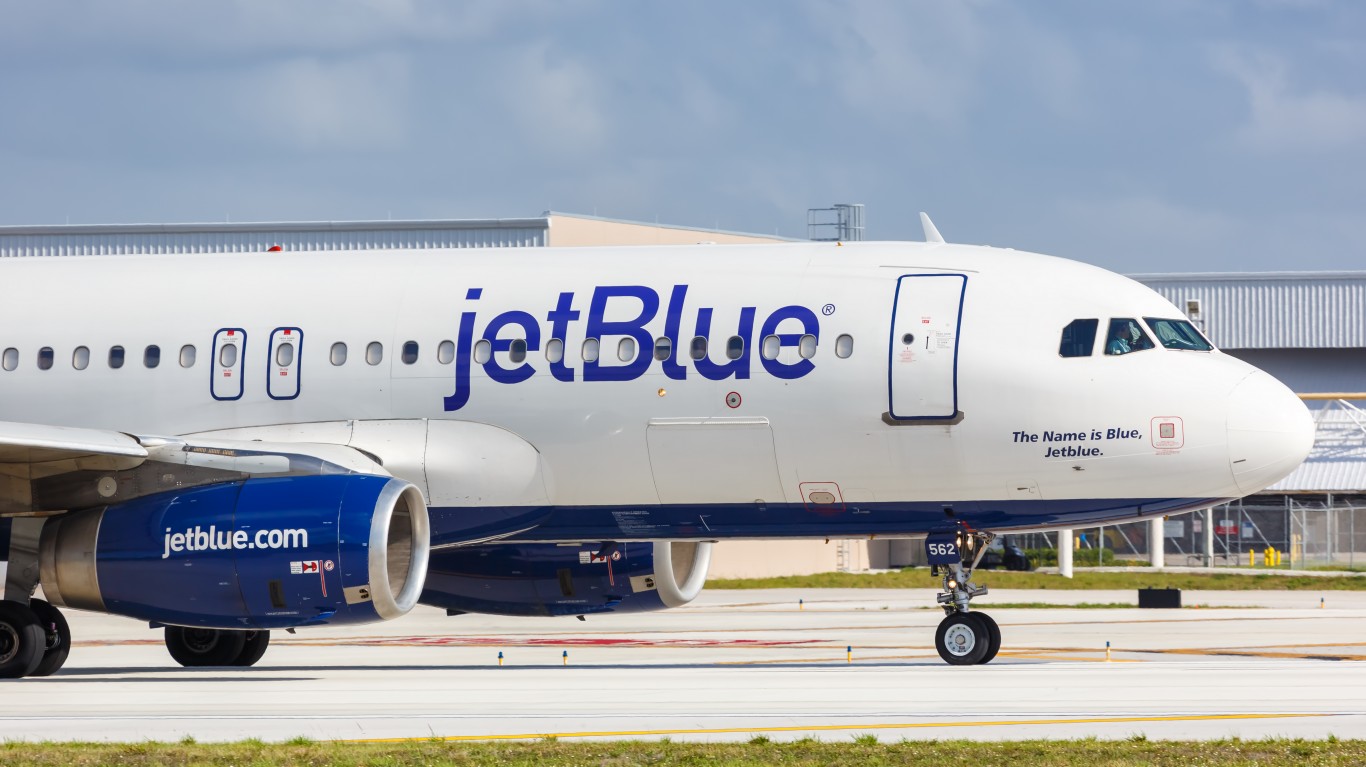
Shares of JetBlue Airways (NASDAQ:JBLU) are up 9% to $5.94 in Tuesday midday trading after the carrier posted a Q2 2026 adjusted-EPS beat, reinstated its full-year outlook, and introduced a long-term 2028 profit target of at least $1 per share. The move is lifting the broader airline group even as JetBlue’s headline GAAP loss actually widened.
JetBlue stock is now up 33% year to date (YTD) after Tuesday’s pop, and the read-through to industry demand is what’s bidding up peers. None of the other carriers had clear, company-specific catalysts Tuesday.
This is a turnaround-optimism rally powered by adjusted metrics and forward targets while GAAP profitability remains out of reach. Fuel costs still surged, and JetBlue’s full-year operating margin is still guided negative.
Earnings Beat and 2028 Target Fuel the Rally
JetBlue’s Q2 revenue rose 14.5% year over year (YoY) to $2.7 billion, in line with the $2.69 billion consensus, with unit revenue (RASM) up 10.9%. Its adjusted loss of $0.66 per share beat the $0.6828 loss expected.
JetBlue recaptured 50% of higher fuel costs in Q2, ahead of the 30% to 40% pace that had been expected, with full recapture expected by early 2027. The airline reinstated full-year 2026 guidance calling for RASM growth of 10% to 12.5%, an adjusted operating margin of -2% to -5%, and a full-year 2026 jet fuel price of about $3.49 per gallon.
CEO Joanna Geraghty stated that the company is “introducing a long-term financial target of at least $1 in earnings per share for 2028” as JetBlue continues its path toward sustained profitability. Its JetForward turnaround program has already generated $470 million of cumulative incremental EBIT and is targeted at $1.2 billion by 2028.

Peers Ride the Sympathy Wave
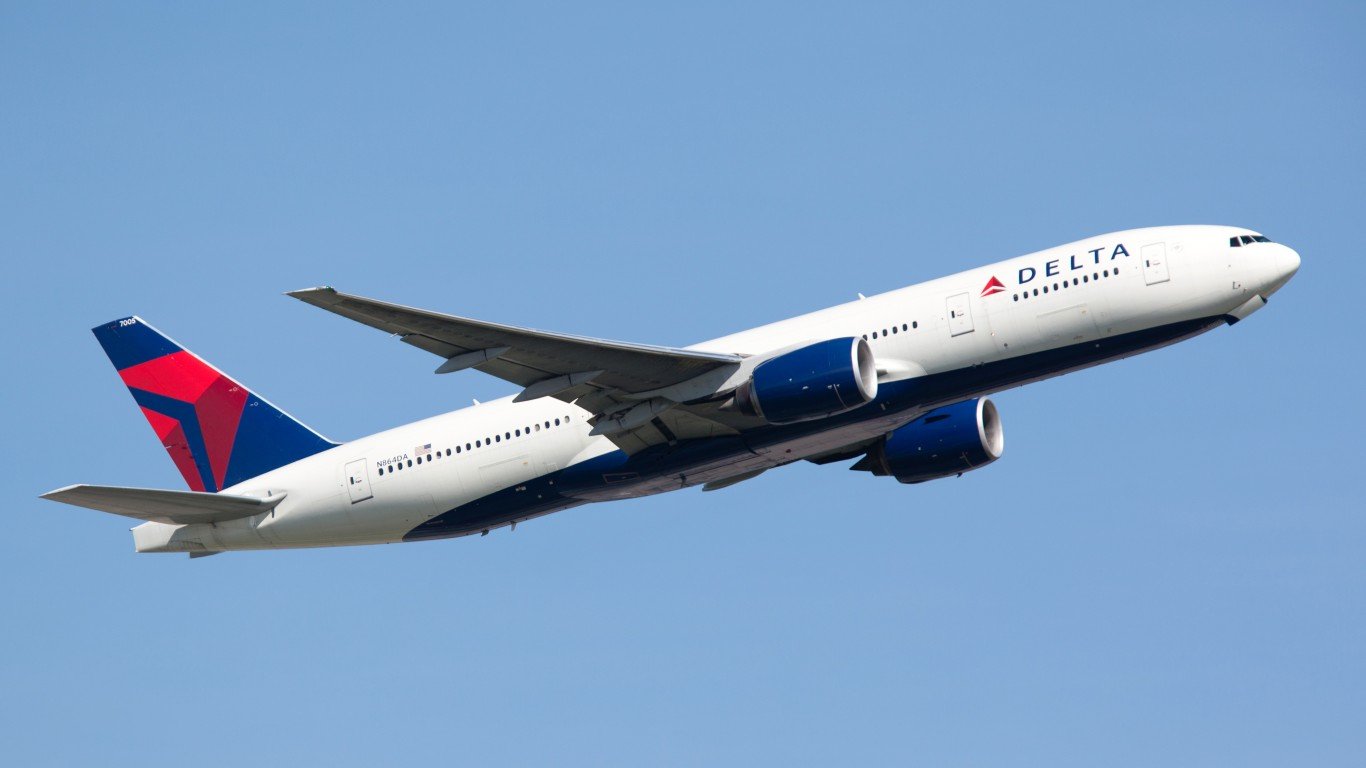
Delta Air Lines (NYSE:DAL | DAL Price Prediction) shares are up 3% to $88.80, and United Airlines (NASDAQ:UAL) shares are up 2% to $123.22, both moving on JetBlue’s demand read. Neither carrier reported news of its own Tuesday.
Southwest Airlines (NYSE:LUV) shares are up 2% to $46.06, and American Airlines Group (NASDAQ:AAL) shares are trading up 1% to $15.11. The move fits the pattern where a single carrier’s unit-revenue beat can pull the whole tape higher.
Shares of the U.S. Global Jets ETF (NYSEARCA:JETS) are up 3% to $31.80. The JETS ETF is a concentrated, single-sector airline product, so it can provide substantial gains on days like this and may also bring drawdowns when fuel costs spike or travel demand softens.
The Bull and Bear Cases
The bull case on JetBlue leans on the revenue beat, the 10.9% RASM gain, faster-than-expected fuel recapture, JetForward execution, and the credibility of the 2028 EPS target. Premium RASM climbed 13%, loyalty revenue grew 13% YoY, and Fort Lauderdale unit revenue rose 11% despite 40% capacity growth in the market.
The turnaround narrative has a track record behind it, too. JetForward delivered $305 million of incremental EBIT in 2025, above its $290 million target, and is guided to at least $310 million more in 2026. That gives the 2028 goal some execution credibility as JetBlue scales BlueFirst domestic first class, its Boston BlueHouse lounge, and the Blue Sky partnership with United Airlines.
The bear case is real, though. JetBlue’s GAAP net loss widened to $247 million from $74 million a year ago as average fuel cost surged 81% to $4.23 per gallon, and full-year operating margin is still guided negative. Investors should consider keeping their position sizes modest given the execution risk on a long-dated 2028 goal and JetBlue stock’s beta of 1.73.
What to Watch Next
Market watchers can watch for whether JetBlue stock holds above the prior $5.56 average analyst target after Tuesday’s rally and whether Q3 2026 RASM guidance of 12.5% to 16.5% is corroborated by peer commentary. Traders can also monitor WTI crude oil at $79.04 per barrel, since jet fuel remains the single biggest swing factor for JetBlue’s 2026 margin path.
JetBlue’s Q2 delivered enough good news to power a double-digit rally and pull peers Delta, United, Southwest, and American with it, though the story remains a slow turnaround rather than a clean profit inflection. The next checkpoints come from other airline earnings reports and any move in the crude complex.
For investors seeking exposure through the U.S. Global Jets ETF, the same concentration note applies to their portfolios. After all, airline stocks tend to move together on fuel and demand headlines.
Contact [email protected] for any questions or corrections.
David Moadel is financial writer specializing in stocks, ETFs, options, precious metals, and Bitcoin. David has written well over 1,000 articles for leading online publications, helping investors understand markets, income strategies, and risk.His work has appeared in The Motley Fool, InvestorPlace, U.S. News & World Report, TipRanks, ValueWalk, Benzinga, Market Realist, TalkMarkets, Finmasters, 24/7 Wall St., and others.With a master’s degree in education, David has taught at the elementary, high school, and college levels. That teaching background shapes his writing style: clear, educational, and practical. David has also built a loyal social-media audience by providing trustworthy financial content on YouTube, X/Twitter, and StockTwits.