Tim Cook’s Era at Apple Is Ending With a $350 Billion Stumble
Apple just posted record quarterly results and watched nearly $350 billion in market value vanish overnight. The culprit is a supply crisis Tim Cook once called a hundred-year flood, and it may define the final chapter of his tenure.


For much of the past decade, investors could count on one thing: Apple (NASDAQ:AAPL | AAPL Price Prediction) rarely disappointed. Under Tim Cook, the company became the first to reach $1 trillion, before going on to surpass $2 trillion, $3 trillion, $4 trillion, and briefly $5 trillion in market value while building one of the most profitable businesses in history.
Yet even the best operators eventually encounter forces beyond their control. Apple’s fiscal third-quarter results yesterday showed a company still setting records, but management also warned that an unprecedented supply crunch will cap sales in the current quarter. The market focused on the near-term pain and knocked roughly 7.7% off Apple’s stock, wiping out about $350 billion in value. Cook will be stepping down as CEO in September and be replaced by John Ternus.
Record Results Overshadowed by a Historic Bottleneck
Apple’s Q3 revenue climbed to a June-quarter record of $109.4 billion, while earnings of $2.02 per share also reached a new high. Services continued to expand, and Apple’s installed base of active devices of over 2.5 billion also hit another record, reinforcing the loyalty that has made the ecosystem so valuable over the years.
The problem wasn’t the quarter Apple reported. It was the quarter ahead. Cook previously described the supply disruption as a “hundred-year flood,” and warned yesterday that shortages of memory and other components would constrain shipments of iPhones, Macs, and certain iPads during fiscal fourth quarter. Guidance for those product categories came in below Wall Street expectations despite demand remaining healthy.
Importantly, Apple isn’t warning that customers are disappearing. It is warning that it can’t build enough products to satisfy them.
The Real Battle Is Happening in Memory
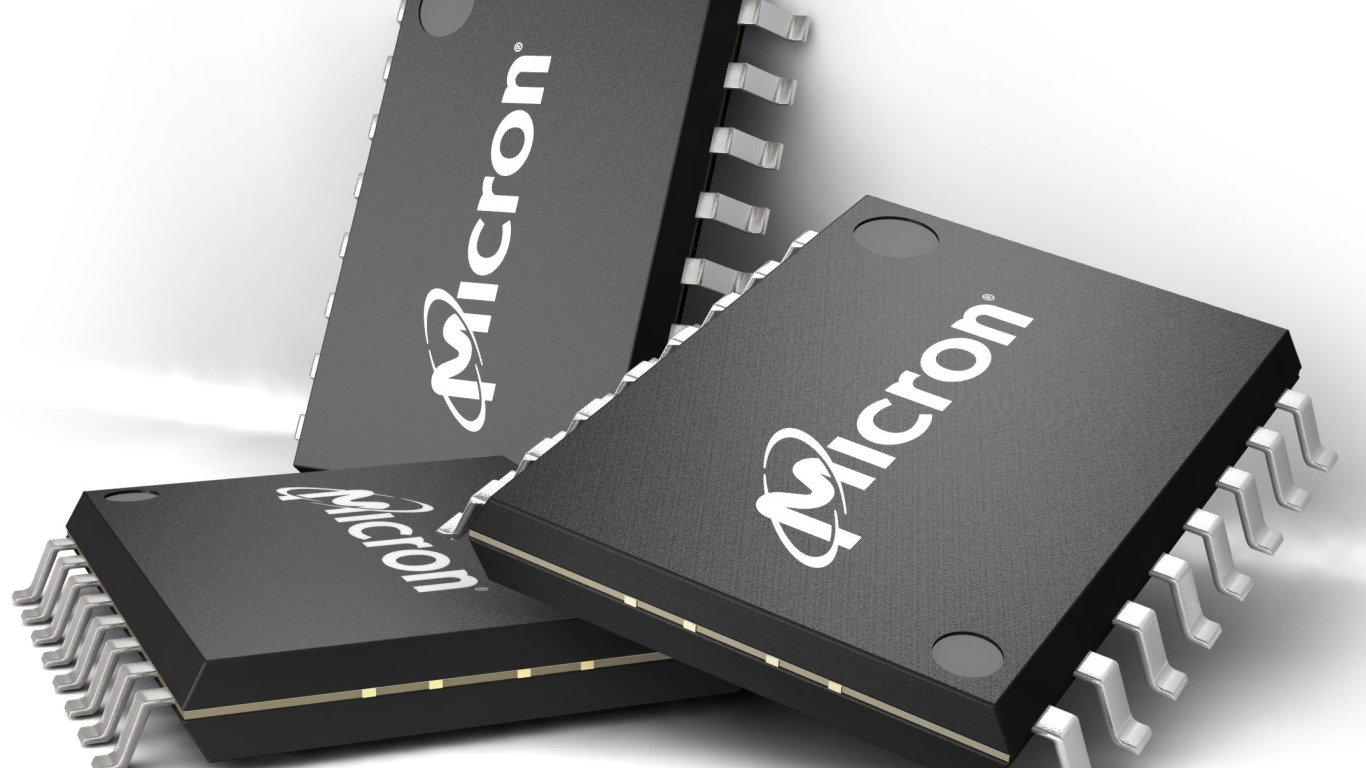
The shortage has evolved into a public dispute between Apple and memory supplier Micron Technology (NASDAQ:MU). Apple has argued that rising memory prices amount to price gouging and is seeking government permission to source certain blacklisted Chinese components to ease shortages.
Micron argues Apple and other large customers spent years using their purchasing power to negotiate lower prices during industry downturns, discouraging investment in new manufacturing capacity. When artificial intelligence created an unexpected surge in demand for high-bandwidth memory, the industry lacked sufficient production to satisfy everyone.
Years of cyclical pricing pressure kept capacity disciplined, while AI accelerated demand far faster than memory manufacturers anticipated. The result is today’s shortage, where even Apple cannot buy every component it needs.
Investors Should Focus on What Happens After the Flood
Wall Street largely views Apple’s problem as delayed demand rather than destroyed demand.
Apple customers have repeatedly shown they’re willing to wait for new devices. The company has also demonstrated unusual pricing power. Apple is raising prices later this year to offset higher component costs, yet analysts broadly expect only modest demand impacts because of the strength of the ecosystem and customer loyalty.
Granted, near-term estimates will probably come down. Revenue deferred into future quarters still affects quarterly results and investor sentiment. That said, long-term investors should separate operational execution from industry-wide supply constraints.
Memory production is expanding, and pricing typically moderates after capacity catches up with demand. When that happens, Apple should once again be able to satisfy demand that already exists rather than spending quarters constrained by unavailable components.
Key Takeaway
In short, Apple’s latest earnings did not expose a weakening franchise. They exposed the limits of even Tim Cook’s supply-chain expertise during an industrywide shortage unlike anything the company has previously experienced.
The market, though, responded by focusing on the next three months. Smart investors should spend more time thinking about the next three years.
Apple still generates record quarterly results, maintains one of the world’s strongest consumer ecosystems, and serves a customer base that has repeatedly proven willing to wait — and pay — for its products. Regardless of whether memory prices remain elevated for another quarter or two, supply constraints eventually ease. When they do, delayed sales have an opportunity to flow back into Apple’s results.
For patient shareholders, this sharp pullback is not the end of Apple’s growth story. It is just another chapter in a business that has repeatedly recovered from temporary setbacks.
Contact [email protected] for any questions or corrections.
After two decades of patrolling the dark corners of suburbia as a police officer, Rich Duprey hung up his badge and gun to begin writing full time about stocks and investing. For the past 20 years, he’s been cruising the markets looking for companies to lock up as long-term holdings in a portfolio while writing extensively on the broad sectors of consumer goods, technology, and industrials. Because his experience isn’t from the typical financial analyst track, Rich is able to break down complex topics into understandable and useful action points for the average investor. His writings have appeared on The Motley Fool, InvestorPlace, Yahoo! Finance, Money Morning, and, of course, 24/7 Wall St. He has been featured in both U.S. and international publications, including MarketWatch, Financial Times, Forbes, Fast Company, and USA Today.