Is the Fed Becoming an Even Bigger Black Box? Warsh Wants to Reduce Number of Meetings
Kevin Warsh wants the Federal Reserve to hold fewer policy meetings, arguing that silence builds more market confidence than constant commentary. But with the Fed already shielded from full congressional review, investors need to understand what less communication could actually…

This post may contain links from our sponsors and affiliates, and Flywheel Publishing may receive compensation for actions taken through them.
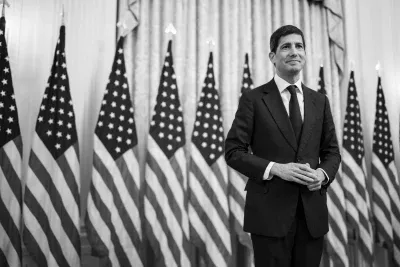
For an institution with enormous influence over the U.S. economy, the Federal Reserve has always operated with a surprising amount of independence from public scrutiny. Every interest-rate decision ripples through stock prices, bond yields, mortgage rates, and retirement accounts worth trillions of dollars. Yet many of the central bank’s most consequential actions remain insulated from congressional review.
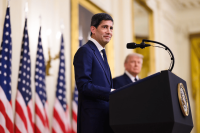
Now, Fed chairman Kevin Warsh is considering another change that would reduce how often policymakers formally meet to set interest rates. The proposal isn’t necessarily an attempt to hide the Fed’s thinking, but it does raise an important question for investors: Does speaking less build confidence, or simply leave markets filling in the blanks?
The Fed Has Long Operated Behind Legal Guardrails
Critics of the Federal Reserve have argued for decades that the central bank enjoys extraordinary power with too little oversight. Former Rep. Ron Paul built much of his congressional career around efforts to “Audit the Fed,” while his son, Sen. Rand Paul, has continued pushing legislation to repeal long-standing audit exemptions.
The debate centers on Section 714 of Title 31 of the U.S. Code, enacted in 1978. While the Government Accountability Office (GAO) audits many parts of the Federal Reserve — including bank supervision, payment systems, and investigations into operational waste, fraud, and abuse — the law prohibits it from reviewing some of the Fed’s most powerful activities.
Those exemptions include the Fed’s discount window lending, FOMC deliberations and transcripts, and foreign central bank swaps and agreements.
That’s the heart of the transparency argument. Critics say a financial audit means little if Congress is legally barred from examining the multi-trillion-dollar monetary policy decisions that shape inflation, employment, and financial markets. Supporters counter that insulating monetary policy from political pressure preserves the Fed’s independence and ultimately produces better economic outcomes.
Warsh Wants the Fed to Speak Less Often
According to The New York Times, Warsh recently floated reducing the number of regularly scheduled Federal Open Market Committee meetings. The Fed has held eight scheduled policy meetings annually since 1981, although federal law requires only four meetings each year.
The proposal fits Warsh’s broader communication strategy. Since taking office, he has reduced the Fed’s reliance on forward guidance, arguing policymakers should stop trying to steer markets through constant commentary and instead let incoming economic data speak for itself.
Granted, fewer meetings don’t mean the Fed loses flexibility. Emergency meetings remain available during financial crises, as they were during both the 2008 financial crisis and the pandemic.
Still, reducing scheduled meetings would also reduce the number of formal interest-rate votes and official opportunities for investors to hear directly from policymakers.
Less Communication Doesn’t Always Mean Less Volatility
Warsh’s reasoning isn’t without merit. If markets spend less time obsessing over every six-week Fed meeting, investors could focus more on corporate earnings, economic fundamentals, and long-term business performance rather than parsing every sentence from the central bank.
Yet, the opposite outcome is also possible. With fewer policy meetings, each decision carries more weight. If the Fed waits longer between scheduled votes, any eventual rate change could have a larger impact because investors have fewer opportunities to recalibrate expectations along the way. Rather than reducing volatility, fewer meetings could concentrate it into fewer — but more consequential — market events.
In short, transparency isn’t measured only by how many words policymakers say. It’s also shaped by how often investors receive new information.
Key Takeaway
Warsh’s proposal probably isn’t the stealth attempt at secrecy that some Federal Reserve critics will portray it as. A quieter central bank may avoid encouraging excessive market speculation and allow policymakers to focus on long-term economic trends instead of reacting to every monthly data release.
That said, the Fed already enjoys broad legal protections that shield many of its most influential decisions from full congressional review. Adding fewer policy meetings to an institution that already communicates less frequently may not strengthen investor confidence as much as Warsh hopes.
Ultimately, investors shouldn’t build portfolios around guessing the next Fed meeting. But they should pay close attention to how the rules governing the world’s most influential central bank continue to evolve, because changes in transparency can matter almost as much as changes in interest rates themselves.
Contact [email protected] for any questions or corrections.
After two decades of patrolling the dark corners of suburbia as a police officer, Rich Duprey hung up his badge and gun to begin writing full time about stocks and investing. For the past 20 years, he’s been cruising the markets looking for companies to lock up as long-term holdings in a portfolio while writing extensively on the broad sectors of consumer goods, technology, and industrials. Because his experience isn’t from the typical financial analyst track, Rich is able to break down complex topics into understandable and useful action points for the average investor. His writings have appeared on The Motley Fool, InvestorPlace, Yahoo! Finance, Money Morning, and, of course, 24/7 Wall St. He has been featured in both U.S. and international publications, including MarketWatch, Financial Times, Forbes, Fast Company, and USA Today.