The Energy Drink Buyout Prize Beverage Giants Are Circling
Celsius Holdings shares have cratered nearly 40% this year, shrinking its market cap to a size beverage giants can actually swallow. With PepsiCo already holding equity and activist investors circling, the question is no longer if a deal happens but…


Celsius Holdings (NASDAQ:CELH | CELH Price Prediction) has become one of the most talked-about consolidation candidates in beverages. Shares are down 39.3% year to date and are 44.6% lower than a year ago, leaving Celsius with a market cap of roughly $7.0 billion. That is digestible for any of the beverage majors.
The asset itself is scaled. CEO John Fieldly told investors, “Today we have 2 billion-dollar brands and a third brand with a clear role in the portfolio.” The portfolio holds roughly 20% of the U.S. RTD energy category, and Alani Nu delivered $364.40 million in Q2 revenue even as the flagship Celsius brand declined 11.7% year over year.

Below is a look at potential acquirers. Keep in mind that this is speculative strategic analysis, as there has been no report of any pending deal.
Keurig Dr Pepper: Least Likely Near Term
Keurig Dr Pepper (NASDAQ:KDP) just closed an $18 billion+ JDE Peet’s acquisition on April 1, 2026, running pro-forma leverage near 4.4x. A planned beverage/coffee separation in early 2027 could change the math, though. The company has purchased a majority stake in popular lifestyle and energy drink brand GHOST, so the fit exists once the balance sheet resets.
Coca-Cola: Strategic but Conflicted
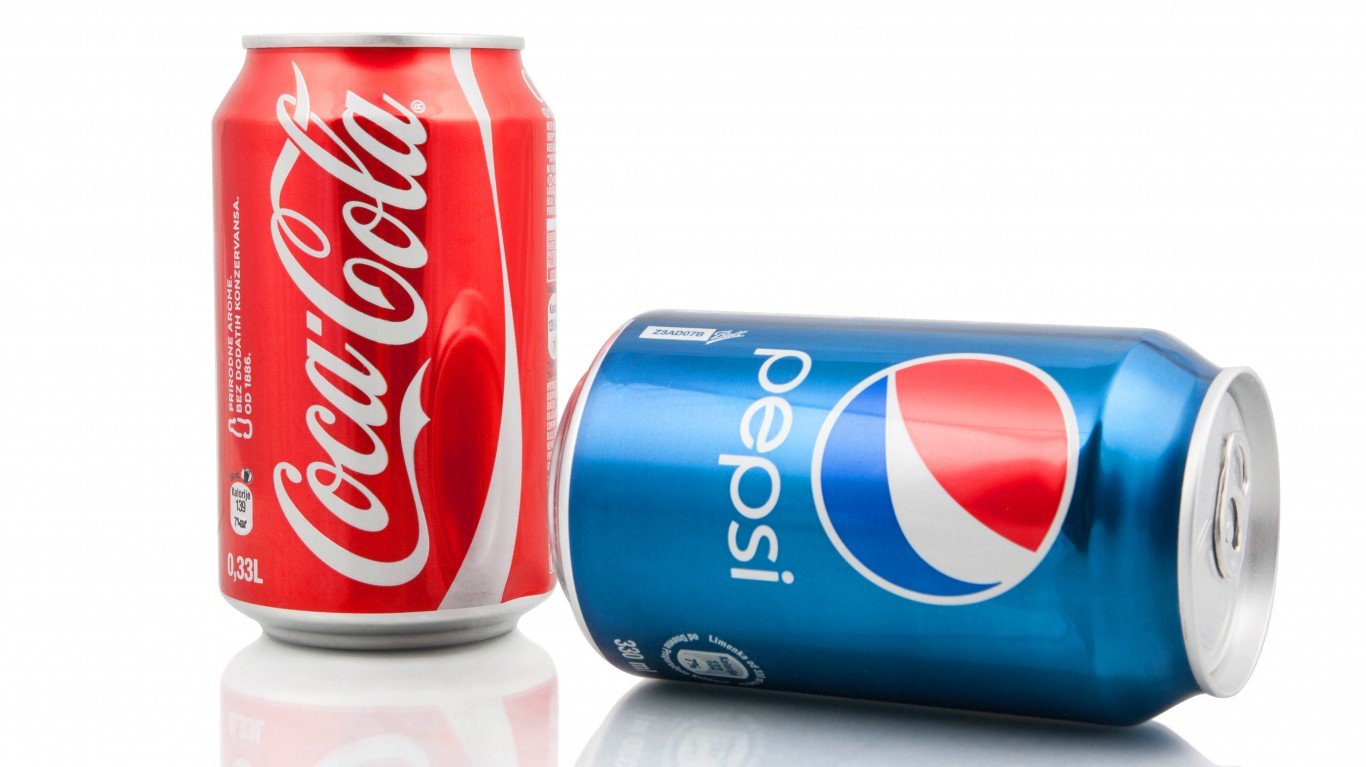
Coca-Cola (NYSE:KO) has $50.13 billion in TTM revenue and clear appetite. New CEO Henrique Braun said, “We delivered another strong quarter by staying close to the changing needs of our consumers.” The complication is that Coca-Cola distributes Monster, which makes a Celsius bid awkward.
Monster Beverage: Obvious Fit, Antitrust Wall
Monster Beverage (NASDAQ:MNST) has $2.192 billion in cash, $900 million in buyback authorization, and a 2-for-1 split effective August 11, 2026. Shares are up 17.9% year to date. Combining Monster with Celsius would concentrate U.S. energy share to a degree regulators would scrutinize heavily.
PepsiCo: Most Natural Acquirer
PepsiCo (NASDAQ:PEP) is already Celsius’s U.S. distributor and holds roughly an 11% equity stake following a $585 million investment. The company carries $10.25 billion in cash. CEO Ramon Laguarta cited “the continued evolution of the portfolio to offer more choices … energy and zero sugar beverage varieties.” Formalizing the relationship is the cleanest path.
What About Private Equity?
A take-private deal is plausible. The stock trades near a 52-week low of $23.56, and July insider filings showed systematic share sales by three former 10% owners using variable prepaid forward contracts. Activist pressure has arrived too: Rockstar Energy co-founder Russ Savage disclosed a 4.7% stake and demanded CEO changes. A sponsor with a strategic partner could unlock value the public market is discounting.
Watch for whether Fieldly’s language shifts from “still early” to something more definitive on the next call.


Contact [email protected] for any questions or corrections.
Trey has been an editor and author at 24/7 Wall St. for more than a decade, where he has published thousands of articles analyzing corporate earnings, dividend stocks, short interest, insider buying, private equity, and market trends. His comprehensive coverage spans the full spectrum of financial markets, from blue-chip stalwarts to emerging growth companies.
Beyond 24/7 Wall St., Trey has created and edited financial content for Benzinga and AOL's BloggingStocks, contributing additional hundreds of articles to the investment community.
Trey's editorial expertise extends across multiple publishing environments. He served as production editor at Dearborn Financial Publishing and development editor at Kaplan, where he helped shape financial education materials. Earlier in his career, he worked as a writer-producer at SVE. His freelance editing portfolio includes work for prestigious clients such as Sage Publications, Rand McNally, the Institute for Supply Management, the American Library Association, Eggplant Literary Productions, and Spiegel.
Outside of financial journalism, Trey writes fiction and has been an active member of the writing community for years, moderating workshop sessions at regional conventions.