Apple Already Increased the Price of iPhones Up to $300. Their Price Hikes Might Be Just Starting.
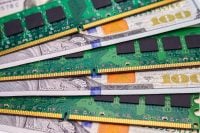
Memory costs are already squeezing Apple hard enough that Tim Cook called it a once-in-a-century event, but the worst may still be ahead for iPhone buyers and Apple shareholders alike.


Apple (NASDAQ:AAPL | AAPL Price Prediction) has already pushed iPhone prices higher by as much as $300 in response to what CEO Tim Cook described as a “100-year flood” in memory prices. According to a new TrendForce smartphone industry report published August 10, 2026, that squeeze is only beginning.
The Memory Math Is Getting Ugly
TrendForce estimates memory’s share of the iPhone Pro bill of materials has climbed from roughly 10% a year ago on the iPhone 17 Pro to about 34% in Q3 2026, and is expected to exceed 40% in the first half of 2027. For the iPhone 18 Pro 256GB, TrendForce estimates the BOM cost will rise about 38% year over year. Contract memory prices have risen five to sevenfold since the start of 2025.
TrendForce’s conclusion: “escalating component costs, led by memory, are expected to significantly raise production expenses for Apple’s next iPhone 18 series… making higher retail prices unavoidable. Apple may offset some of these costs by reducing gross margins to prevent weakening consumer demand.”
How Exposed Is Apple?
Every meaningful Apple product contains memory, and iPhone alone generated $54.25 billion in the June quarter, part of $109.42 billion in total revenue. Cook flagged the pressure on the March-quarter call: “For the June quarter, we expect significantly higher memory costs… beyond the June quarter, we believe memory costs will drive an increasing impact on our business.” June-quarter gross margin guidance was set at 47.5% to 48.5%. Jefferies downgraded Apple to Underperform with a $263.66 target, citing “rising memory costs and the cancellation of an ‘all-glass iPhone’ that would have helped increase average selling prices.” Apple shares trade at $306.32, up 13.7% year to date.
Who Benefits, Who Bleeds
Memory suppliers are printing money. Micron Technology (NASDAQ:MU) posted fiscal Q3 revenue of $41.456 billion, up 345.7% year over year, with GAAP gross margin of 84.6%. CFO Mark Murphy said Q2 DRAM prices rose in the mid-sixties percentage range and NAND prices in the high-seventies percentage range. CEO Sanjay Mehrotra warned Micron is only fulfilling “50% to two-thirds” of key customer demand. Shares are up 201.86% year to date. South Korea’s SK Hynix, the other major DRAM supplier to Apple, is capturing similar gains.
The pain sits with chip vendors whose volumes depend on smartphone units. Qualcomm (NASDAQ:QCOM) saw handset revenue drop to $5.086 billion, down 20% year over year, with operating income falling 41.13%. CEO Cristiano Amon acknowledged a “challenging memory and supply environment” and said Qualcomm is taking pricing actions to reflect higher input costs. Shares are down 4.21% year to date.
The Contrarian Long-Term Case
Apple can absorb the hit by trimming gross margins where rivals cannot. Android vendors in entry-level and mid-range tiers face a harsher squeeze, and TrendForce expects global smartphone production to stay under pressure. If weaker competitors are forced into steeper hikes or discontinue lines running at negative gross margins, Apple could gain share. If memory pricing normalizes, the $300 already baked into iPhone shelf prices becomes pure margin recovery.
Contact [email protected] for any questions or corrections.
After two decades of patrolling the dark corners of suburbia as a police officer, Rich Duprey hung up his badge and gun to begin writing full time about stocks and investing. For the past 20 years, he’s been cruising the markets looking for companies to lock up as long-term holdings in a portfolio while writing extensively on the broad sectors of consumer goods, technology, and industrials. Because his experience isn’t from the typical financial analyst track, Rich is able to break down complex topics into understandable and useful action points for the average investor. His writings have appeared on The Motley Fool, InvestorPlace, Yahoo! Finance, Money Morning, and, of course, 24/7 Wall St. He has been featured in both U.S. and international publications, including MarketWatch, Financial Times, Forbes, Fast Company, and USA Today.