Jensen Huang’s $500 Billion Wall Street AI Deal Sounds Brilliant — Until You Consider the Risks
Six of Wall Street's biggest capital allocators just signed onto a half-trillion-dollar Nvidia infrastructure bet, but a quiet detail buried in the fine print reveals why the market pushed back almost immediately.

This post may contain links from our sponsors and affiliates, and Flywheel Publishing may receive compensation for actions taken through them.
Wall Street has spent the past two years pouring money into anything with “AI” stamped on the label, and the bill for that enthusiasm keeps climbing. Data center buildout costs are now measured in the hundreds of billions annually, and hyperscalers have leaned on their own balance sheets to keep pace. That approach has limits.
Even Microsoft (NASDAQ:MSFT | MSFT Price Prediction), Meta Platforms (NASDAQ:META), and Amazon (NASDAQ:AMZN) can’t fund a global compute buildout entirely with free cash flow, which is why the financing structures underneath AI infrastructure have started shifting toward the same institutional capital that built America’s highways and power grids.
Nvidia (NASDAQ:NVDA) just gave that shift its biggest push yet. Yesterday, the company announced memoranda of understanding with Apollo (NYSE:APO), BlackRock (NYSE:BLK), Blackstone (NYSE:BX), Brookfield (NYSE:BN), Goldman Sachs (NYSE:GS), and KKR (NYSE:KKR) to mobilize over $500 billion in third-party capital for AI infrastructure. It’s a landmark deal. It’s also one investors should read closely before assuming it de-risks the AI trade.
A New Asset Class, Old Vendor-Financing Habits
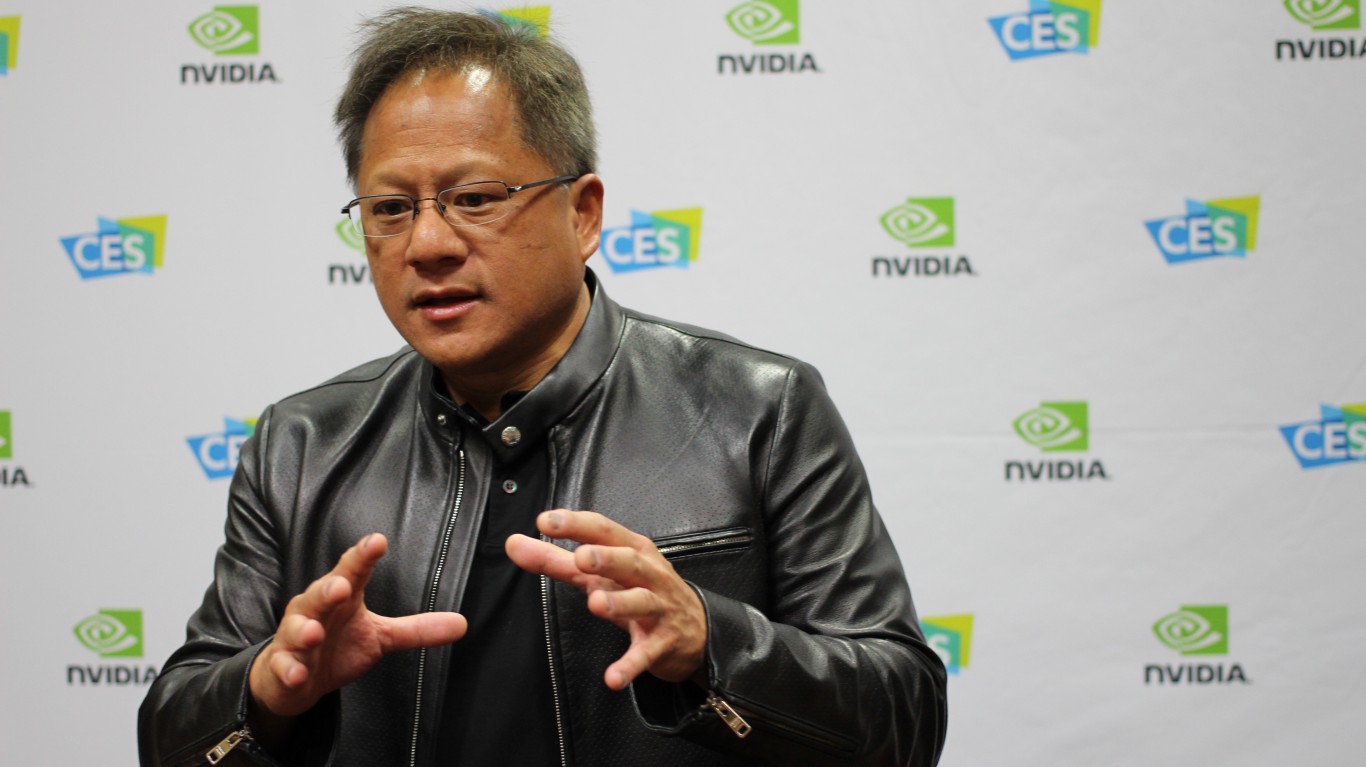
Huang’s pitch is that Nvidia compute has become an investable asset class, comparable to real estate, toll roads, or power grids — infrastructure institutional capital is familiar with underwriting. The new “compute financing platforms” are designed to fund data centers and chip deployments for Nvidia’s customers, including frontier AI labs, enterprises, and cloud providers, at what the company calls attractive rates.
The detail that matters most is Nvidia retains the option to backstop up to roughly 25% of the financing, or about $125 billion. That’s not a passive bystander role. The stock declined about 3% following the announcement, a signal that the market isn’t fully buying the “independent underwriting” framing.
That skepticism has merit. Capital raised through these platforms flows toward customers acquiring more Nvidia hardware, which means Nvidia benefits twice — once through chip and software sales, and again through deeper CUDA ecosystem lock-in. The company has already faced scrutiny over equity stakes and guarantees extended to major buyers, including prior data-center financing arrangements. Layering a $125 billion backstop on top of that pattern creates correlated exposure: if the underlying AI projects underperform, Nvidia risks losing both the demand and the capital it pledged to protect.
Why GPUs Aren’t Toll Roads
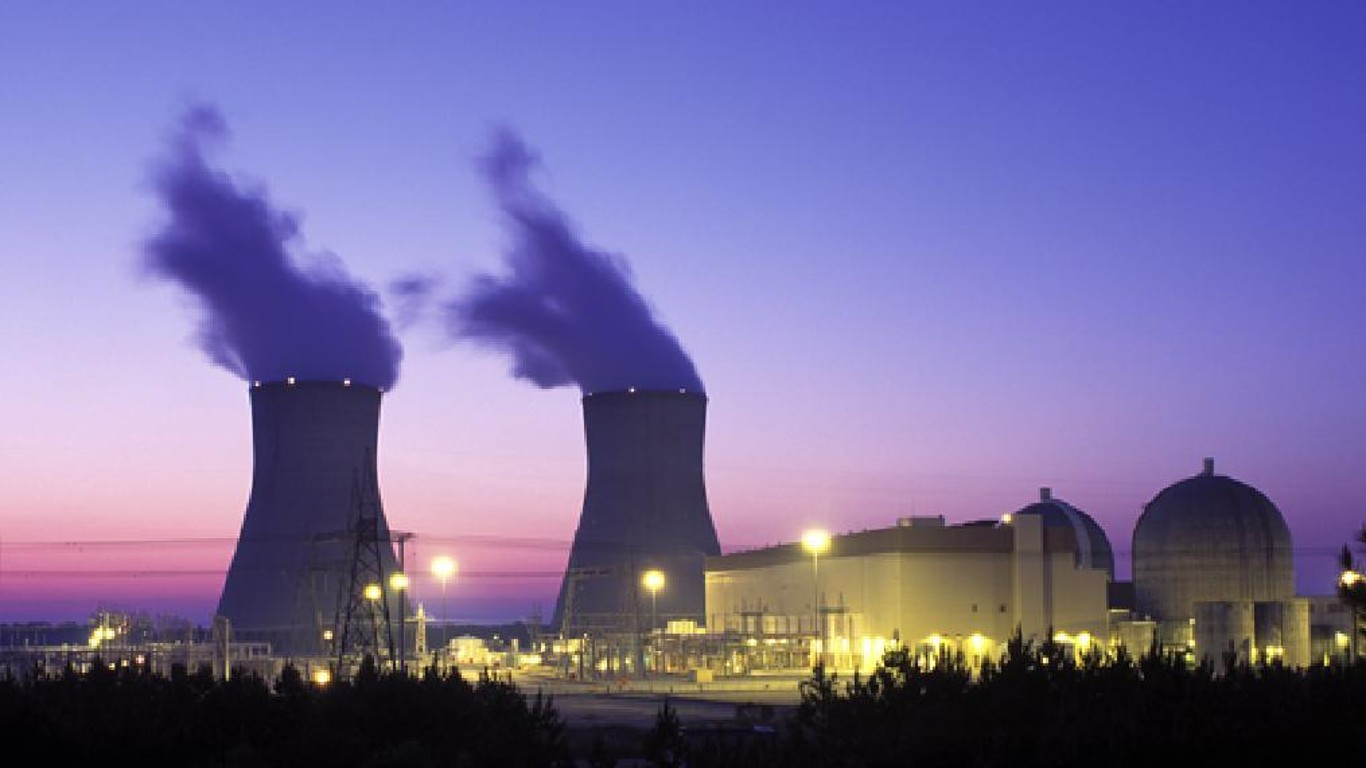
The comparison to real estate and power grids sounds reassuring until you check the depreciation schedules. Toll roads generate revenue for decades. Power plants run for 30-plus years. GPUs don’t get that luxury.
| Asset Type | Typical Useful Economic Life | Financing Tenor Fit |
| Toll roads / power grids | 30–50+ years | Long-duration debt, well-matched |
| Commercial real estate | 30–40 years | Long-duration debt, well-matched |
| Data center GPUs (Nvidia-class) | 3–5 years before meaningful obsolescence | Mismatched against infrastructure-style tenors |
Each new architecture generation — Nvidia has cycled through Hopper, Blackwell, and now Rubin in a matter of years — compresses the resale and collateral value of the prior fleet. Infrastructure lenders typically underwrite against decades of predictable cash flow. GPUs offer a fraction of that runway. If AI utilization or pricing power softens, collateral values erode fast, leaving lenders — and Nvidia, through its backstop — exposed to losses that a toll road never generates.
Significant Uncertainty Remains
Granted, these are MOUs, not signed, funded deals. The $500 billion figure is a multiyear target, not committed capital sitting in an account today. Execution risk is also real: permitting, power availability, and the pace at which these six firms — with a combined balance sheet north of $3 trillion in assets under management between Blackstone, Brookfield, Apollo, and KKR alone — actually deploy capital will determine whether this reshapes AI financing or just headlines a press release.
The broader concern is amplification. Much of the AI ecosystem’s end demand isn’t yet generating cash flow that matches the capital being committed. Stacking leverage onto that gap doesn’t create revenue; it just raises the stakes if growth disappoints.
Key Takeaway
In short, Nvidia’s $500 billion consortium is a genuine vote of confidence from six of the world’s largest capital allocators, and it does reduce Nvidia’s own balance-sheet burden. But the vendor-financing dynamic and the mismatch between GPU depreciation and infrastructure-style lending are real structural risks, not just headline skepticism.
Investors should treat this as a demand signal worth watching, not proof that AI compute has become as safe as a toll road. Keep an eye on utilization rates and how much of that $125 billion backstop Nvidia actually has to use — that number will tell you more than the $500 billion headline ever will.
Contact [email protected] for any questions or corrections.
After two decades of patrolling the dark corners of suburbia as a police officer, Rich Duprey hung up his badge and gun to begin writing full time about stocks and investing. For the past 20 years, he’s been cruising the markets looking for companies to lock up as long-term holdings in a portfolio while writing extensively on the broad sectors of consumer goods, technology, and industrials. Because his experience isn’t from the typical financial analyst track, Rich is able to break down complex topics into understandable and useful action points for the average investor. His writings have appeared on The Motley Fool, InvestorPlace, Yahoo! Finance, Money Morning, and, of course, 24/7 Wall St. He has been featured in both U.S. and international publications, including MarketWatch, Financial Times, Forbes, Fast Company, and USA Today.