Tesla’s China Numbers Show It Is On The Road To Comeback
Tesla's stock has cratered 26% this year while rivals circle, but a fresh wave of data from the world's largest car market suggests the company's fortunes may be shifting faster than Wall Street expected.


Investors, more and more likely to look at Tesla’s (NASDAQ: TSLA) | TSLA Price Prediction car sales, should be encouraged by official EV figures out of China for the month of July. According to the China Passenger Car Association, across the world’s largest car market, sales of passenger cars fell 20.9% in July from the same month the year before to 1.46 million retail units. Sales of EVs and other cars that are not run entirely by fossil fuels dropped 3.9% to 951,000.
Tesla’s sales were extremely strong. According to The Wall Street Journal, “In July, Tesla exported 66,330 units made at its Shanghai plant and sold 93,579 units to Chinese buyers.” Keep in mind that in the second quarter, Tesla said it produced 450,000 vehicles and delivered over 480,000 vehicles. On top of China, Tesla sells hundreds of thousands of cars in the US, UK, and EU each quarter. Although the Chinese numbers cannot be used as an exact way to estimate third-quarter sales, investors should be optimistic.
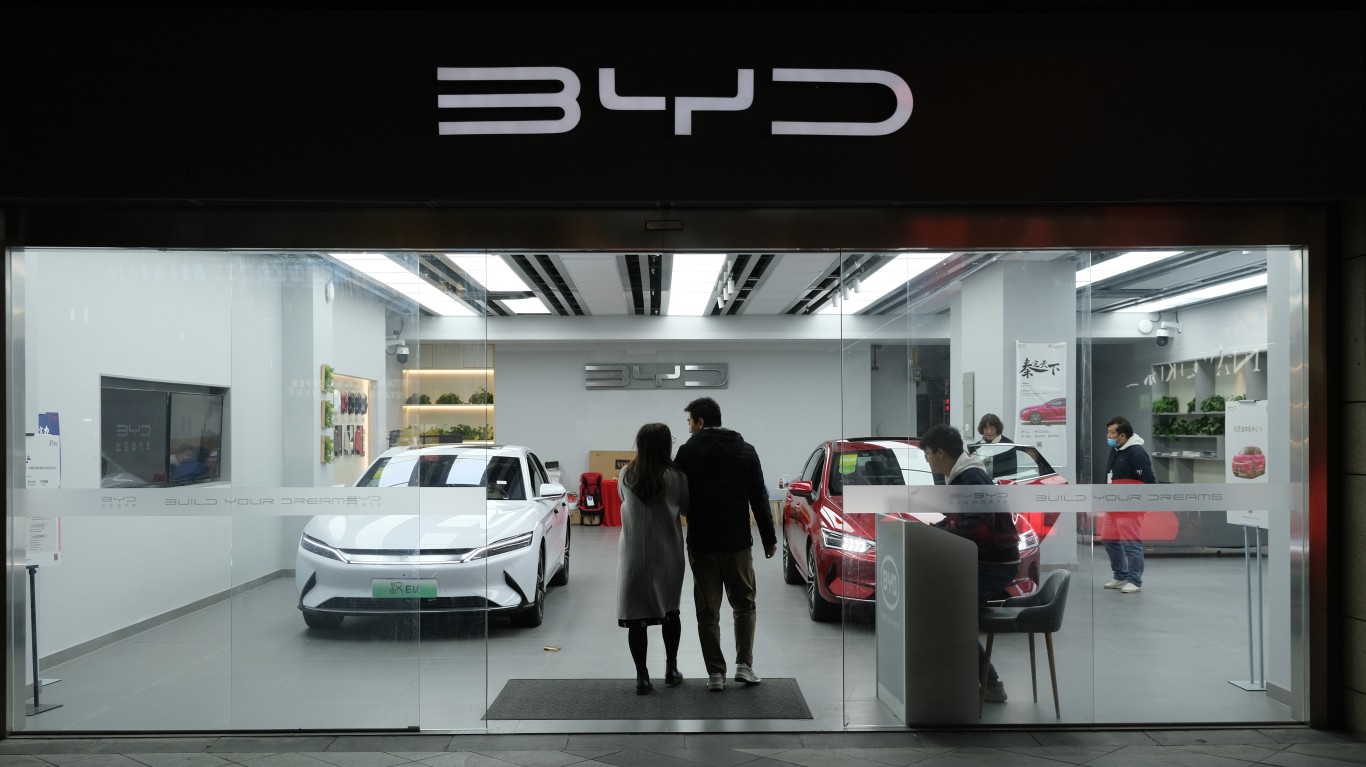
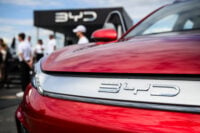
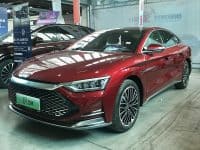
On top of the good Tesla news, its primary global EV rival BYD had a horrible month. It did not sell enough units to be among the top three by units sold in China in July.
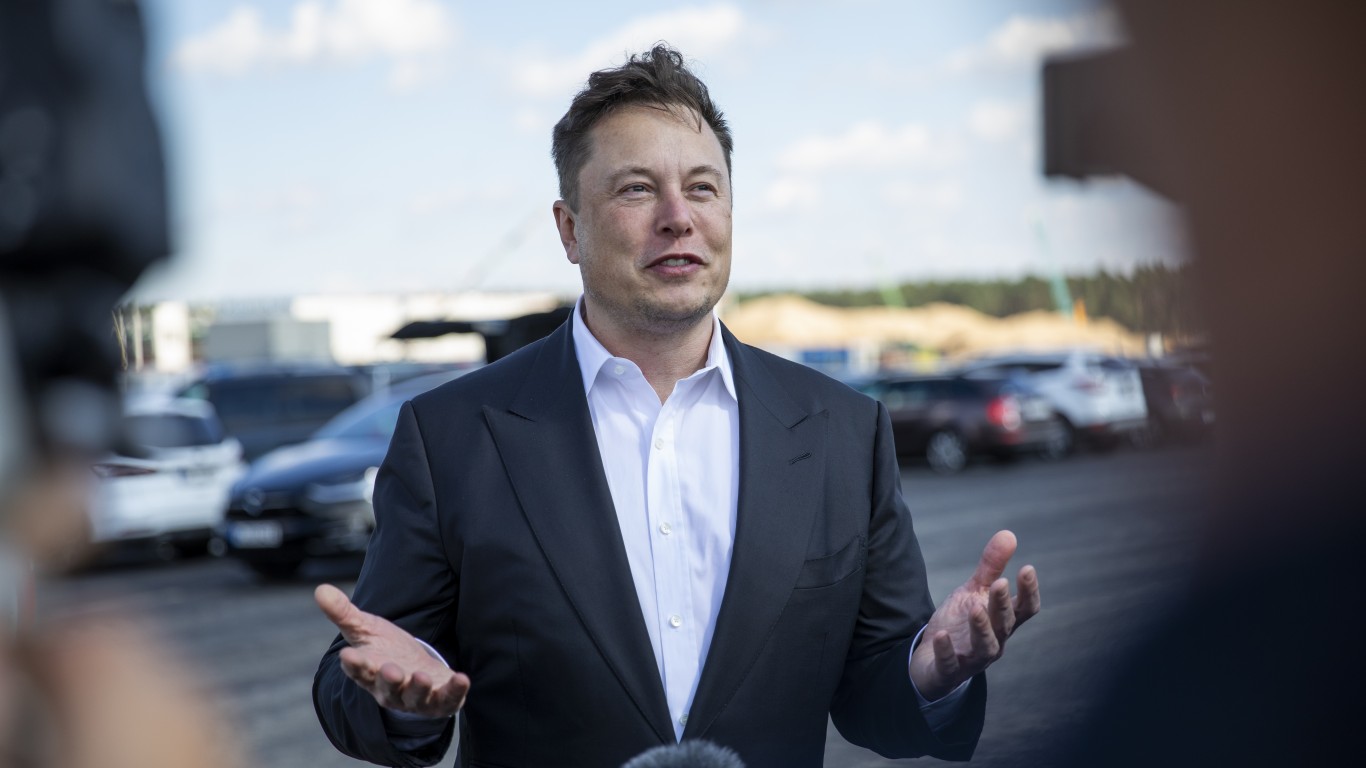
Tesla’s stock is down 26% this year, while the S&P 500 is up 12%. To some extent, this is because of a tug-of-war between Elon Musk and a group of investors who believe his argument that Tesla will grow because of Robotaxis, AI, and robots is unlikely. Rather, they would like to see Tesla as the dominant EV company in the world, as it was a half a decade ago. It continues to trail some of the largest EV companies in China, which include Geely.
In Europe, after a difficult year in 2025, Tesla’s sales have rebounded in double digits year over year in the first half of 2026. However, BYD is growing faster and now sells more units per month.
In the US, Tesla has over half the EV market. It is helped by the fact that large US car companies, particularly GM (NYSE: GM) and Ford (NYSE: F), have retreated after billions in losses on their EV divisions. But US EV sales dropped by about 20% in the first half of the year. Most of this has been blamed on the elimination of the $7,500 federal tax credit, which ended in September of last year. High gas prices could help reverse that trend–if they remain high. Used EV sales have already started to rise. (That could draw people away from new models, which tend to be expensive compared to gas-powered cars.)
Tesla may never get back its global market share, but it could benefit from a sharp growth in EV sales across a large number of nations, particularly those where gas prices are high already. If the flow of oil through the Strait of Hormuz remains very low, EVs will become more and more attractive. Gas prices in the US could move toward $5. They are currently just above $4 a gallon, but US oil reserves are a multi decade low. According to The Independent, “US oil reserve just hit a low not seen since 1983.”
If Tesla has an ace in the hole, it is the 100% tariff the US has put on Chinese EVs. Many experts consider these cars to be as well-built as Teslas, but they are also less expensive. China may be important for Tesla, but the US tariffs may be the key to a rebound.
Contact [email protected] for any questions or corrections.
Douglas A. McIntyre is the co-founder, chief executive officer and editor in chief of 24/7 Wall St. and 24/7 Tempo. He has held these jobs since 2006.
McIntyre has written thousands of articles for 24/7 Wall St. He is an expert on corporate finance, the automotive industry, media companies and international finance. He has edited articles on national demographics, sports, personal income and travel.
His work has been quoted or mentioned in The New York Times, The Wall Street Journal, Los Angeles Times, The Washington Post, NBC News, Time, The New Yorker, HuffPost USA Today, Business Insider, Yahoo, AOL, MarketWatch, The Atlantic, Bloomberg, New York Post, Chicago Tribune, Forbes, The Guardian and many other major publications. McIntyre has been a guest on CNBC, the BBC and television and radio stations across the country.
A magna cum laude graduate of Harvard College, McIntyre also was president of The Harvard Advocate. Founded in 1866, the Advocate is the oldest college publication in the United States.
TheStreet.com, Comps.com and Edgar Online are some of the public companies for which McIntyre served on the board of directors. He was a Vicinity Corporation board member when the company was sold to Microsoft in 2002. He served on the audit committees of some of these companies.
McIntyre has been the CEO of FutureSource, a provider of trading terminals and news to commodities and futures traders. He was president of Switchboard, the online phone directory company. He served as chairman and CEO of On2 Technologies, the video compression company that provided video compression software for Adobe’s Flash. Google bought On2 in 2009.