The Old Fear-Based Paradigm Around Memory Cyclicality is Dead, So I’m Buying Micron
Micron keeps getting dismissed as a cyclical chip stock doomed to repeat the same boom-and-bust pattern, but one structural shift buried in its latest earnings call suggests that logic no longer applies the way investors assume.

This post may contain links from our sponsors and affiliates, and Flywheel Publishing may receive compensation for actions taken through them.
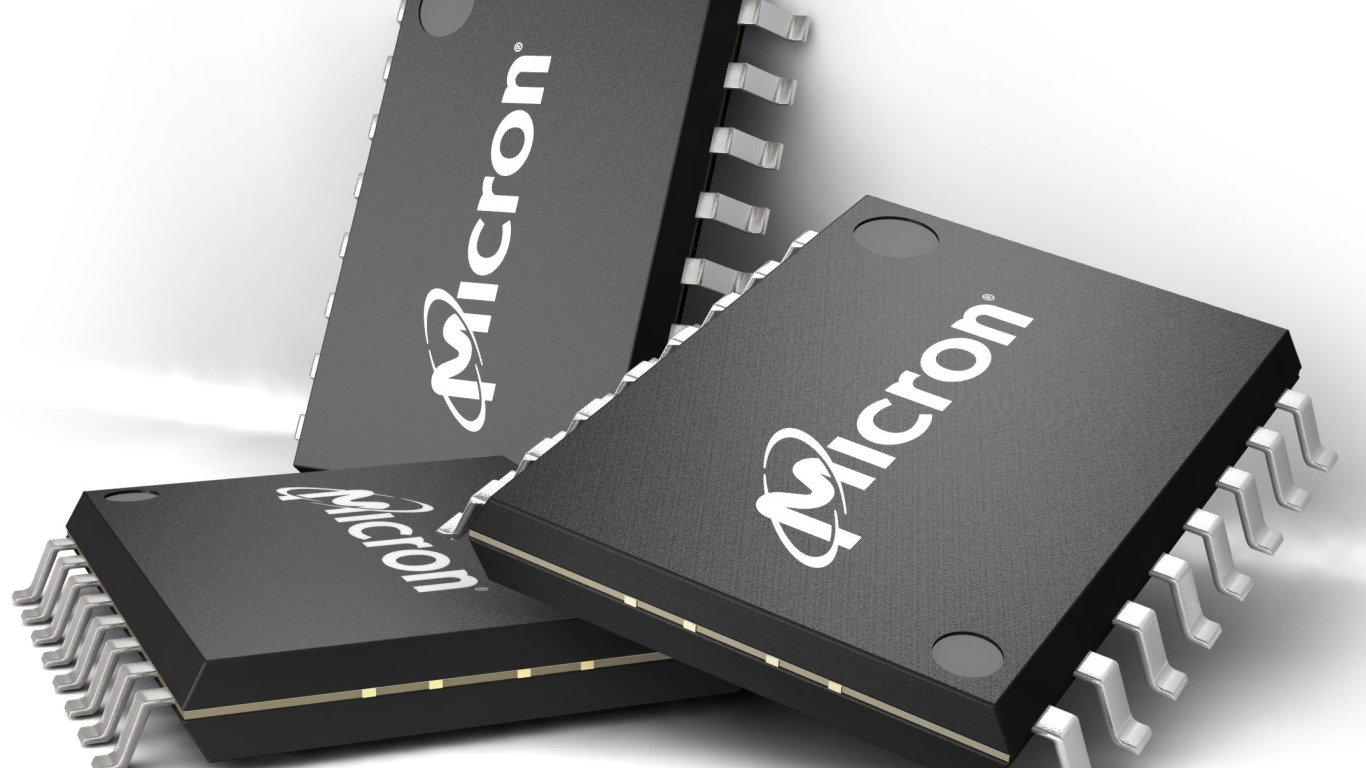
I keep buying Micron Technology (NASDAQ:MU | MU Price Prediction), and I am not planning to stop. The button gets pressed on green days and red days, and I sleep fine either way, because the story I bought into last year has hardened into something structural.
The core reason is simple: the old memory playbook, where every up cycle carries the seed of an oversupply crash, no longer describes this business. High Bandwidth Memory is a co-engineered subsystem shipped under multi-year, non-cancellable supply contracts with hyperscalers, not commodity DRAM sold on spot. On the Q3 FY26 call, CEO Sanjay Mehrotra told investors that “the memory industry has been structurally transformed by the proliferation of AI” and that Micron expects “tight conditions to persist beyond calendar 2027”. That is a supply chain statement, not a cycle statement.
Three Receipts I Keep Coming Back To
Revenue durability that no memory business has ever had. Micron has signed 16 Strategic Customer Agreements, with $100 billion in remaining performance obligations and $22 billion of customer deposits and financial commitments already on the books. CFO Mark Murphy said that even at contract floor prices, “we expect the margins to be significantly above prior peak margins.” Floor pricing beats prior cycle peaks. Read it twice.
The Q3 FY26 numbers reflect structural demand, not cyclical dynamics. Revenue landed at $41.456 billion, up 345.72% year over year, GAAP gross margin hit 84.6% versus 37.7% a year earlier, and free cash flow ran $18.304 billion in a single quarter. Guidance for Q4 FY26 calls for $50.0 billion in revenue and $31.00 in non-GAAP EPS at the midpoint. Non-GAAP EPS for Q3 came in at $25.11, the seventh consecutive quarter of beats.
Valuation still is not stretched despite the run. Shares trade at $868.52 with a forward P/E of 6 and a trailing P/E of 20. The balance sheet shows $24.995 billion in cash against total liabilities of $33.39 billion and shareholders’ equity of $100.724 billion. This is a fortress funding its own capex.
Why Not the Obvious Alternatives
The reflex trade for an AI thesis is NVIDIA (NASDAQ:NVDA). I keep coming back to Micron because NVIDIA’s accelerators cannot ship without HBM at bandwidth, and HBM is supply constrained. I want to own the constrained input, and Micron has already shipped over $1 billion in HBM4 revenue with a 12-high ramp tracking twice as fast as HBM3E 12-high. I also looked at Western Digital (NASDAQ:WDC) as the storage proxy and passed because WDC has no HBM franchise, which is the exact piece of the memory stack the AI buildout cannot substitute.
The Real Risk
The real risk is customer concentration and capex intensity. The lead HBM4 customer is a large slice of the growth story, and capex ran $7.826 billion in Q3 alone. If AI infrastructure spending slows before the SCA book fully cures the cycle, this stock will feel it. My answer is that $100 billion of RPO across 14 signed agreements, structured as take-or-pay with floor pricing above prior peak margins, is the exact insurance policy I want against that scenario.
The dividend was raised 30% this year to $0.15 quarterly, and $650 million came back through buybacks over nine months. I buy for the compounding, and the compounding here is being contractually locked in for the next five years.
The buy button stays active.
Contact [email protected] for any questions or corrections.
Alex Sirois is a financial writer with experience spanning both retail and institutional investing. He has written for InvestorPlace and held roles at BNY Mellon and Bernstein, giving him a perspective that bridges Main Street portfolios and Wall Street analysis.
Alex holds an MBA from George Washington University and has built his career across multiple industries, including e-commerce, education, and translation — a breadth of experience that informs how he breaks down complex financial topics for everyday investors. His writing is conversational, actionable, and grounded in long-term, buy-and-hold investing principles.
At 247 Wall St., Alex focuses on delivering analysis that is both accessible and useful, with a clear emphasis on helping readers make more informed decisions with their money.