Investors Trust Nancy Pelosi Almost as Much as Warren Buffett for Investment Ideas. Here’s Why
Retail investors now follow Nancy Pelosi's stock trades almost as closely as Warren Buffett's, and their reason for doing so reveals something troubling about what they think is actually happening in Washington.


The stock market runs on information. Corporate earnings, economic reports, and Federal Reserve decisions are public. What happens behind closed doors in Washington is different.
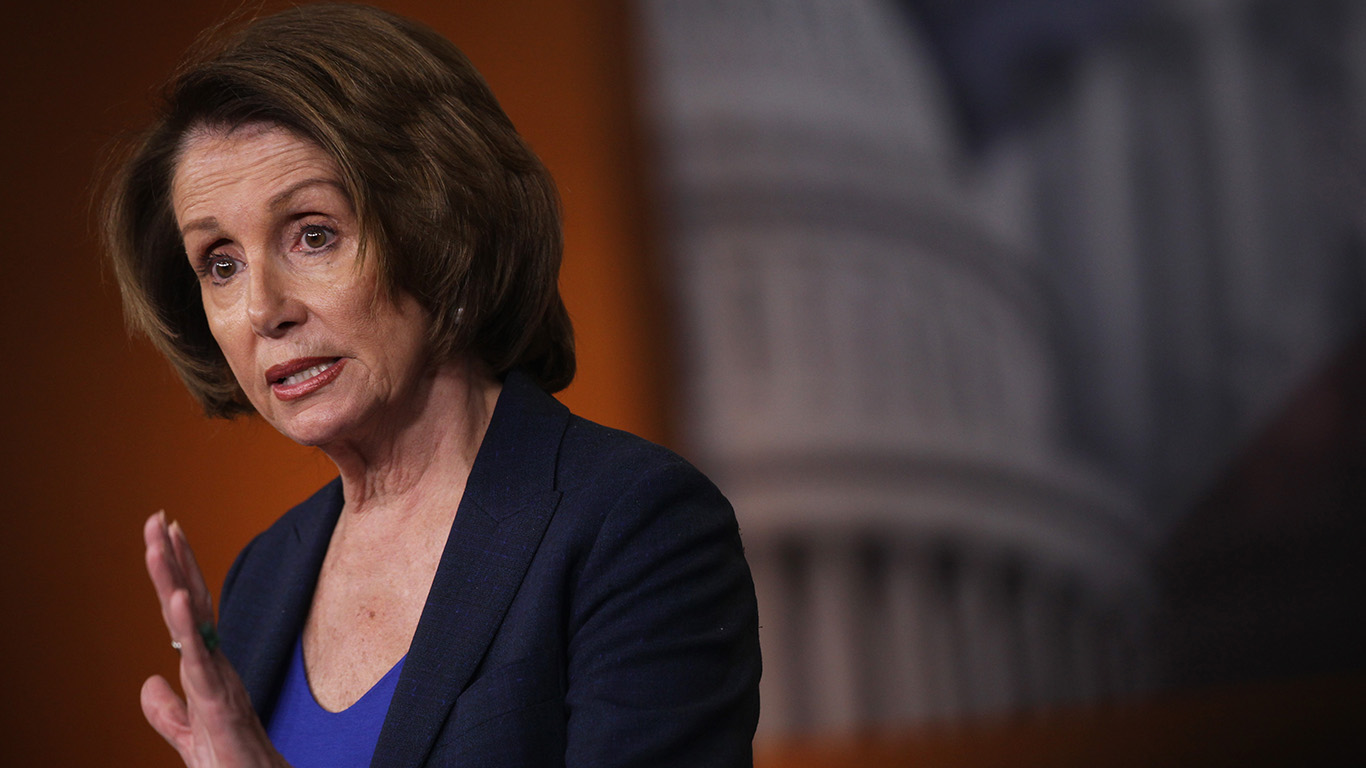
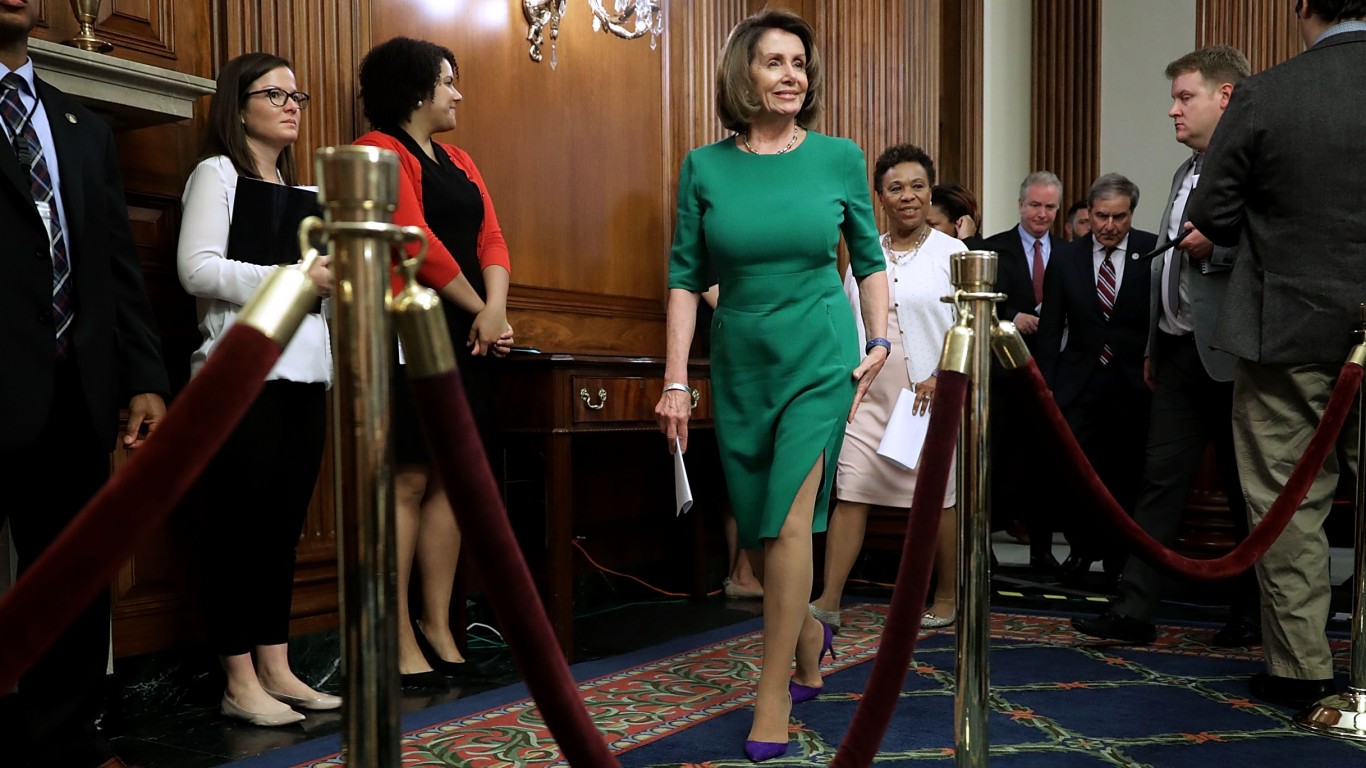
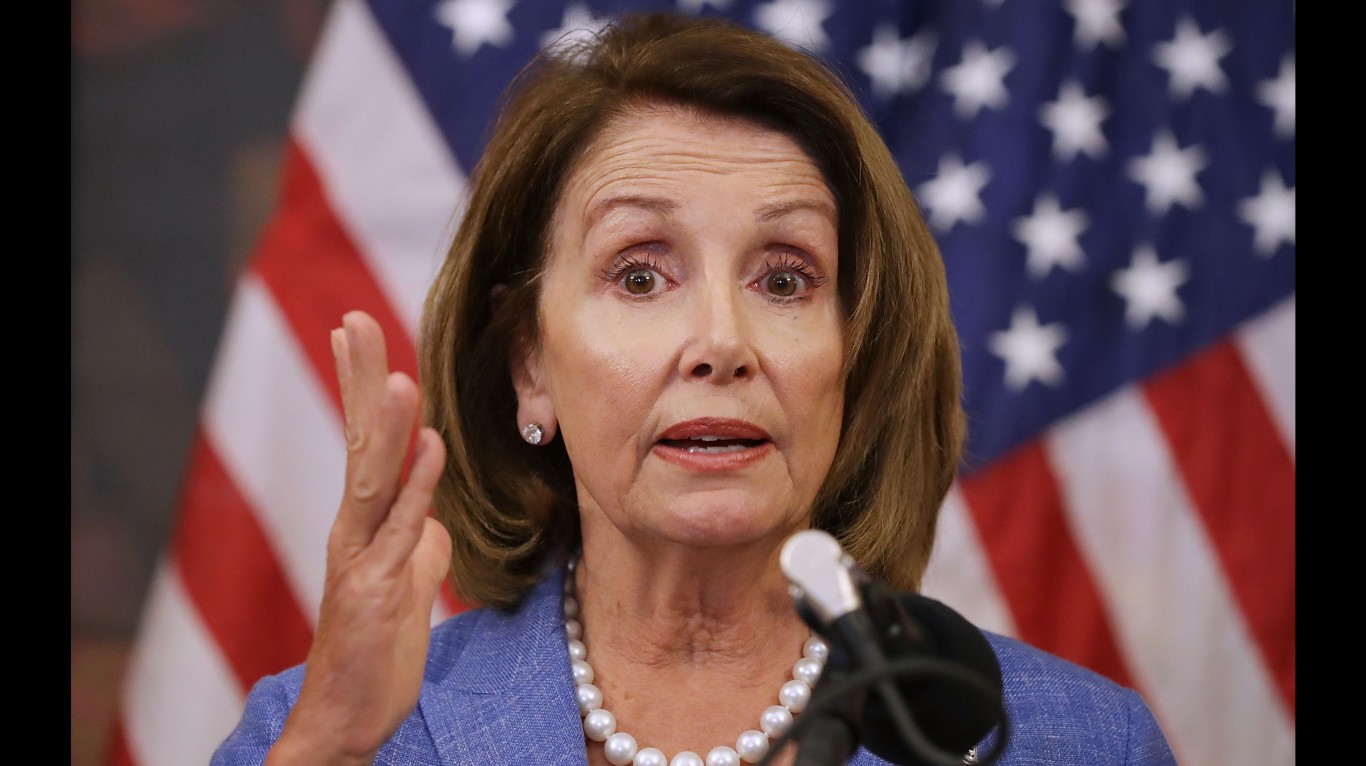
That helps explain an unlikely pairing among retail investors: They trust former House Speaker Nancy Pelosi’s trades almost as much as Warren Buffett’s. Both rank near the top when investors decide whose trades are worth following.
The more revealing number, however, isn’t Pelosi’s popularity. It’s why investors believe her trades are worth following.
Investors Think Congress Has An Inside Track
A July MarketWise survey of 1,005 U.S. retail investors put Buffett at the top, cited by 35% of “copycat” investors — traders who follow executives, politicians, celebrities, or financial influencers. Pelosi trailed at 34%, followed by financial influencers at 30% and Elon Musk at 28%.
It’s easy to see why Pelosi ranks so high. Since 2014, Pelosi’s trades have generated cumulative returns of 965%, compared with 313% for the S&P 500, according to Quiver Quantitative. Her portfolio gained roughly 65% in 2023 alone and an incredible 71% in 2024. Last year’s 20% return was more modest but still beat the index’s 17% and Buffett’s 11% at Berkshire Hathaway (NYSE:BRK-A | BRK-A Price Prediction)(NYSE:BRK-B).
Yet where Buffett built Berkshire Hathaway on decades of publicly documented investing discipline, Pelosi’s is seen as due to proximity to power. MarketWise found that 86% of retail investors believe members of Congress trade on non-public information. Nearly 3 in 5, or 59%, said Congress should be banned from trading individual stocks. Another 21% would allow it only through a blind trust.
This isn’t just an investing quirk. It’s a credibility problem.
The House Just Proved the Point
Congress took a step toward addressing that distrust on July 22, when the House passed the Stop Insider Trading Act. The bill would prohibit members of Congress, their spouses, and dependent children from purchasing individual stocks and require seven to 14 days’ notice before selling covered investments.
But investors shouldn’t mistake passage for reform. The bill faces long odds in the Senate, and it exempts the president and vice president. That’s a tough sell to an electorate already skeptical of Washington, and the omission matters.
President Donald Trump retained an actively traded portfolio through the first quarter. His Office of Government Ethics report revealed 3,642 transactions, including more than $100 million in purchases and sales. His second-quarter report hasn’t been released yet.
Pelosi’s Popularity Says More About Congress Than Buffett
Pelosi’s trading record may give investors interesting companies to research, though it does not offer a smoking gun that she traded on inside information. Her stock trade reports simply offer a window into the portfolio.
Unfortunately, MarketWise found that 59% of copycat investors had traded within 24 hours of seeing a social-media post about a trade, while 42% had copied a famous person’s trade without researching the company. That’s the wrong lesson to take from Pelosi’s popularity.
Investors don’t need to decide whether Pelosi is a better stock picker than Buffett. They need to determine whether her trades give them a reason to investigate a company further. They should be a launch pad for due diligence, not the destination for making an investment decision.
Key Takeaway
In short, Pelosi’s near-parity with Buffett isn’t a vote of confidence in Washington. It’s the idea that lawmakers know something ordinary investors don’t. That’s precisely why Congress needs to remove the ambiguity. The House’s July 22 vote is largely symbolic unless the Senate acts — and ultimately, any ban should cover the executive branch as well.
For investors, the better strategy is simple: Treat Pelosi’s, or any famous investor’s, trades as research leads rather than buy signals. A congressional trade may tell you where to look, but it won’t tell you what price to pay, how much to buy, or when to sell.
Contact [email protected] for any questions or corrections.
After two decades of patrolling the dark corners of suburbia as a police officer, Rich Duprey hung up his badge and gun to begin writing full time about stocks and investing. For the past 20 years, he’s been cruising the markets looking for companies to lock up as long-term holdings in a portfolio while writing extensively on the broad sectors of consumer goods, technology, and industrials. Because his experience isn’t from the typical financial analyst track, Rich is able to break down complex topics into understandable and useful action points for the average investor. His writings have appeared on The Motley Fool, InvestorPlace, Yahoo! Finance, Money Morning, and, of course, 24/7 Wall St. He has been featured in both U.S. and international publications, including MarketWatch, Financial Times, Forbes, Fast Company, and USA Today.