The 4 Words From Jensen Huang That Could Redefine NVIDIA’s Total Addressable Market
Jensen Huang dropped four words at GTC 2026 that could expand NVIDIA's addressable market far beyond AI chips, and the company is already building the product stack to back up that claim.

This post may contain links from our sponsors and affiliates, and Flywheel Publishing may receive compensation for actions taken through them.
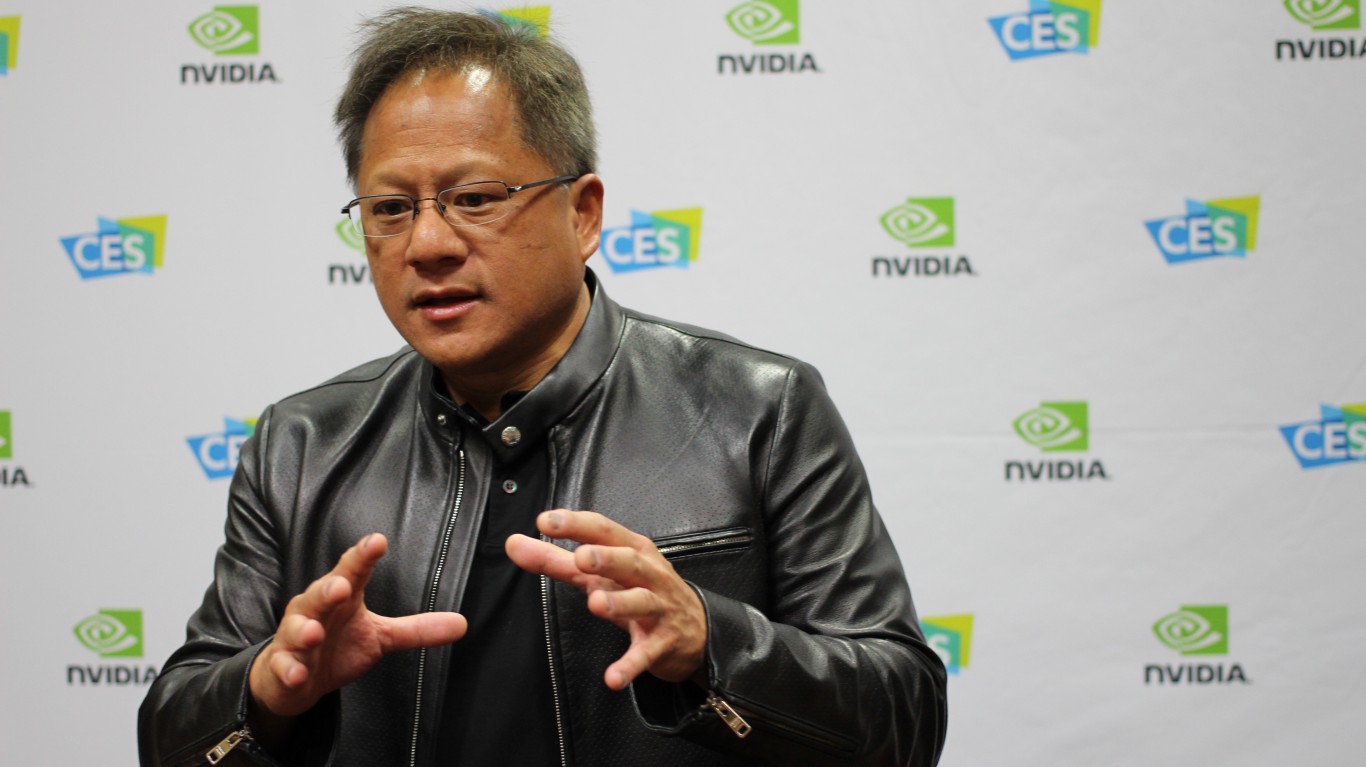
At NVIDIA’s GTC 2026 conference in Q1, CEO Jensen Huang made a statement that reframes the company’s long-term addressable market: “Every industrial company will become a robotics company.” For investors, that line deserves unpacking because it signals where NVIDIA’s next phase of growth is being built.
The Physical AI Thesis
Huang’s claim is backed by a specific product stack. NVIDIA (NASDAQ:NVDA | NVDA Price Prediction) announced Isaac GR00T N1 and N1.5, described as the world’s first open humanoid robot foundation models, alongside new Cosmos world foundation models and frameworks for physical AI. The company also launched the NVIDIA Halos safety platform and expanded partnerships with Siemens to build an industrial AI operating system and with Dassault Systemes to build an industrial AI platform, with Omniverse integrations spanning Accenture, Ansys, SAP, and Schneider Electric.
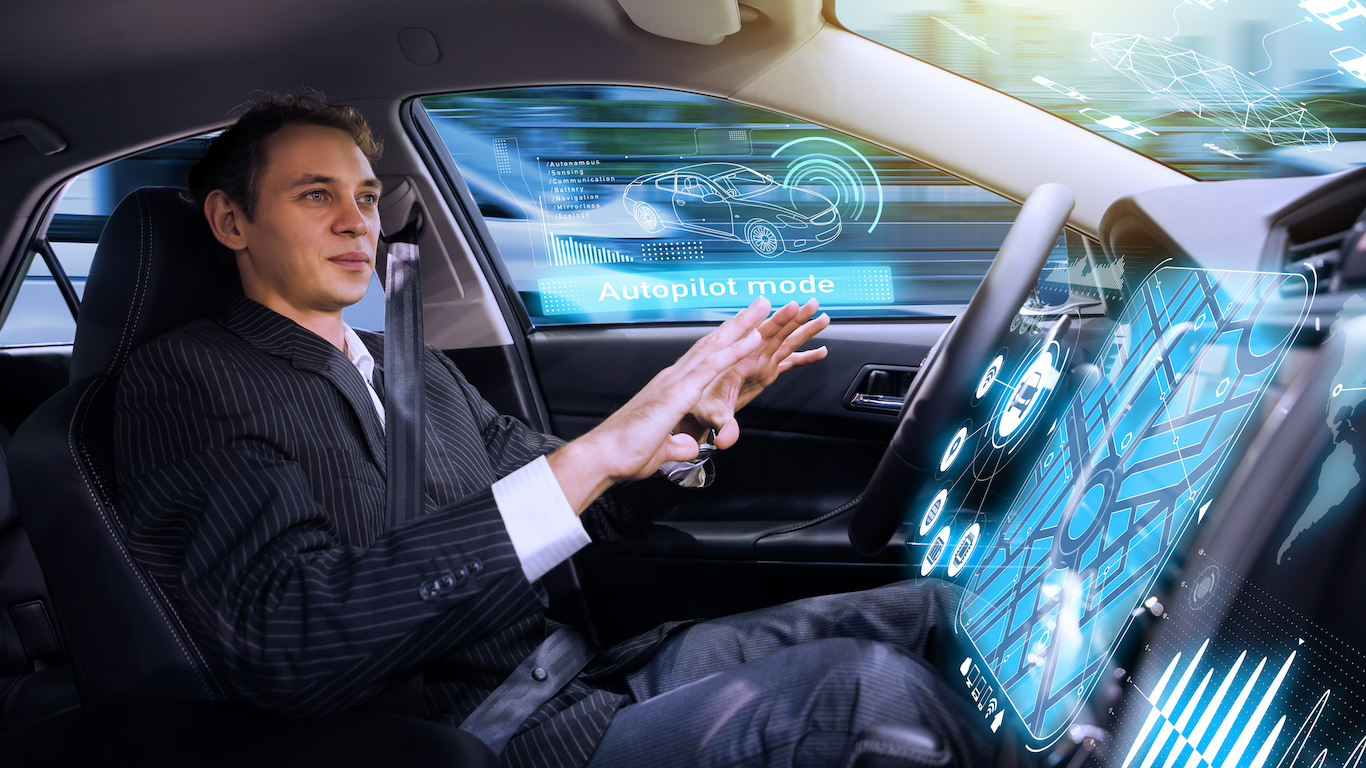
The robotics ecosystem is also expanding into mobility. NVIDIA announced plans to launch L4 software-driven robotaxis on Uber across 28 cities by 2028, with the Uber partnership targeting 100,000 level 4-ready vehicles by 2027. Mercedes-Benz is deploying NVIDIA DRIVE AV software in its all-new CLA.
The Numbers Behind the Vision

NVIDIA reported full-year FY2026 revenue of $215.94 billion, up 65.47% year over year, with net income of $120.07 billion and free cash flow of $96.58 billion. The most recent quarter showed Q4 FY2026 revenue of $68.13 billion, up 73.2% year over year, with non-GAAP EPS of $1.62 beating the $1.52 consensus estimate.
The automotive segment, NVIDIA’s most direct robotics revenue line today, remains small: $604 million in Q4 FY2026, up 6% year over year. That is a fraction of total revenue, which means the “every industrial company becomes a robotics company” thesis remains a forward-looking bet rather than a current revenue driver.
What is scaling now is the infrastructure that physical AI runs on. Data Center Networking revenue hit $10.98 billion in Q4, up 263% year over year, driven by NVLink fabric adoption. Q1 FY2027 guidance stands at approximately $78 billion in revenue, though that figure explicitly excludes any Data Center compute revenue from China due to export restrictions.
What Investors Should Watch

The proof points over the next 12 months are specific. Watch automotive segment revenue for acceleration beyond its current single-digit growth rate. Track whether Isaac GR00T and Cosmos adoption shows up in enterprise software and licensing metrics. Monitor whether the Siemens and Dassault integrations generate measurable industrial customer wins. The analyst consensus target price sits at $305.94, more than 35% above the current price of $225.46, suggesting analysts see meaningful upside relative to the physical AI opportunity Huang is describing.
Contact [email protected] for any questions or corrections.
Joel South covers large-cap stocks, dividend investing, and major market trends, with a focus on earnings analysis, valuation, and turning complex data into actionable insights for investors.
He brings more than 15 years of experience as an investor and financial journalist, including 12 years at The Motley Fool, where he served as an investment analyst, Bureau Chief, and later led the Fool.com investing news desk. He has also co-hosted an investing podcast and appeared across TV and radio discussing market trends.