




Oil has become one of the clearest financial beneficiaries of the Iran war — and one of the biggest headaches for American drivers. The Strait of Hormuz, a critical artery for global energy shipments, remains effectively closed, with little tanker traffic moving through the waterway.
West Texas Intermediate (WTI) crude is above $82 a barrel and Brent is above $88, compared with roughly $73 Brent before the war. The result has been a windfall for Big Oil. Bloomberg reported in July that combined earnings for the five supermajors were on track to be the third-highest in history, while several companies have already reported profits more than double a year ago.
Exxon And Chevron Are Already Cashing In
Exxon Mobil (NYSE:XOM | XOM Price Prediction) reported $14.5 billion of second-quarter profit, up from $7.1 billion a year earlier. Chevron (NYSE:CVX) reported $12.1 billion, compared with $3.1 billion. Together, they generated roughly $26.6 billion in quarterly earnings.
Both companies are integrated — meaning they produce crude, refine it into gasoline and diesel, and market those products. That matters when a geopolitical shock disrupts the entire energy chain.
Chevron’s upstream earnings jumped to $8.2 billion, while downstream earnings reached $4.9 billion. Exxon generated $17.2 billion of free cash flow and returned $9.4 billion to shareholders through dividends and buybacks.
Their stocks reflect that strength, with Exxon and Chevron both up 33% year-to-date. Neither, though, is at its March peak, leaving room for further gains if crude prices remain elevated.
War Escalation Could Raise Gas Prices Further
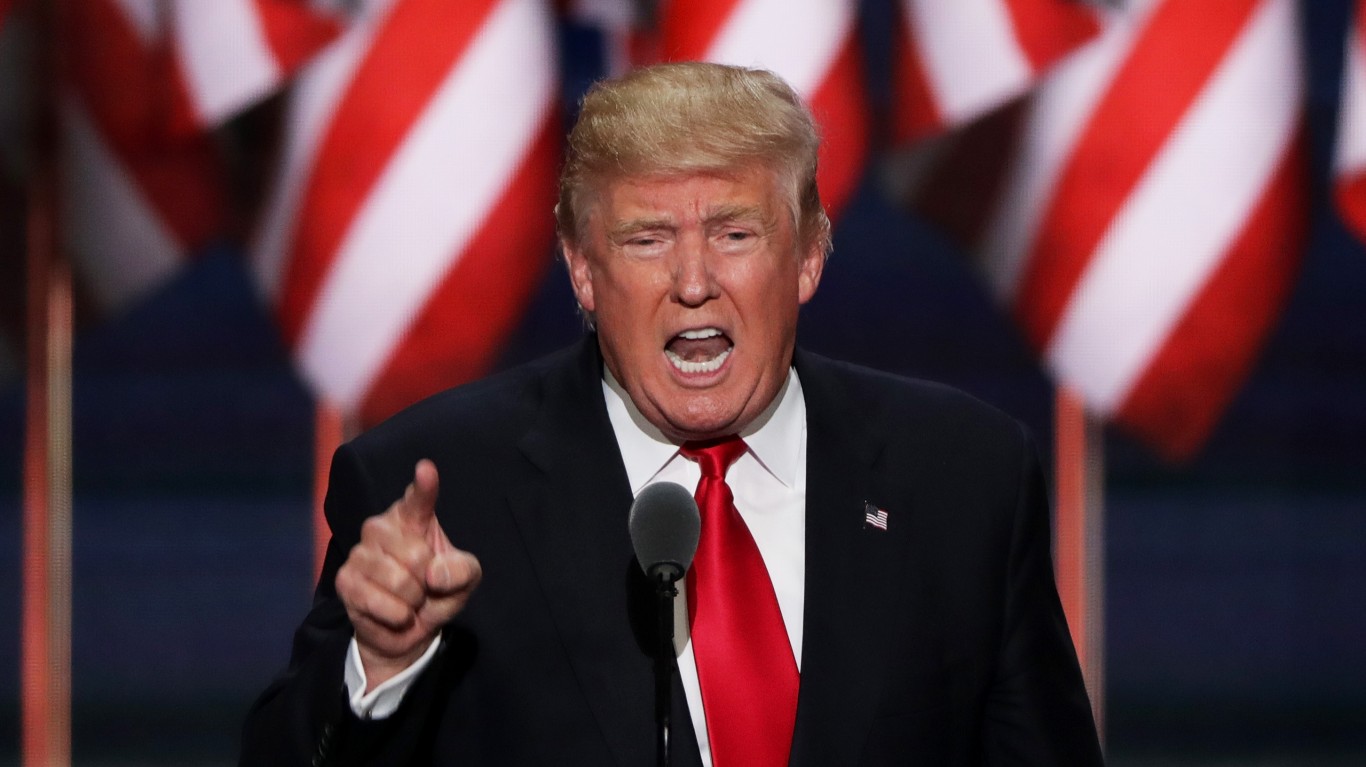
Trump has repeatedly accused oil companies of gouging consumers, singling out Exxon, Chevron, BP (NYSE:BP), and Shell (NYSE:SHEL), and demanding lower prices. In June, he said gasoline should be $2.25 a gallon and ordered a Justice Department investigation into potential price gouging.
However, Exxon and Chevron don’t simply choose the price posted at every gas station. Local competition, regional supply, refining margins, transportation costs, and crude prices all influence what motorists pay.
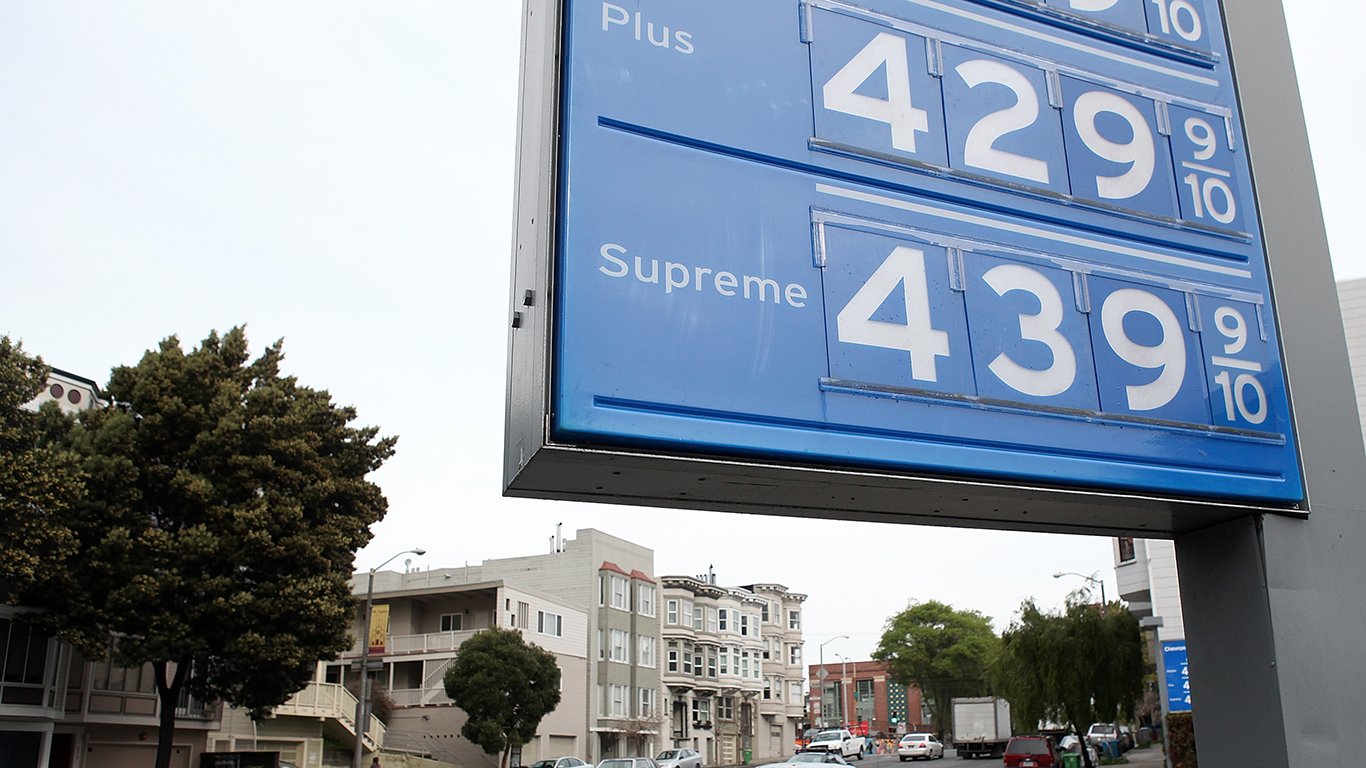
AAA’s national average was about $4.06 a gallon this morning, versus $3.98 a month earlier and $3.11 a year ago. Gasoline had been below $3 before the Iran war began. Notably, widening the war could make Trump’s price problem worse.
Trump has repeatedly extended the truce to give negotiations with Iran more time. Yet Iran continues threatening shipping through Hormuz, and Reuters reported today that Tehran is considering a shift to a “fully offensive” posture if diplomacy fails.
Now Trump has threatened to bomb Oman if it “gets in the way” of peace talks. Oman is a U.S. ally and has been mediating between Washington and Tehran.
The Bigger Risk For Investors
An attack on Oman would introduce another Middle Eastern country into the conflict. If other Gulf states that have so far remained outside the fighting begin choosing sides, the market could price an even larger supply disruption.
That would be bullish for Exxon and Chevron’s upstream businesses and potentially their refining operations. But investors shouldn’t assume every additional $10 in crude translates directly into another $10 billion of profit. Demand can weaken, refining margins can reverse, and a peace deal reopening Hormuz could send oil prices sharply lower. Brent crude is already well below its $126 wartime peak.
Key Takeaway
In short, Exxon and Chevron are unusually well positioned for a prolonged oil shock because their integrated businesses can capture profits from production through refining and marketing. Another escalation could push quarterly earnings above their already massive Q2 totals — but investors shouldn’t chase the stocks solely on the prospect of war.
The better thesis is that Exxon and Chevron have demonstrated they can convert elevated crude and refining margins into billions of dollars of cash. If Hormuz remains closed, that cash machine could keep running. If peace finally reopens the strait, the windfall can disappear almost as quickly as it arrived.
Contact [email protected] for any questions or corrections.






 Top Gaining Stocks
 Top Losing Stocks