Diamondback Energy Reveals Brutal Truth: High Oil Prices Are Here to Stay
Diamondback Energy just dropped a quarterly report that has less to do with its own profits and more to do with a warning every consumer and investor needs to hear about where oil prices are permanently headed.

For much of the past decade, investors treated oil price spikes as temporary disruptions that eventually faded. That assumption is becoming harder to defend. The Iran war has fundamentally changed the balance between global supply and demand, and the world’s oil market is still struggling to recover.
Before hostilities erupted, West Texas Intermediate (WTI) crude traded near $65 per barrel while Brent crude hovered around $70. Both briefly surged above $100 after the Strait of Hormuz was effectively shut down, and although prices have eased from those peaks, WTI and Brent remain above $80 today. Diamondback Energy‘s (NASDAQ:FANG | FANG Price Prediction) latest earnings report suggests that elevated prices may no longer be the exception — they could become the baseline.
Diamondback’s Results Tell the Story
Diamondback Energy delivered one of the strongest earnings reports in the energy sector, according to its quarterly earnings release. Revenue climbed to $5.56 billion, beating the $4.81 billion Wall Street consensus and rising from $3.68 billion a year earlier. Adjusted earnings reached $6.48 per share, ahead of the $6.01 analysts expected.
The numbers extended well beyond the income statement.
| Metric | Q2 2026 |
| Revenue | $5.56 billion |
| Adjusted EPS | $6.48 |
| Free Cash Flow | $2.33 billion |
| Production | 1.018 million BOE/d |
| Oil Production | 525 MBO/d |
Management also raised full-year production guidance while forecasting 517,000 to 527,000 barrels of oil per day during the third quarter.
Diamondback isn’t benefiting from a temporary windfall alone. It is generating enough cash to expand production while returning capital to shareholders, illustrating how higher commodity prices quickly translate into stronger financial results for efficient producers.
Management Thinks Oil Has Changed Permanently
The more important message came in CEO Kaes Van’t Hof’s shareholder letter. He called the Iran conflict “the largest supply shock in the history of the global oil market.” According to Diamondback, global production fell by 13.6 million barrels per day, while worldwide inventories declined by an estimated 3.8 million barrels per day after the conflict began, accelerating to roughly 4.6 million barrels per day in May.
Although exports through the region are recovering in stages, Van’t Hof argued that the market has fundamentally changed.
“These draws will eventually have to reverse, and we believe the restocking required to rebuild global inventories has structurally raised the floor for oil prices compared to pre-conflict prices.”
That is an important distinction. Inventories don’t replenish overnight. Even if geopolitical tensions ease tomorrow, producers must rebuild depleted stockpiles before supply catches demand. That creates persistent buying pressure that supports higher oil prices.
Ironically, Saudi Aramco warned early in the conflict that unless shipping disruptions ended quickly, the consequences would prove lasting. Diamondback’s latest assessment suggests exactly that scenario is unfolding.
The Inflation Problem Isn’t Going Away
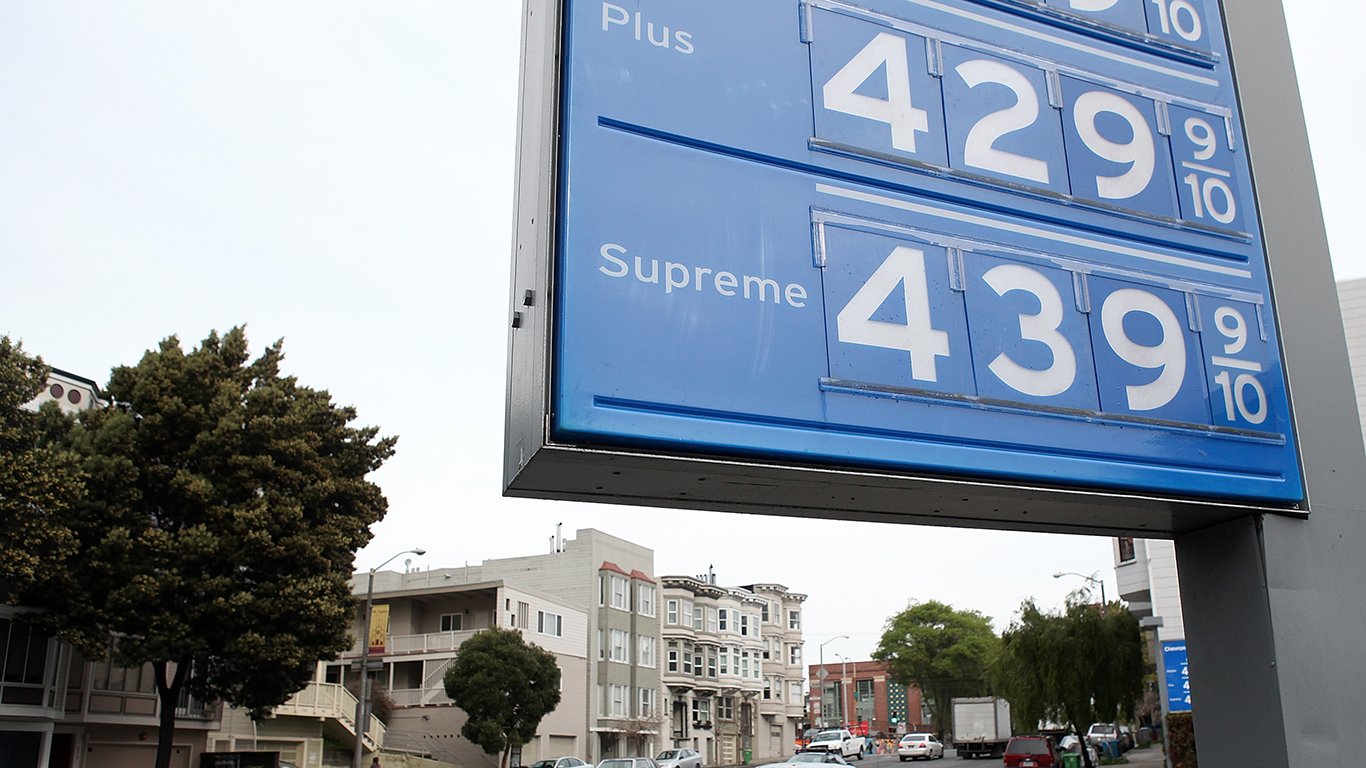
For producers like Diamondback, Chevron (NYSE:CVX), and ExxonMobil (NYSE:XOM), stronger crude prices generally expand profits and free cash flow. For consumers, however, gasoline prices above $4 per gallon continue squeezing household budgets and remain one of inflation’s largest contributors.
President Trump criticized Chevron, ExxonMobil, and other producers yesterday over gasoline prices, seemingly absolving himself of any responsibility and ignoring that integrated oil companies have little influence over prices set at the pump. Oil companies simply sell into the market they are given.
That has broader implications for investors. If energy inflation remains elevated, the Federal Reserve may find it harder to declare victory over inflation. Diamondback’s comments point toward sustained upward pressure on prices, increasing the possibility that interest rates rise sooner than markets currently expect.
Key Takeaway
In short, Diamondback’s quarterly results were impressive, but its outlook may matter even more. The company’s earnings release and shareholder letter argue that the Iran conflict didn’t simply create a temporary spike in oil prices — it permanently raised the market’s starting point by draining global inventories that now must be rebuilt.
Granted, peace negotiations could eventually restore more supply. Regardless, rebuilding millions of barrels of depleted inventories will take time, supporting crude prices well above pre-war levels. For investors, that favors efficient energy producers like Diamondback. For consumers, it suggests expensive gasoline — and the inflation pressure that comes with it — may be the new normal.
Contact [email protected] for any questions or corrections.
After two decades of patrolling the dark corners of suburbia as a police officer, Rich Duprey hung up his badge and gun to begin writing full time about stocks and investing. For the past 20 years, he’s been cruising the markets looking for companies to lock up as long-term holdings in a portfolio while writing extensively on the broad sectors of consumer goods, technology, and industrials. Because his experience isn’t from the typical financial analyst track, Rich is able to break down complex topics into understandable and useful action points for the average investor. His writings have appeared on The Motley Fool, InvestorPlace, Yahoo! Finance, Money Morning, and, of course, 24/7 Wall St. He has been featured in both U.S. and international publications, including MarketWatch, Financial Times, Forbes, Fast Company, and USA Today.