Trump Trolls, Calls Strait of Hormuz “New U.S. Territory.” Here’s Why Oil Investors Should Still Pay Attention
Trump just claimed the Strait of Hormuz as U.S. territory on Truth Social, and while international law has something to say about that, oil investors may be missing the far more dangerous scenario hiding behind the headline.

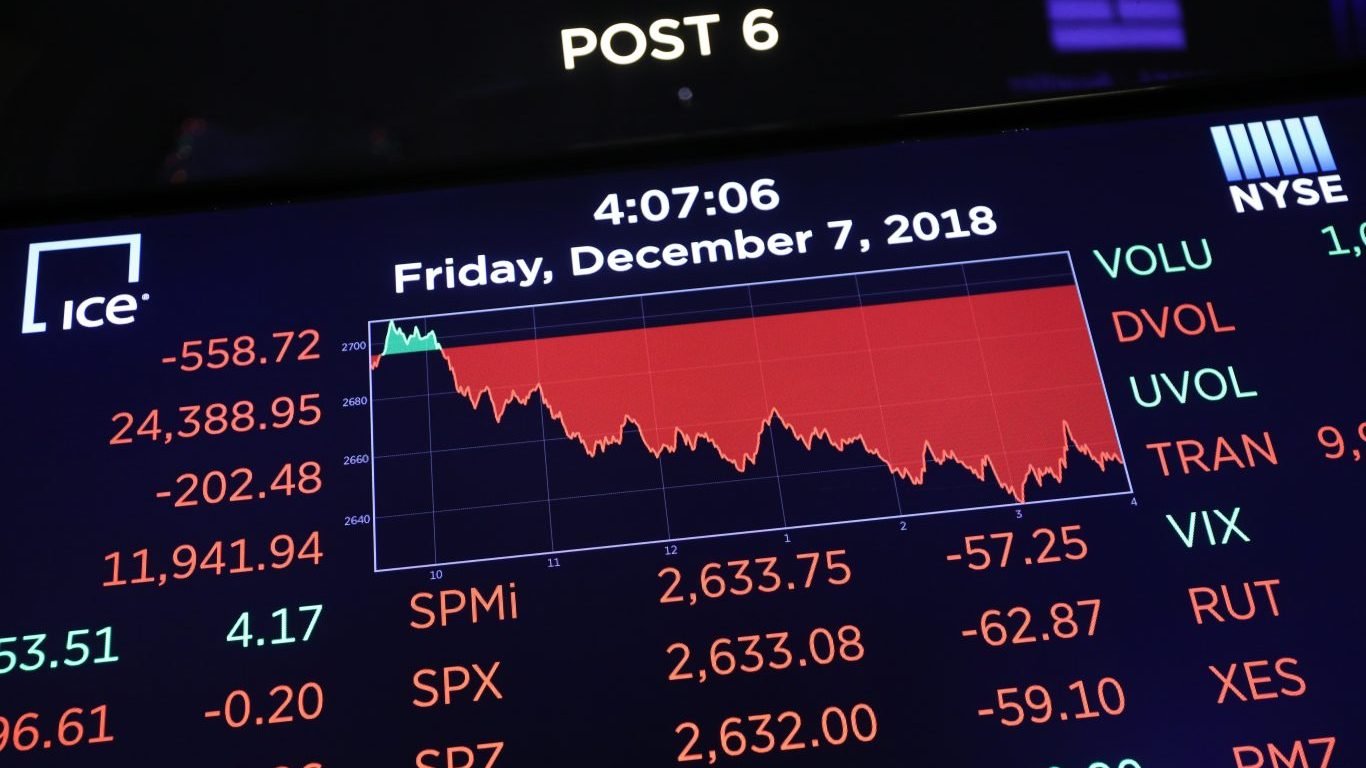
Oil markets are already pricing in a prolonged crisis around the Strait of Hormuz. Brent crude reached $91.07 a barrel this morning, while West Texas Intermediate hit $84.99, according to Reuters, as the U.S.-Iran conflict threatens to keep the world’s most important oil chokepoint effectively closed.
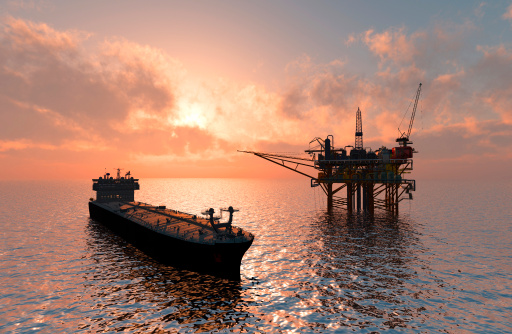
The stakes are unusually high. The U.S. Energy Information Administration says 20.9 million barrels of oil per day passed through Hormuz in the first half of 2025 — about 20% of global petroleum consumption and one-quarter of seaborne oil trade. Against that backdrop, President Trump has added a provocative new claim to the mix.
Trump’s ‘New Territory’ Post
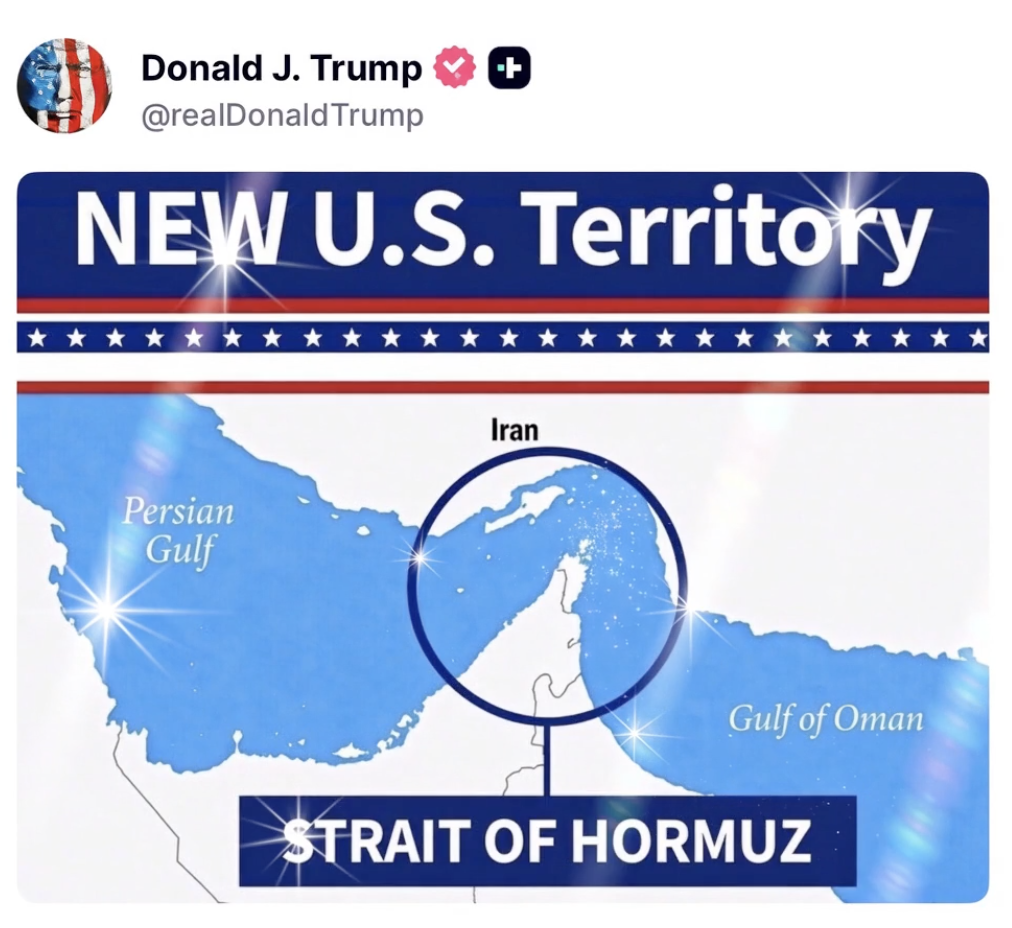
Trump posted on Truth Social showing an image of the Strait of Hormuz with the words “NEW U.S. TERRITORY.” The post followed his comments that the U.S. controls the waterway through its naval blockade and that declaring it U.S. territory would be “an excellent idea.”
But let’s separate presidential trolling from presidential power. Unlike Trump’s 2025 renaming of the Gulf of Mexico as the Gulf of America, this isn’t something the president can accomplish with an executive order. The White House’s Gulf of America order relied on existing federal authority and directed the Interior Dept. to change the name of the U.S. continental-shelf area under U.S. jurisdiction.
The Constitution gives Congress authority over U.S. territories and property under Article IV, Section 3, which holds broad authority to govern territories. Claiming foreign waters as American territory is a different matter altogether.
International Law Makes It Even Clearer
The Strait of Hormuz isn’t unclaimed real estate waiting for Washington to put up a flag. The waterway lies between Iran and Oman, and the United Nations Convention on the Law of the Sea recognizes the sovereignty and jurisdiction of states bordering international straits. The United Nations also records maritime-boundary agreements between Iran and Oman, including a 2015 agreement that entered into force in 2016.
In other words, a Truth Social post doesn’t transfer sovereignty. It creates a headline. And that’s why investors should treat the declaration differently from the Gulf of America rename. There is no realistic legal mechanism by which Trump can simply declare this open water U.S. territory.
The Oil Market Risk Is Real Anyway
That doesn’t make the post irrelevant. If Washington tried to enforce ownership of Hormuz rather than simply maintaining freedom of navigation or its existing blockade, the military consequences could be severe. Iran has already declared that the strait will remain closed until the U.S. meets its conditions, while Reuters reported that Tehran was preparing to shift toward a “fully offensive” posture.
That is exactly the scenario oil investors don’t want. Reuters reported that only around 2 million barrels per day were moving through Hormuz currently, compared with roughly 18 million before the crisis. Saudi Arabia and the UAE have alternative pipelines, but EIA estimates those routes can bypass only about 4.7 million barrels per day.
A further escalation could therefore push crude prices materially higher, even if Trump’s “territory” claim never becomes anything more than a meme.
Key Takeaway
In short, Trump’s “New U.S. Territory” declaration is almost certainly rhetoric, not a legally operative annexation. But investors shouldn’t dismiss the post entirely.
The real threat isn’t Washington acquiring Hormuz. It’s Washington attempting to enforce a claim that Iran, Oman and much of the international community would reject — potentially turning an already severe oil-supply disruption into a broader war.
With Brent crude already above $91, the market is giving investors a warning: the geopolitical risk is real even when the legal claim isn’t. Smart investors should watch the Strait’s shipping volumes and diplomatic developments more closely than Trump’s map graphics.
Contact [email protected] for any questions or corrections.
After two decades of patrolling the dark corners of suburbia as a police officer, Rich Duprey hung up his badge and gun to begin writing full time about stocks and investing. For the past 20 years, he’s been cruising the markets looking for companies to lock up as long-term holdings in a portfolio while writing extensively on the broad sectors of consumer goods, technology, and industrials. Because his experience isn’t from the typical financial analyst track, Rich is able to break down complex topics into understandable and useful action points for the average investor. His writings have appeared on The Motley Fool, InvestorPlace, Yahoo! Finance, Money Morning, and, of course, 24/7 Wall St. He has been featured in both U.S. and international publications, including MarketWatch, Financial Times, Forbes, Fast Company, and USA Today.