Trump Says Venezuelan Oil Will Refill the U.S.’s Strategic Reserves. Reality Says Don’t Count On It
Trump just announced that Venezuelan oil will refill America's nearly empty Strategic Petroleum Reserve, calling it a gift to the American people. But there is a striking gap between controlling 65 billion barrels on paper and actually getting that oil…


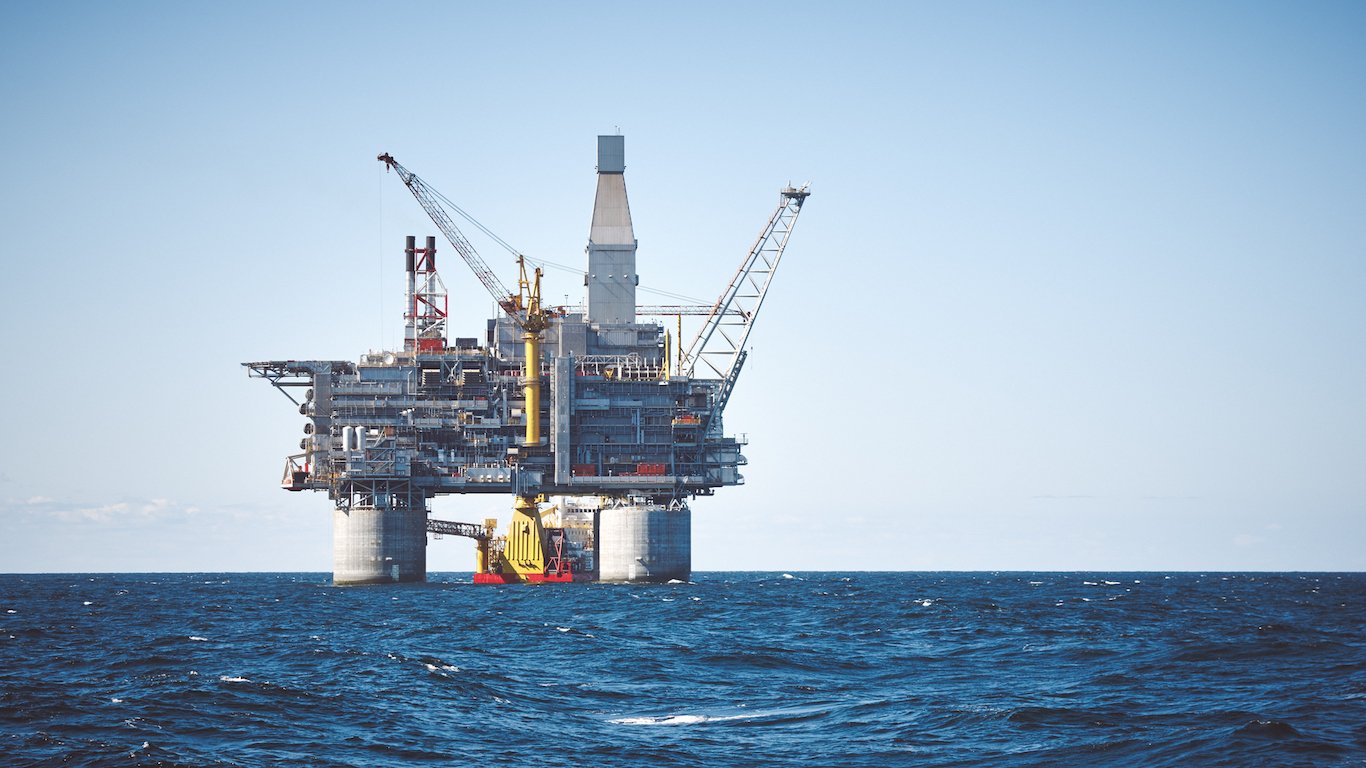
President Trump has struck what his administration is calling a historic oil agreement with Venezuela, giving a U.S.-backed venture majority control over the development of 17 Venezuelan oil fields containing more than 65 billion barrels of proven reserves. Venezuela holds roughly 303 billion barrels of proven oil reserves — the most of any country — so the agreement gives the U.S. access to a resource base equivalent to about 7.1% of the world’s proven oil reserves.
Now Trump says that oil will help rebuild America’s depleted Strategic Petroleum Reserve. In a Truth Social post Sunday, he said the SPR’s “topping out” process will begin “very shortly,” calling the Venezuelan oil a “Gift from Venezuela to the People of the United States.”
That sounds like a remarkably cheap way to rebuild an emergency oil stockpile that has fallen to roughly 290 million barrels, its lowest level in 44 years. But there is a big difference between controlling 65 billion barrels in Venezuela and having those barrels available to fill America’s underground storage caverns. For investors, that’s where this deal gets much more interesting.
Trump Has Plenty of Oil — Just Not Yet
The Energy Dept. reported 294.1 million barrels in the SPR as of Aug. 20, including 192.3 million barrels of sour crude and 101.8 million barrels of sweet crude. That is only 41% of the reserve’s authorized capacity.
Filling the SPR completely would therefore require roughly 420 million barrels. Even restoring it to the roughly 415 million barrels it held immediately before the March emergency release related to Trump’s Iran war would require about 121 million barrels.
Essentially, that wouldn’t even reverse the energy-security damage caused by the war. Blaming the Biden administration for the SPR’s current state is disingenuous.
The “Free” Oil Still Has to Be Produced
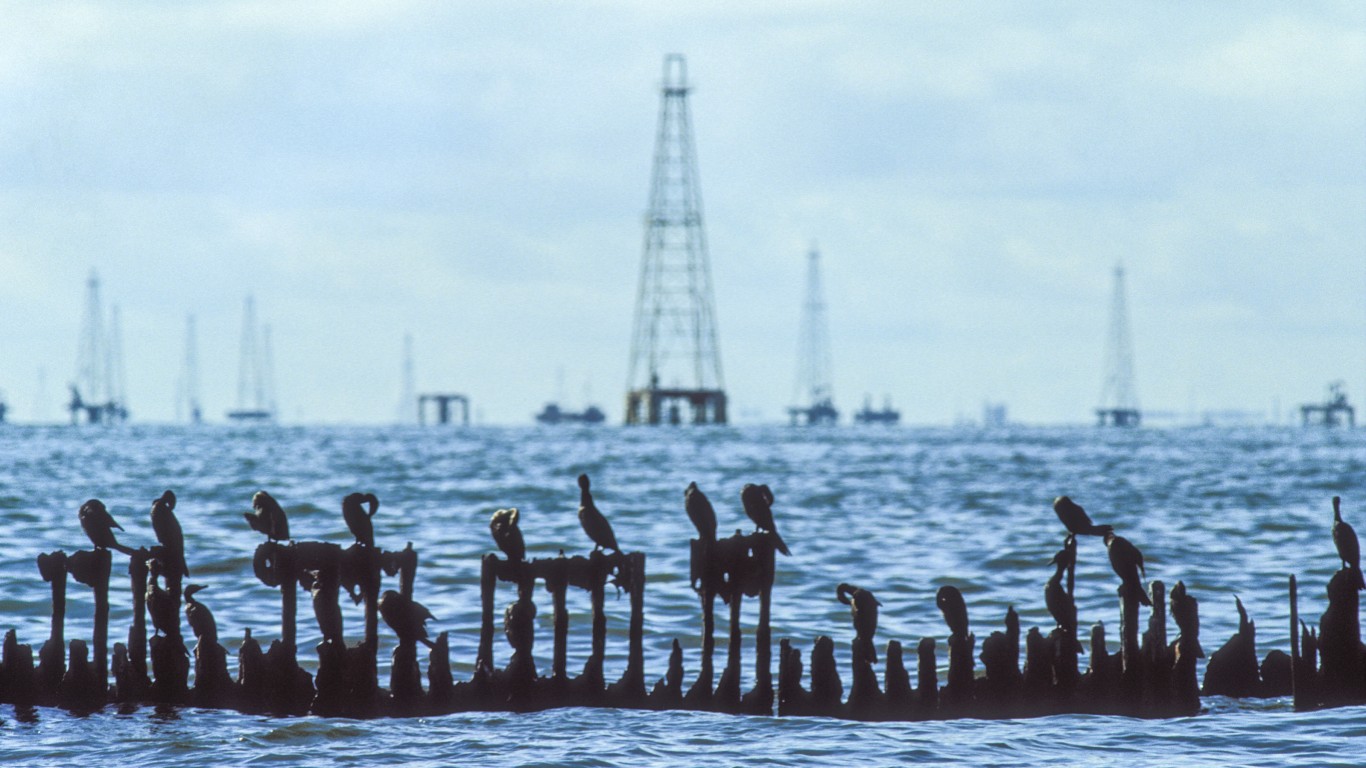
The biggest catch is that the 65 billion barrels aren’t sitting in a Venezuelan warehouse. They are simply proved reserves — oil deposits that can be commercially recovered — spread across 17 fields. Venezuela currently produces only about 1.25 million barrels per day despite possessing roughly 303 billion barrels of proved reserves, because years of underinvestment and infrastructure deterioration have crippled its petroleum industry. The new agreement targets production of more than 1.5 million barrels per day.
That means Trump’s SPR announcement cannot instantly translate into hundreds of millions of barrels in U.S. salt caverns. Wells have to be drilled, equipment repaired, pipelines and export infrastructure restored, crude transported and the oil ultimately delivered to the Gulf Coast. That is a multiyear industrial project, not a weekend shipment.
There is, however, a potentially attractive economic angle. The Energy Dept.’s previous major replenishment program bought 59 million barrels at an average price below $76 per barrel. Filling today’s roughly 420-million-barrel gap at that price would cost about $32 billion. If Venezuelan crude can genuinely be acquired at little or no direct cost to taxpayers, the economics could look far better.
Heavy Crude Creates Another Problem
Venezuelan crude isn’t necessarily the same oil already sitting in the SPR. The Energy Information Administration says most Venezuelan reserves are extra-heavy crude from the Orinoco Belt. Historically, Venezuela’s conventional crude has also been heavy and sour.
The SPR, meanwhile, does not normally store heavy crude below 22.3 degrees API, and heavy oil presents additional storage and operational difficulties. Moreover, the reserve’s existing inventory is primarily light and medium crude, so Trump can’t simply mix Venezuelan heavy crude in for whatever the SPR needs. Specific grades would have to meet SPR specifications — potentially through blending — and the Energy Dept. retains the right to reject crude deemed incompatible with existing stocks.
Legal questions aren’t trivial, either. Venezuela’s constitution gives the state control over petroleum resources, although a January 2026 hydrocarbons-law reform opened the door to greater private participation. The agreement’s precise legal structure remains unclear, creating potential challenges over sovereignty, contracts, and the authority of the interim Venezuelan government to make the kind of deal announced yesterday.
Key Takeaway
In short, Trump’s Venezuelan oil deal could eventually provide an inexpensive source for rebuilding the SPR, but it does not mean 420 million barrels can suddenly appear underground in Texas and Louisiana. Even the 65 billion barrels are a long-term resource, not an existing inventory. And if much of that crude is too heavy for the SPR’s current specifications, the “topping out” promise may prove more complicated than the sound bite suggests.
For investors, the real achievement won’t be the size of the reserve number. It will be how quickly Venezuela can actually produce compatible crude — and how cheaply the U.S. can put it into the SPR.
Contact [email protected] for any questions or corrections.
After two decades of patrolling the dark corners of suburbia as a police officer, Rich Duprey hung up his badge and gun to begin writing full time about stocks and investing. For the past 20 years, he’s been cruising the markets looking for companies to lock up as long-term holdings in a portfolio while writing extensively on the broad sectors of consumer goods, technology, and industrials. Because his experience isn’t from the typical financial analyst track, Rich is able to break down complex topics into understandable and useful action points for the average investor. His writings have appeared on The Motley Fool, InvestorPlace, Yahoo! Finance, Money Morning, and, of course, 24/7 Wall St. He has been featured in both U.S. and international publications, including MarketWatch, Financial Times, Forbes, Fast Company, and USA Today.