How $300 a Month in This Dividend ETF Could Make You a Millionaire
Compounding turns a modest monthly habit into something most people assume requires a six-figure income, but SCHD has a specific quirk that makes it unusually well suited to the economic chaos ahead.


If you think $300 is too little to invest, reconsider. Even on a lower-than-average salary, that’s an amount you can save, and putting it into an ETF like the Schwab U.S. Dividend Equity ETF (NYSEARCA:SCHD) can make you a millionaire.
And no, it will not take a lifetime.
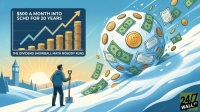
Compounding is powerful enough that you’ll be surprised just how much $300 a month can afford you. At an average annual return of 10%, that monthly investment grows to $1 million in a little over 33 years and nine months, provided you keep reinvesting the dividends.
Of that million, you’re only putting in $121,500, and the rest is coming from the stock market compounding your money for you.
Obviously, no ETF is built to keep outperforming for decades, so it’s a good idea to look at what the catch is and what the outlook is for the next three decades to see whether or not this SCHD strategy is for you. We’ll be doing exactly that in this article.
Your opportunities and pitfalls
SCHD is a genuine dividend ETF with a dividend yield over 3% and has become a default dividend pick. It’s special in a way no other ETF can replicate. The portfolio isn’t passive enough that you miss out on all the stock market action, nor is it aggressive enough that you get a growth fund with a dividend veneer and a low yield.
The icing on the cake is that SCHD has an expense ratio of 0.06%, or just $6 per $10,000. Better yet, this dividend ETF has returned 30%-plus gains year-to-date. That’s double the S&P 500’s 13% gain and is ahead of some hot tech stocks.
The pitfall is that SCHD can underperform in the opposite direction as well if dividend stocks become less popular again. For example, SCHD delivered very little in the 2021 to 2025 stretch. Investors in the ETF only managed to keep pace with the rest of the market thanks to its dividend yield. Even during that “quiet” period, SCHD investors who reinvested stayed ahead of inflation and continued to build momentum.
Why the next few years are likely to be more opportune
If you look at the macroeconomics, they do favor investors who are willing to be bold and invest in the market. The government doesn’t have room left for policy experiments, with debt crossing $40 trillion this August.
The government could raise taxes, cut spending, tolerate higher inflation, or grow the economy faster than the debt. The first two would require a degree of austerity that Washington has shown little appetite for. You’ll likely see nominal economic growth, and tolerance for a debt load that would once have seemed unthinkable.
Bond yields should remain high, and inflation will likely remain above the target range. SCHD is well suited to this environment because its index considers cash flow relative to debt, return on equity, and dividend growth. Those screens help it favor companies that can withstand expensive borrowing costs and continue to reward shareholders. Also, stocks remain very resilient to inflation. If inflation rises, it won’t crush stocks. They’re just going to reprice higher. Bonds, on the other hand, are not so protected.
All of this makes me believe SCHD will likely deliver 10%-plus average annual returns over the coming decades. The only way my thesis would change is if a future administration decides to bite the bullet and introduce austerity measures to slow the growth of debt, which is very unlikely.
Contact [email protected] for any questions or corrections.
Omor Ibne Ehsan is a writer at 24/7 Wall St. He is a self-taught investor with a focus on growth, cyclical, and dividend equities that have strong fundamentals, value, and long-term potential. He also has an interest in high-risk, high-reward investments such as penny stocks.