Pepsi vs. Coke: One Stock Is Starting to Pull Ahead
Coke and Pepsi both reported Q2 earnings this week, but their results told completely different stories about brand power, margin strength, and where consumer spending is actually heading.

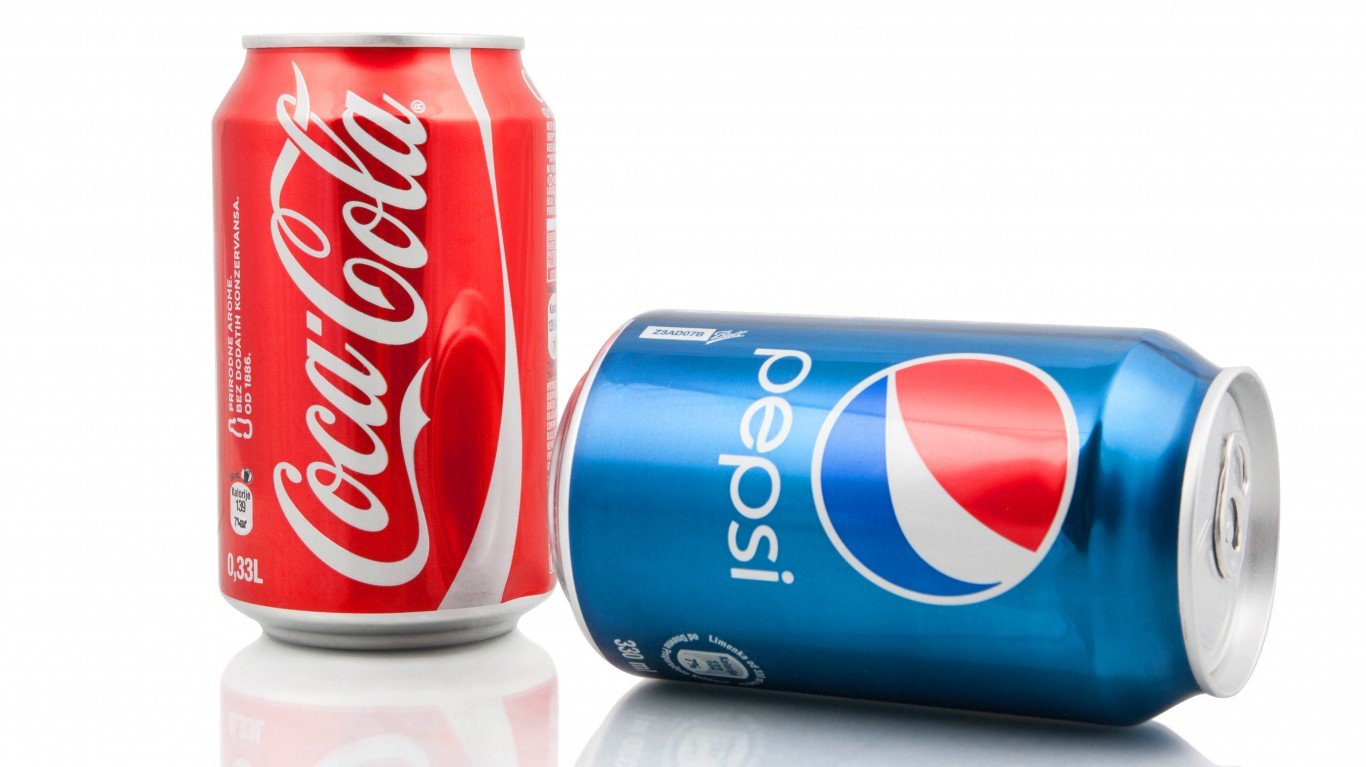
PepsiCo (NASDAQ:PEP | PEP Price Prediction) and Coca-Cola (NYSE:KO) both delivered Q2 2026 results, and the contrast is louder than the shared category suggests.
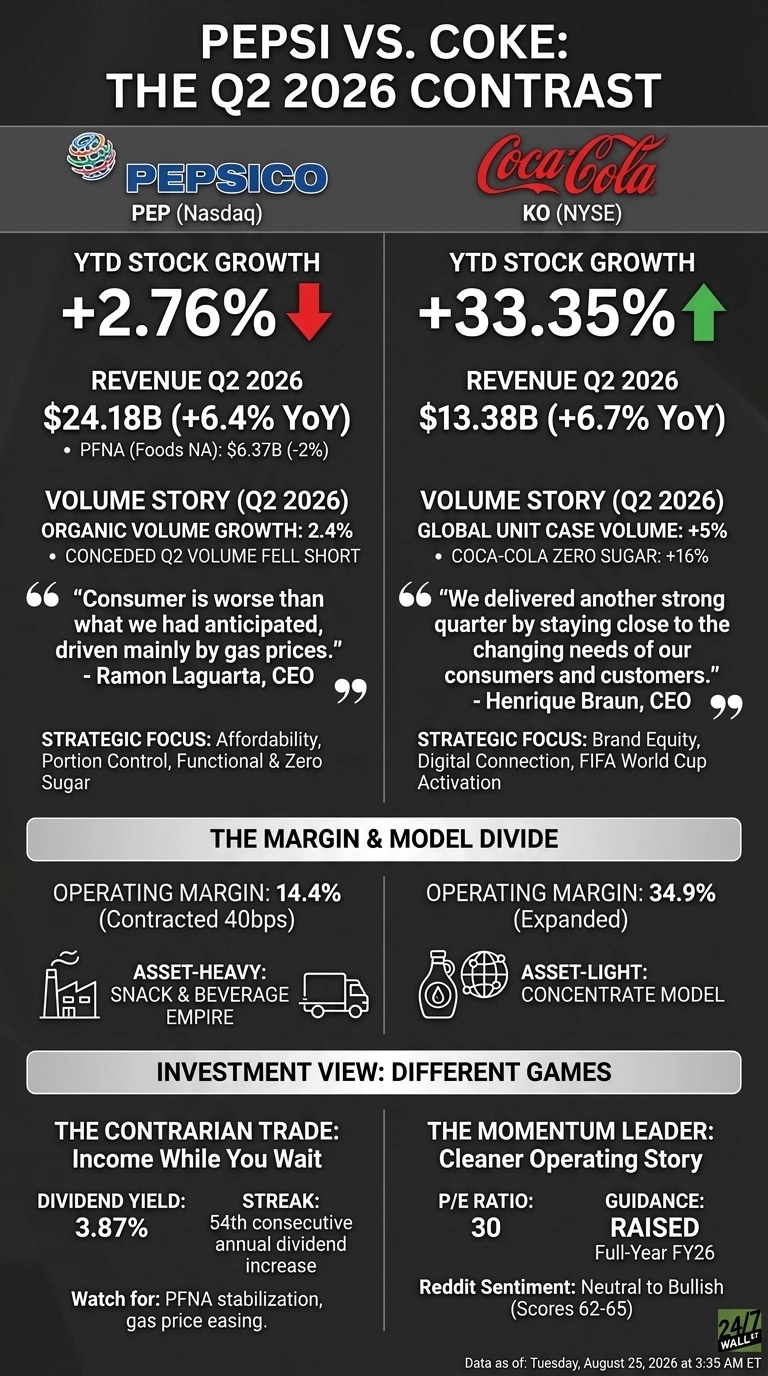
Coke raised full-year guidance on 5% global unit case volume growth. Pepsi reaffirmed guidance while conceding Q2 volume fell short. The stock action agrees: KO is up 33.35% year to date versus PEP at 2.76%.
Frito-Lay Drags One, World Cup Lifts the Other
PepsiCo posted $24.18 billion in revenue, up 6.4%, but the mix was uneven. PBNA beverages grew 7% while PFNA foods fell 2%. CEO Ramon Laguarta blamed a weaker consumer, telling analysts “I think the consumer is worse than what we had anticipated and driven mainly by gas prices.”
International carried the quarter, with Latin America Foods up 15% and Asia Pacific Foods up 12%. Convenience and gas-station traffic remained soft, which pinched impulse purchases of Lay’s, Doritos, and Gatorade.

Coca-Cola’s quarter looked cleaner across the board. Revenue reached $13.38 billion, and Coca-Cola Zero Sugar volume grew 16%.
New CEO Henrique Braun leaned on the FIFA World Cup platform, which spanned more than 180 markets and generated more than 25 million first-party data points. Braun told investors, “We delivered another strong quarter by staying close to the changing needs of our consumers and customers.”

One Company Sells Everything. The Other Sells Focus.
| Lens | PepsiCo | Coca-Cola |
| Operating margin | 14.4% | 34.9% |
| FY26 guidance | Reaffirmed, may land at low end | Raised |
| Dividend yield | 3.87% | 2.22% |
| P/E ratio | 24 | 30 |
Pepsi runs an asset-heavy snack and beverage empire that must fight for shelf space, gas-station conversion, and factory throughput. Coke’s asset-light concentrate model shows up in that 34.9% operating margin, which expanded again this quarter.
Pepsi’s core operating margin contracted 40 basis points, with PBNA down about 90 basis points partly because of the Alani commercial arrangement. Laguarta is spending on affordability, portion control, and permissible snacks such as Doritos Protein and Naked. Braun is spending on brand equity and digital connection. Different games, played at different scales.
Next Test: Second-Half North America
I will watch whether Pepsi’s shelf-space wins and delayed pricing execution finally show up in PFNA volume. CFO Steve Schmidt already warned the North America business will improve “at a more moderate pace than we thought coming into Q2.”
For Coke, the question is whether Asia Pacific stabilizes after price/mix fell 9% on affordability investments, and whether the World Cup halo carries beyond the quarter. Q4 also brings six fewer days versus 2025, a mechanical drag worth remembering.
Why I Lean Toward Coke, With Pepsi as the Contrarian Trade
If you want the cleaner operating story, I think Coke is winning right now. The 17-year high in Coca-Cola trademark volume growth, raised guidance, and margin expansion form a hard combination to argue against. The stock trades at a rich P/E near 30, and Reddit chatter reflects that, with recent readings ranging from neutral to bullish sentiment scores of 62 to 65.

Pepsi fits a different investor. That 3.87% yield, backed by a 54th consecutive dividend increase, is real income while you wait for Frito-Lay to heal (that streak puts Pepsi in rare company, and we ranked ten similar 50-year raisers by valuation in a free Dividend Kings report).
If gas prices ease and affordability investments start converting, the setup could rerate quickly. I would want two more quarters of PFNA stabilization before making that bet with conviction.

Contact [email protected] for any questions or corrections.
Vandita Jadeja is a financial publisher with over a decade of experience writing about financial topics, including investment, savings, retirement, insurance and banking. Vandita is a Chartered Accountant who loves to debunk financial concepts for readers.
Her work has appeared on sites that include The Motley Fool, InvestorPlace, and Benzinga. She covers investing and focuses on stock picks and price prediction for 24/7 Wall St.
When not looking for the next stock investment opportunity, she can be found traveling, reading, chasing sunsets and enjoying her iced latte.