Pepsi vs. Coke: This Is How Much You Could Make by 2031
Coke is outpacing Pepsi by a wide margin this year, but one projected scenario shows the losing stock actually protecting your money better by 2031. The answer depends entirely on how much downside you can afford.

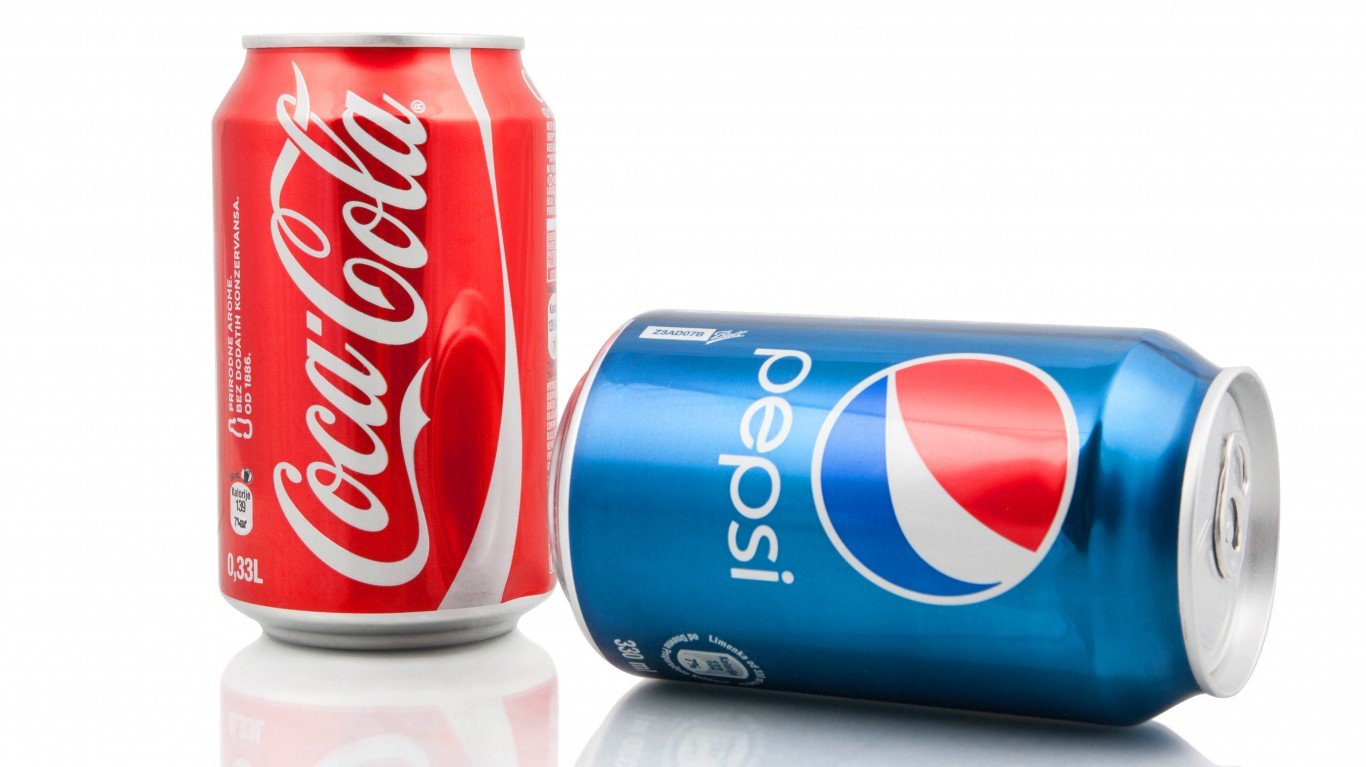
Coca-Cola (NYSE:KO | KO Price Prediction) and PepsiCo (NASDAQ:PEP) both reported second-quarter 2026 results, and the market has already picked a side. Coke shares are up 26.76% year to date, while PepsiCo is at -8.20%. Over five years, the gap grows: 90.01% for Coke against -1.31% for Pepsi. My take is Coke carries the higher ceiling. Pepsi carries the higher floor.
Zero Sugar Fuels Coke as Pepsi Resets Snack Prices
Coke’s quarter ran on volume. Global unit case volume rose 5%, and Coca-Cola Zero Sugar jumped 16%, proof the no-calorie shift keeps recruiting drinkers. Management raised comparable EPS growth guidance to 9-10%, and CEO Henrique Braun said Coke “leveraged our powerful brands and system to gain value share.”
PepsiCo’s quarter split by geography. Latin America Foods grew 15%, while PepsiCo Foods North America revenue fell 2% on lower effective pricing. Chairman and CEO Ramon Laguarta was frank: “The consumer is worse than what we had anticipated and driven mainly by gas prices.” Management now sees EPS landing toward the low end of guidance.
Coke’s Premium Multiple Creates the Widest Range
At $87.44 and 25 times forward earnings, Coke already prices in strong execution. Our model’s base case reaches $140.09 by 2031, a 60.22% gain. The bull case hits $175.09, up 100.25%, roughly doubling your money. The bear case, $101.27, returns just 15.82%, the smallest downside of all four scenarios. Momentum plus a premium multiple stretches outcomes both ways, and Asia Pacific price/mix of -9% shows where gaps could form.
Pepsi’s Beaten-Down Price Hides a Sturdier Floor
Wall Street is lukewarm, with 16 analysts rating PepsiCo a hold. At $128.71 and 15 times forward earnings, though, expectations are low. Our base case is $199.53, a 55.02% gain, with a bull case of $216.26, or 68.02%. The surprise is the bear case: $164.98, up 28.18%, significantly above Coke’s floor. An international business Laguarta says will “cross $40 billion in this year” anchors that resilience, and a 4.35% yield pays you to wait.
Side by Side, Pepsi’s Floor Sits Above Coke’s
| Scenario | Coca-Cola | PepsiCo |
|---|---|---|
| Bull | $175.09 (100.25%) | $216.26 (68.02%) |
| Base | $140.09 (60.22%) | $199.53 (55.02%) |
| Bear | $101.27 (15.82%) | $164.98 (28.18%) |
| Dividend Yield | 2.34% | 4.35% |
Coke owns the upside tail. Pepsi owns the tighter, safer band.


Why I Would Anchor a Retirement Portfolio With Pepsi
If you are at or near retirement, I lean toward PepsiCo. When you draw income, avoiding a smallest outcome matters more than chasing the best one, and Pepsi’s worst projected case still returns 28.18% while yielding 4.35% against Coke’s 2.34%. Coke fits investors with longer runways who want the 100.25% upside and can accept a 15.82% floor.
What changes my view? If Pepsi’s North American snack volumes fail to recover as pricing investments land, Coke takes the lead. For Coke to justify its multiple, it needs volume growth sustained above its 2% two-year average.


Contact [email protected] for any questions or corrections.
Joel South covers large-cap stocks, dividend investing, and major market trends, with a focus on earnings analysis, valuation, and turning complex data into actionable insights for investors.
He brings more than 15 years of experience as an investor and financial journalist, including 12 years at The Motley Fool, where he served as an investment analyst, Bureau Chief, and later led the Fool.com investing news desk. He has also co-hosted an investing podcast and appeared across TV and radio discussing market trends.