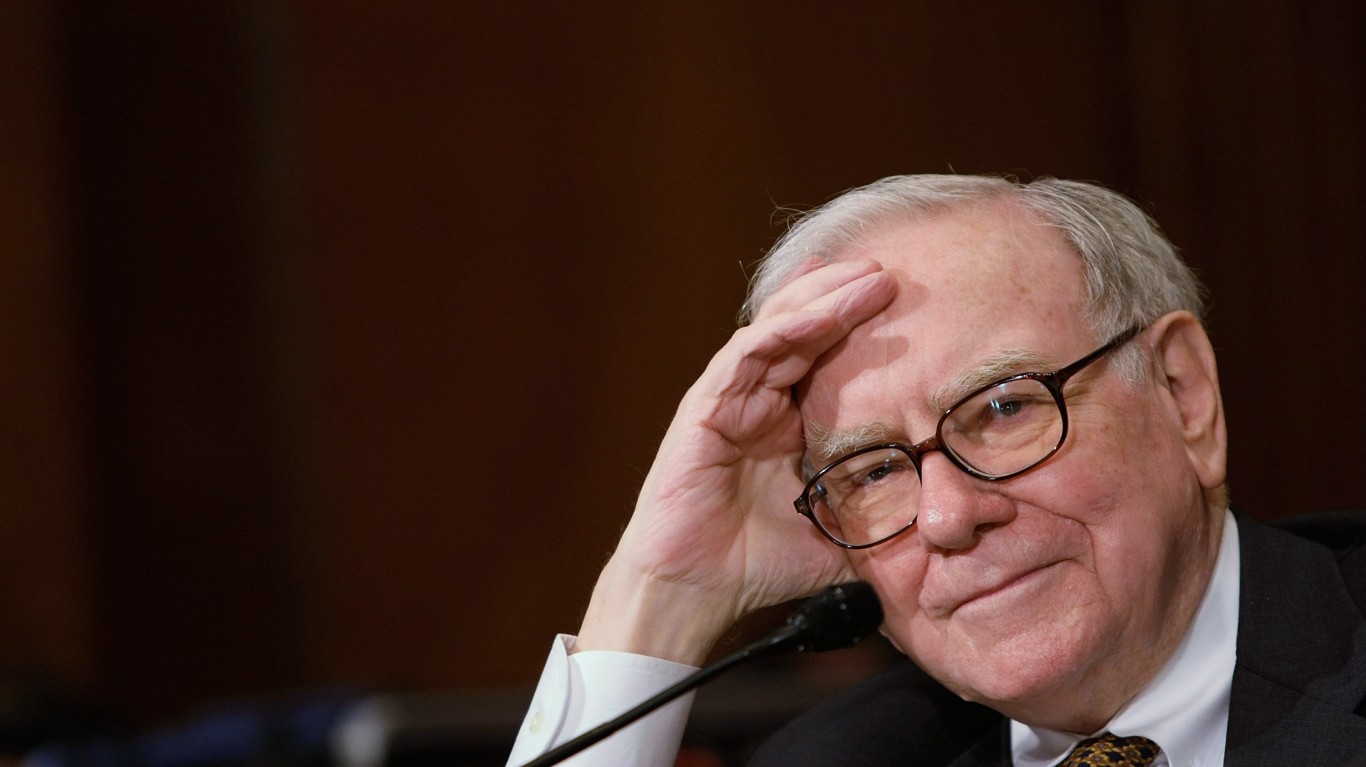
Did Greg Abel Get Berkshire Hathaway Caught In a Housing Trap?
Greg Abel just steered Berkshire Hathaway into a massive housing bet right as the market sends some of its ugliest demand signals in years. Whether that timing reflects visionary patience or a costly miscalculation depends on what you think comes…

This post may contain links from our sponsors and affiliates, and Flywheel Publishing may receive compensation for actions taken through them.
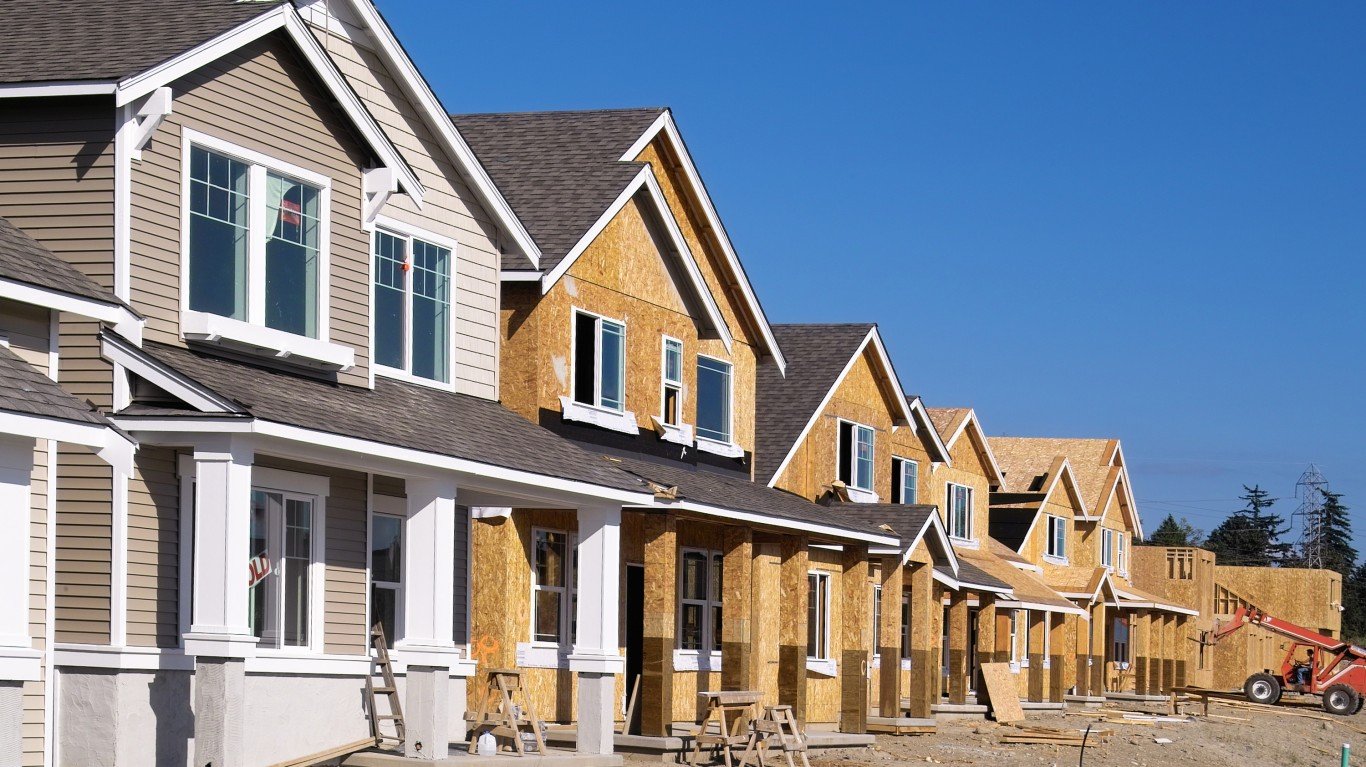
The U.S. housing market has reached an uncomfortable point for investors. Home prices remain elevated, mortgage rates are keeping buyers on the sidelines, and new-home sales have weakened. Now the latest data suggests the problem is moving beyond affordability and into demand itself.
That is important because Berkshire Hathaway (NYSE:BRK-A | BRK-A Price Prediction)(NYSE:BRK-B) has made housing a much bigger part of its investment story under new CEO Greg Abel. The timing could hardly be more interesting — or more questionable.
Berkshire Doubled Down on Housing
Berkshire’s second-quarter 13F filing showed Abel increasing the company’s position in Lennar (NYSE:LEN) by roughly 30% and initiating a small position in D.R. Horton (NYSE:DHI). Berkshire already owned NVR (NYSE:NVR) and Louisiana-Pacific (NYSE:LPX), giving it exposure to homebuilding and the materials used to construct houses.
Then came the much bigger move. Berkshire agreed to acquire Taylor Morrison Home for approximately $6.8 billion, with the transaction closing July 24.
That’s a lot of housing exposure just as the industry’s foundation is beginning to look less sturdy.
The Housing Data Isn’t Helping
The National Association of Realtors’ July Pending Home Sales Report delivered another warning sign.
The Pending Home Sales Index fell 2.3% month over month to 71.2 — its second-lowest reading on record. The index has collapsed 36% since July 2021 and remains 33% below its pre-pandemic level.
The weakness was broad-based:
| Region | July MoM | Since July 2021 |
| West | -7.7% | -47.4% |
| South | -2.2% | -36.2% |
| Northeast | -2.0% | -31.2% |
| Midwest | -0.7% | -32.3% |
That creates an awkward backdrop for Berkshire’s holdings. Lennar operates heavily across the West and South, including Arizona, California, Texas, Florida, and the Carolinas. Its second-quarter results already showed the pressure: new orders fell 4% year over year, while its gross margin declined to 15.6% from 17.8%.
Taylor Morrison is similarly exposed to markets that just posted some of the steepest declines. Its operations span Phoenix, Las Vegas, Southern California, Austin, Dallas, Houston, Atlanta, Charlotte, Orlando, Tampa, and other high-growth markets.
NVR is somewhat better positioned geographically, with a concentration in the Northeast and Mid-Atlantic. But even the Northeast isn’t immune. Pending sales there have fallen 31.2% over five years.
And this isn’t merely an existing-home problem. The Commerce Dept. reported that new single-family home sales plunged 10.5% in July to a 607,000 annual rate, while the median new-home price fell 0.9% year over year to $393,800.
While the housing market isn’t collapsing, the data increasingly suggests demand is deteriorating.
Berkshire Can Afford to Wait
That said, investors shouldn’t assume Abel is trying to call the housing bottom next quarter. Berkshire typically buys businesses with holding periods measured in years or decades, not quarters. The 13F only tells us what Berkshire owned on June 30, while Taylor Morrison is an outright operating acquisition that can be held indefinitely.
There is also a useful reminder from Buffett’s own housing trade. Berkshire bought roughly 6 million D.R. Horton shares in 2023, along with stakes in Lennar and NVR. It then sold the entire D.R. Horton position by the end of that year. Depending on the exact purchase and sale prices, Berkshire appears to have generated a profit of more than 50% on D.R. Horton in less than six months.
In other words, even Buffett didn’t always hold a stock through thick and thin.
Key Takeaway
In short, Berkshire’s housing bet looks poorly timed if the objective is near-term earnings growth. Pending sales are weakening across virtually every region, new-home sales are falling, and Berkshire’s biggest builder exposures are concentrated in markets showing some of the sharpest deterioration.
But that doesn’t necessarily make the investments mistakes. Abel may simply be buying quality housing businesses at valuations he believes compensate for the current downturn. If mortgage rates eventually fall and housing demand normalizes, Berkshire could own some attractive assets when the cycle turns.
For investors, however, the lesson is straightforward: don’t confuse Berkshire’s purchase with a forecast that housing is about to rebound. Abel may be willing to wait years for this bet to work. Investors buying today need to be equally patient.
Contact [email protected] for any questions or corrections.
After two decades of patrolling the dark corners of suburbia as a police officer, Rich Duprey hung up his badge and gun to begin writing full time about stocks and investing. For the past 20 years, he’s been cruising the markets looking for companies to lock up as long-term holdings in a portfolio while writing extensively on the broad sectors of consumer goods, technology, and industrials. Because his experience isn’t from the typical financial analyst track, Rich is able to break down complex topics into understandable and useful action points for the average investor. His writings have appeared on The Motley Fool, InvestorPlace, Yahoo! Finance, Money Morning, and, of course, 24/7 Wall St. He has been featured in both U.S. and international publications, including MarketWatch, Financial Times, Forbes, Fast Company, and USA Today.