Elon Musk’s 15-Gigawatt Warning Points to a Very Different Set of AI Winners in 2027
Elon Musk just put a number on the AI bottleneck that Goldman Sachs and Morgan Stanley have been quietly flagging for months, and it points to a very different group of winners than the ones dominating every investor conversation right…


Yesterday, Elon Musk shone a spotlight on a constraint everyone in the AI trade already knew was coming: Roughly 15 gigawatts of AI compute scheduled to be manufactured next year may never get powered up in 2027 — the equivalent of 10 nuclear plants’ worth of capacity sitting idle in a single year, enough to power several mid-sized American cities.
Musk wasn’t the source of the warning — Goldman Sachs, Morgan Stanley, and SemiAnalysis have been flagging the same bottleneck for months — but his post on X finally gave the number a bigger audience that it deserved. He also named the actual choke points: transformers, wiring, liquid-cooling systems, massive chillers, and networking gear that cannot be built or installed fast enough.
That changes the investing question. It is no longer chips versus power. It is who supplies the hardware that sits between a finished GPU and a data center that can actually turn on. The opportunity now stretches well past Nvidia (NASDAQ:NVDA | NVDA Price Prediction) and the utilities. The biggest 2027 winners may be the companies that sell the plugs.
Why Chipmakers Are No Longer the Whole Story
Nvidia’s fiscal second-quarter results still look like a growth machine. Data-center revenue hit $89 billion, up 117% year-over-year, on a stock trading around 18 times forward earnings — a reasonable multiple for that pace. Its backlog and multi-year customer commitments remain intact.
None of that disappears if a third of next year’s chip crop sits in a warehouse waiting for power. It just arrives later. Goldman Sachs sees U.S. data-center power demand climbing from 31 GW in 2025 to 66 GW in 2027. Historically, only 50% to 60% of scheduled capacity comes online on time. Morgan Stanley puts the U.S. shortfall at 38 GW through 2028.
Nvidia will still sell the GPUs. The delay will come in plugging them in, and that is where the next layer of spending goes.
Where the Money Actually Flows
Bloom Energy (NYSE:BE) is the obvious first stop. Second-quarter revenue reached $1.07 billion, up 165.5% year-over-year and well ahead of the $827 million consensus. Product backlog was already near $20 billion at year-end 2025 — a record high — and management says the pipeline has grown faster than revenue since then. Solid-oxide fuel cells can be installed in months, not the years a grid interconnection takes.
However, that speed is already priced into the stock. Bloom’s forward multiple has compressed from peaks above 190 earlier this year to the mid-50s. The growth is real, but making easy money from multiple expansion is not.
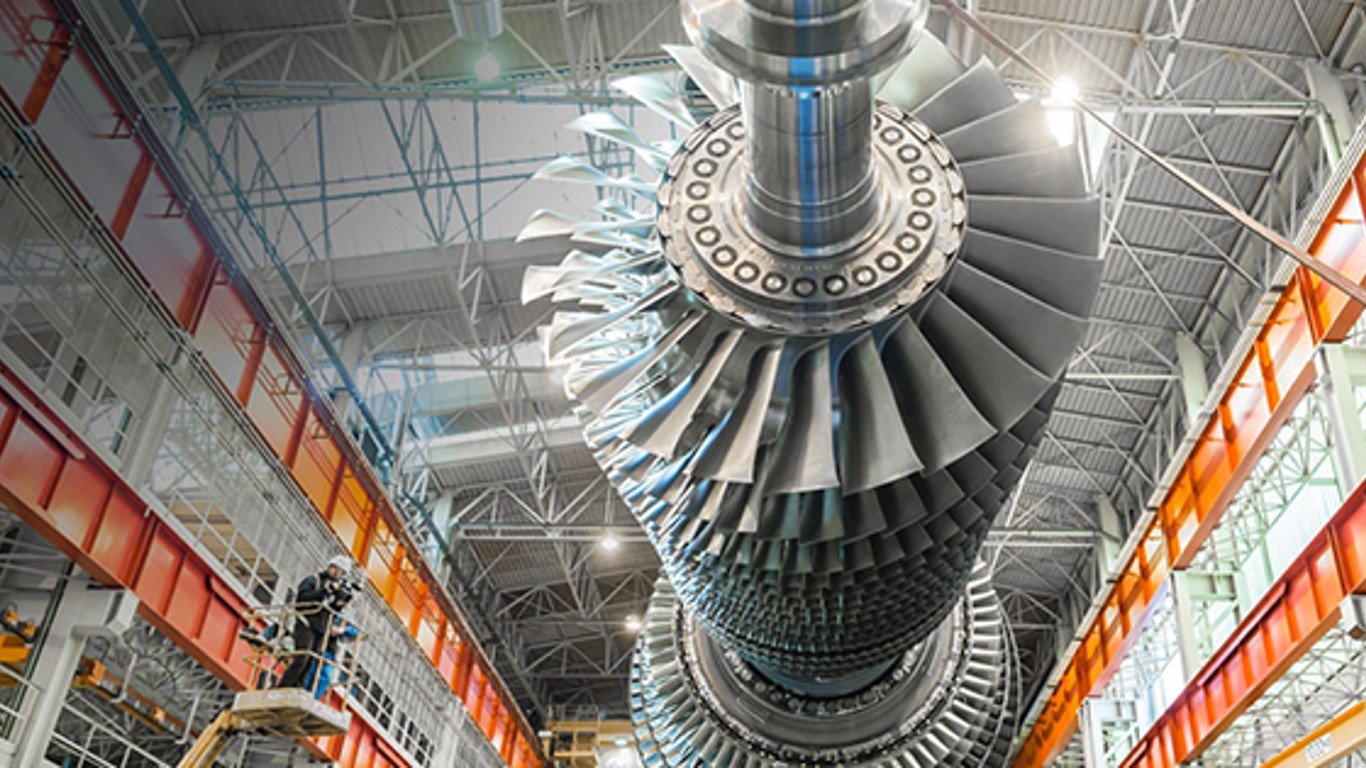
Musk’s list of bottlenecks points more directly at GE Vernova (NYSE:GEV). Second-quarter results showed a $176 billion total backlog, up $13 billion in three months. The Electrification segment booked more than $5 billion in data-center orders year-to-date — more than double all of 2025. Gas-turbine equipment and slot reservations reached 116 gigawatts, with at least 125 gigawatts expected under contract by year-end.
That is the business selling the transformers, switchgear, and turbines Musk named, at a scale still compounding faster than the headlines.
Existing generators offer a third path with less execution risk. Constellation Energy (NYSE:CEG) and Vistra (NYSE:VST) already run nuclear and gas fleets that can sign power-purchase agreements today. No multi-year factory ramp. No interconnection queue. They also offer a different risk profile than a fuel-cell maker scaling production or a turbine builder racing to add capacity.
Key Takeaway
Musk did not discover the AI power gap; he just put a 15-gigawatt number on it.
The trade is not “short Nvidia, buy Bloom.” Nvidia’s chip demand is intact whether those racks light up in 2027 or 2028, while Bloom’s valuation already prices in a lot of optimism about closing the gap. The more interesting money sits in the equipment Musk actually named — turbines, transformers, and grid gear — where GE Vernova’s backlog is still compounding, and in generators like Constellation that can monetize the shortfall without building a thing.
For the looming AI power gap coming next year, pick the name that fits your risk tolerance. The lesson for 2027 is the AI trade will not be decided by who makes the best chip. It will be by who can plug it in.
Contact [email protected] for any questions or corrections.
After two decades of patrolling the dark corners of suburbia as a police officer, Rich Duprey hung up his badge and gun to begin writing full time about stocks and investing. For the past 20 years, he’s been cruising the markets looking for companies to lock up as long-term holdings in a portfolio while writing extensively on the broad sectors of consumer goods, technology, and industrials. Because his experience isn’t from the typical financial analyst track, Rich is able to break down complex topics into understandable and useful action points for the average investor. His writings have appeared on The Motley Fool, InvestorPlace, Yahoo! Finance, Money Morning, and, of course, 24/7 Wall St. He has been featured in both U.S. and international publications, including MarketWatch, Financial Times, Forbes, Fast Company, and USA Today.