Apple Is Facing One of Its Most Challenging Times in a Decade. Time to Sell?
Two threats are closing in on Apple at the worst possible moment, and neither the App Store nor the supply chain can absorb the hit alone. Whether a single product launch in September can silence the skeptics is the question…


The Magnificent Seven have become less predictable as investors rotate between artificial intelligence winners, consumer technology, and companies capable of turning enormous revenue into even more enormous cash flows. Before Nvidia‘s (NASDAQ:NVDA | NVDA Price Prediction) latest earnings report, Apple (NASDAQ:AAPL) was the best-performing member of the group in 2026, with its stock up more than 15% year to date. Nvidia has now moved ahead after reporting $96.2 billion of quarterly revenue and forecasting roughly 70% revenue growth for fiscal 2028. Its shares are rising more than 7% today.
That puts Apple’s recent run in a different light. Investors weren’t buying the stock merely because it was Apple. They were betting on a powerful combination of cash generation, profitability, and the possibility of an iPhone upgrade supercycle. But two new problems are emerging at precisely the wrong time.
Apple’s Growth Engine Is Showing Cracks
Apple generated $29.8 billion of net income in its latest quarter on $109.4 billion of revenue, up 16% year-over-year. Over the first nine months of fiscal 2026, it generated $101.5 billion of net income. Its services business also produced a 75.6% gross margin, compared with 40.1% for products.
That mix has made Services Apple’s most dependable growth engine. The problem is that the App Store — arguably the crown jewel within that engine — is now under pressure.
The Financial Times reports that U.S. consumer spending through the App Store fell 6% in the June quarter, versus 9% growth a year earlier. Appfigures estimates Apple’s U.S. App Store commission revenue has contracted 18% so far this year. Apple’s Services revenue still reached a record $30.7 billion, but it missed Wall Street’s $31.4 billion expectation, while Services gross margin also came in below forecasts.
Regulators and courts are forcing Apple to loosen its control over payments and app distribution, threatening the commissions of as much as 30% that made the App Store such a lucrative business.
For years, investors could count on Services growing through almost any environment. That assumption is becoming harder to defend.
Now Memory Costs Are Attacking Margins
As if regulatory pressure weren’t enough, Apple is facing a second problem: memory.
CEO Tim Cook previously described soaring memory costs as a “100-year flood” and had complained to the Trump administration about Micron Technology‘s (NASDAQ:MU) price increases. That forced Apple to reluctantly raise prices on Macs and iPads because absorbing the increases was no longer sustainable. Apple raised prices on 14 products in July.
Nvidia is seeing the same inflation. Its CFO said memory pricing has exceeded expectations and will continue rising into next year. Nvidia expects gross margins to fall from 75% in the June quarter to 71% to 72% in its fiscal fourth quarter before recovering to 72% to 73% in fiscal 2028 as price increases take effect.
That is not something Apple can ignore because it doesn’t have Nvidia’s ability to pass higher component costs to customers without risking demand. Reports suggest some upcoming iPhone models could cost about $100 more, while higher memory costs are already forcing Apple to raise prices elsewhere.
The iPhone Supercycle Could Change Everything
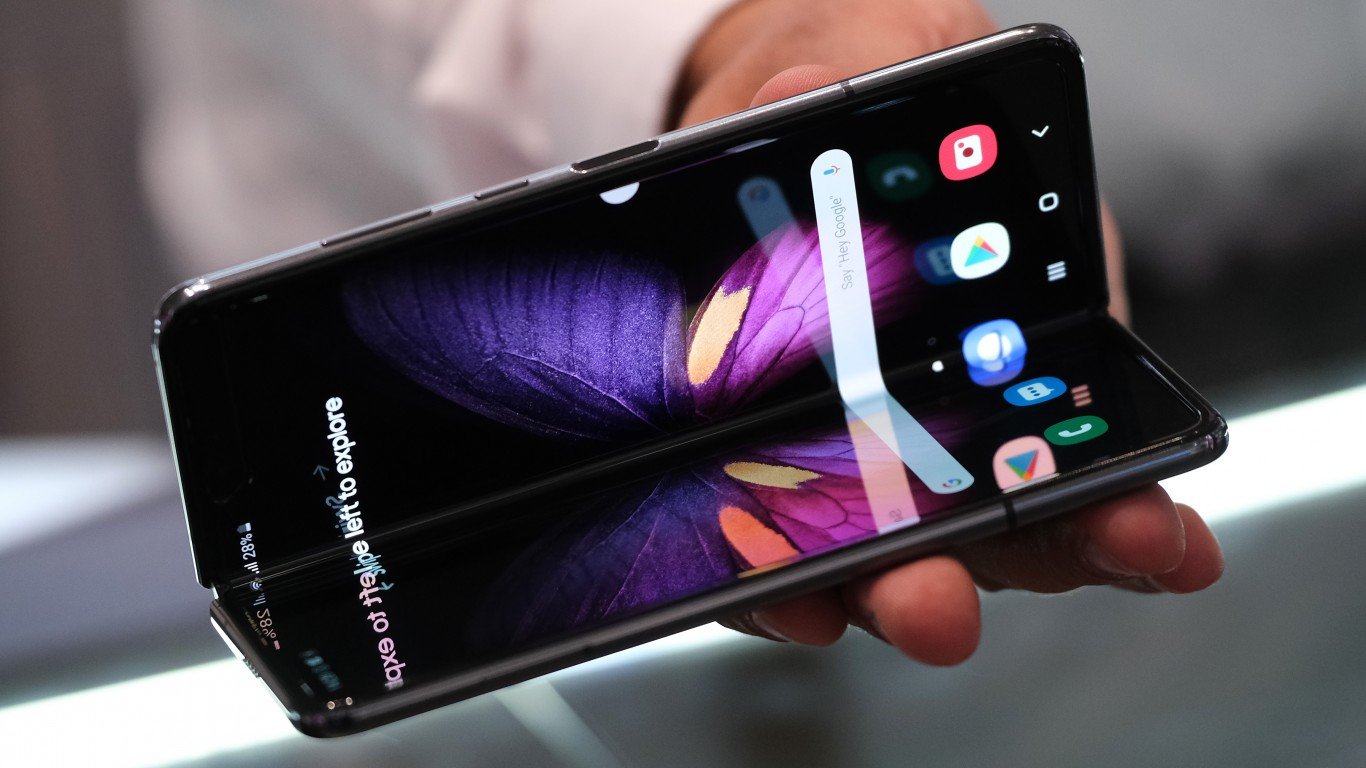
Granted, Apple has a potential ace up its sleeve. The company will unveil its next iPhones on Sept. 9, including its first foldable model, just as John Ternus takes over as CEO. The iPhone generated $54.3 billion of revenue in the June quarter, up 22% year over year, so the product remains anything but broken.
A successful iPhone 18 launch could therefore overwhelm some of the current problems by driving upgrades, higher average selling prices, and renewed ecosystem engagement.
But that is an expectation, not a certainty.
Key Takeaway
In short, Apple doesn’t look like a stock investors need to sell simply because its challenges are mounting. Its $101.5 billion of nine-month profit, 75.6% Services gross margin, and 22% iPhone revenue growth provide plenty of financial cushion.
That said, the investment thesis has become less straightforward. The App Store is no longer an unquestioned growth machine, while memory inflation threatens to pressure prices and margins.
I’d view Apple as a hold today, not a sell. The September iPhone launch could reignite the growth story. But until investors see whether Apple can offset regulatory leakage and memory inflation, chasing the stock after its 15%-plus run is harder to justify.
Contact [email protected] for any questions or corrections.
After two decades of patrolling the dark corners of suburbia as a police officer, Rich Duprey hung up his badge and gun to begin writing full time about stocks and investing. For the past 20 years, he’s been cruising the markets looking for companies to lock up as long-term holdings in a portfolio while writing extensively on the broad sectors of consumer goods, technology, and industrials. Because his experience isn’t from the typical financial analyst track, Rich is able to break down complex topics into understandable and useful action points for the average investor. His writings have appeared on The Motley Fool, InvestorPlace, Yahoo! Finance, Money Morning, and, of course, 24/7 Wall St. He has been featured in both U.S. and international publications, including MarketWatch, Financial Times, Forbes, Fast Company, and USA Today.