Apple Avoided the AI CapEx Trap — It Could Create the Biggest iPhone Upgrade Cycle Ever
While Microsoft, Meta, and Google race to outspend each other on AI infrastructure, Apple has taken a radically different path, and Wall Street is starting to wonder if the company that skipped the arms race is actually positioned to win…

For the past two years, investors have measured the artificial intelligence race by one metric above all others: spending. Microsoft (NASDAQ:MSFT | MSFT Price Prediction), Meta Platforms (NASDAQ:META), Alphabet (NASDAQ:GOOG), and Amazon (NASDAQ:AMZN) are collectively on pace to spend hundreds of billions of dollars on AI infrastructure this year, betting that bigger data centers and more powerful chips will translate into long-term dominance.
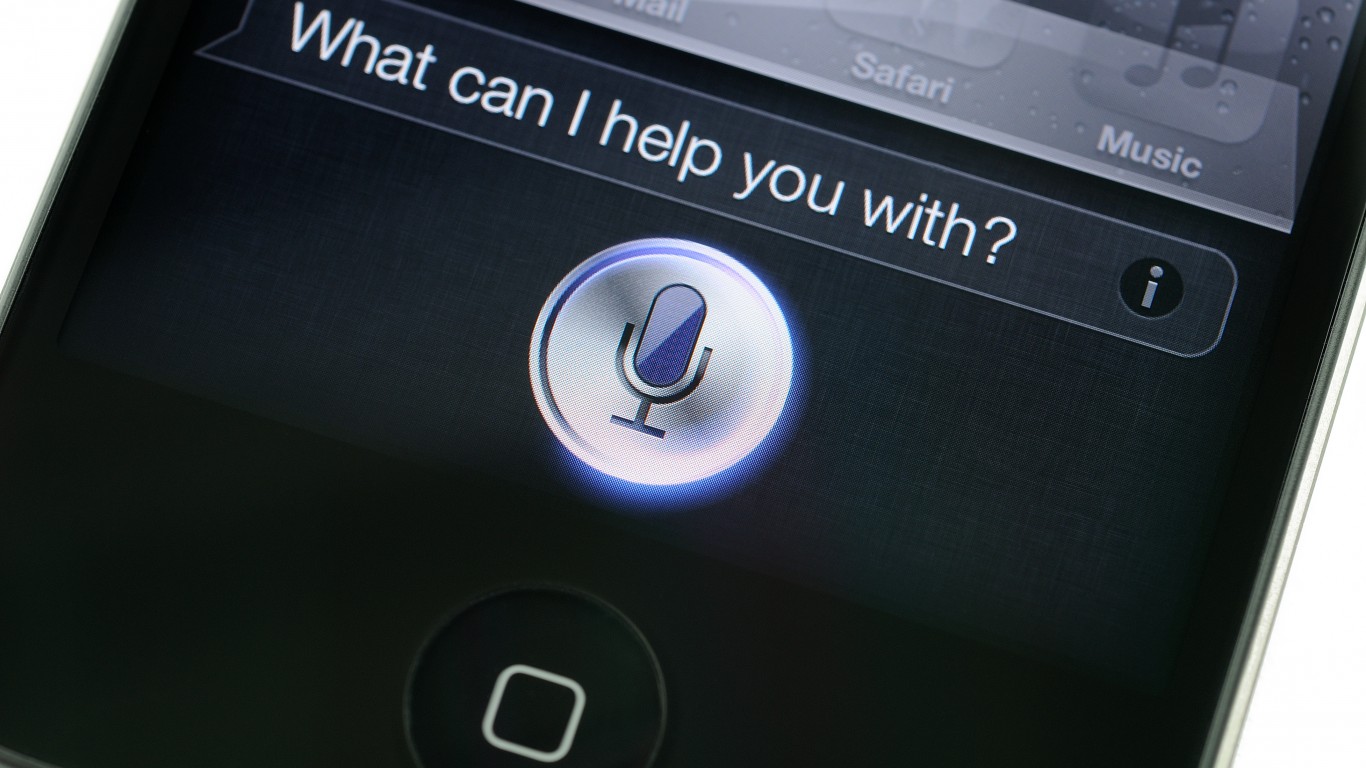
Apple (NASDAQ:AAPL), by comparison, looked like the odd company out. It avoided the AI spending arms race, rolled out Apple Intelligence at a measured pace, and has yet to deliver the fully capable AI-powered Siri it promised. Yet the market is beginning to rethink that narrative.
Apple is the best-performing Magnificent Seven stock year to date, suggesting investors are starting to recognize that winning AI may depend less on building the biggest model than on controlling how consumers actually use it.
Apple Is Playing a Different AI Game
Unlike the hyperscalers, Apple isn’t spending tens of billions of dollars building frontier AI models. Instead, it is positioning itself as the gateway through which consumers interact with AI every day.
At Apple’s Worldwide Developers Conference, the company introduced App Intents, the framework allowing Siri to perform actions inside apps instead of simply answering questions. Booking a reservation, buying products, scheduling appointments, or completing tasks could eventually happen through a simple voice command rather than manually opening an app.
Ironically, Apple may not need the best AI model if it owns the customer relationship. Rather than competing head-to-head with ChatGPT, Gemini, Claude, or future models, Apple could become an AI traffic controller, routing requests to whichever model is fastest, cheapest, or most capable for a given task while keeping sensitive information processed locally on-device whenever possible.
That approach also aligns with Apple’s longstanding emphasis on privacy.
The Device Upgrade Opportunity Could Be Historic
The larger investment story isn’t today’s AI features. It’s tomorrow’s hardware demand. According to Morgan Stanley, roughly 850 million active iPhones cannot run Apple Intelligence, while approximately 1.3 billion of Apple’s estimated 1.4 billion active iPhones cannot support the upcoming AI-powered Siri. Those numbers dwarf previous upgrade opportunities.
If agentic AI becomes the preferred way consumers interact with technology — asking Siri to complete purchases, manage schedules, and coordinate digital tasks automatically — it creates a compelling reason to upgrade hardware, not simply download another app.
That’s an important distinction because Apple’s business has always been strongest when software innovation drives hardware sales.
Granted, Apple’s enhanced Siri remains unfinished. The vision has been outlined, but execution still lies ahead. Investors shouldn’t confuse the roadmap with a guaranteed outcome.
Apple Could Become The Toll Booth For Consumer AI
Surprisingly, Apple’s greatest AI opportunity may have little to do with selling smartphones. If intelligent agents become the primary interface between consumers and digital services, Apple already owns the hardware ecosystem where those interactions occur across iPhone, iPad, Mac, Apple Watch, and Vision products.
That opens the door to new revenue streams through premium AI subscriptions, transaction fees when AI agents complete purchases, or partnerships with multiple AI providers. Instead of competing against every AI company, Apple could benefit from all of them.
It’s a strategy that resembles the App Store playbook. Apple didn’t invent most mobile apps, but it built the platform that connected developers with consumers.
Agentic AI could become the next version of that ecosystem.
Key Takeaway
In short, Apple’s AI strategy has often been criticized because it hasn’t matched rivals dollar for dollar in AI infrastructure spending. Yet investors may have been looking at the wrong scoreboard.
If AI ultimately becomes something consumers use through personal assistants instead of standalone chatbots, Apple already controls the devices where those interactions are most likely to occur. Morgan Stanley’s estimate that 1.3 billion iPhones cannot support the next-generation Siri also hints at what could become the largest hardware refresh cycle in the company’s history.
That said, execution remains the biggest risk. Apple still must deliver the intelligent Siri it has promised. Until it does, the investment case rests on potential rather than proven results.
Ultimately, if Apple succeeds, skipping the AI capital spending race may prove to be one of the smartest investments it never made.
Contact [email protected] for any questions or corrections.
After two decades of patrolling the dark corners of suburbia as a police officer, Rich Duprey hung up his badge and gun to begin writing full time about stocks and investing. For the past 20 years, he’s been cruising the markets looking for companies to lock up as long-term holdings in a portfolio while writing extensively on the broad sectors of consumer goods, technology, and industrials. Because his experience isn’t from the typical financial analyst track, Rich is able to break down complex topics into understandable and useful action points for the average investor. His writings have appeared on The Motley Fool, InvestorPlace, Yahoo! Finance, Money Morning, and, of course, 24/7 Wall St. He has been featured in both U.S. and international publications, including MarketWatch, Financial Times, Forbes, Fast Company, and USA Today.