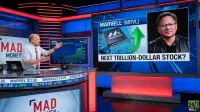
Cramer Says Not to Bet Against the AI Chipmaker That Lost Nearly 10% the Day After NVIDIA’s Huge Gain
Marvell Technology dropped nearly 10% the same morning NVIDIA added $442 billion in a single session, and Jim Cramer thinks that selloff is the setup, not the warning sign. One date in October could prove him right or very wrong.

The morning of Friday, Aug. 28, delivered one of the strangest split screens of the AI trade so far. NVIDIA (NASDAQ:NVDA | NVDA Price Prediction) added roughly $442 billion in market cap in a single session, the second largest one-day gain ever, trailing only Microsoft‘s (NASDAQ:MSFT) $450 billion. Meanwhile Marvell Technology (NASDAQ:MRVL), the other big AI chipmaker to report the same week, was down 10.26% intraday to $216.68 despite a beat-and-raise quarter.
Jim Cramer’s message to viewers: Do not bet against it before the Oct. 6 analyst day.
Why Marvell Sold Off on a Blowout Quarter
Marvell reported record Q2 fiscal 2027 revenue of $2.739 billion, up 36.55% year over year, with Data Center revenue of $2.1715 billion, up 46%. Management guided fiscal 2028 data-center growth to more than 60% year over year and said custom revenue will “more than double” in fiscal 2028.
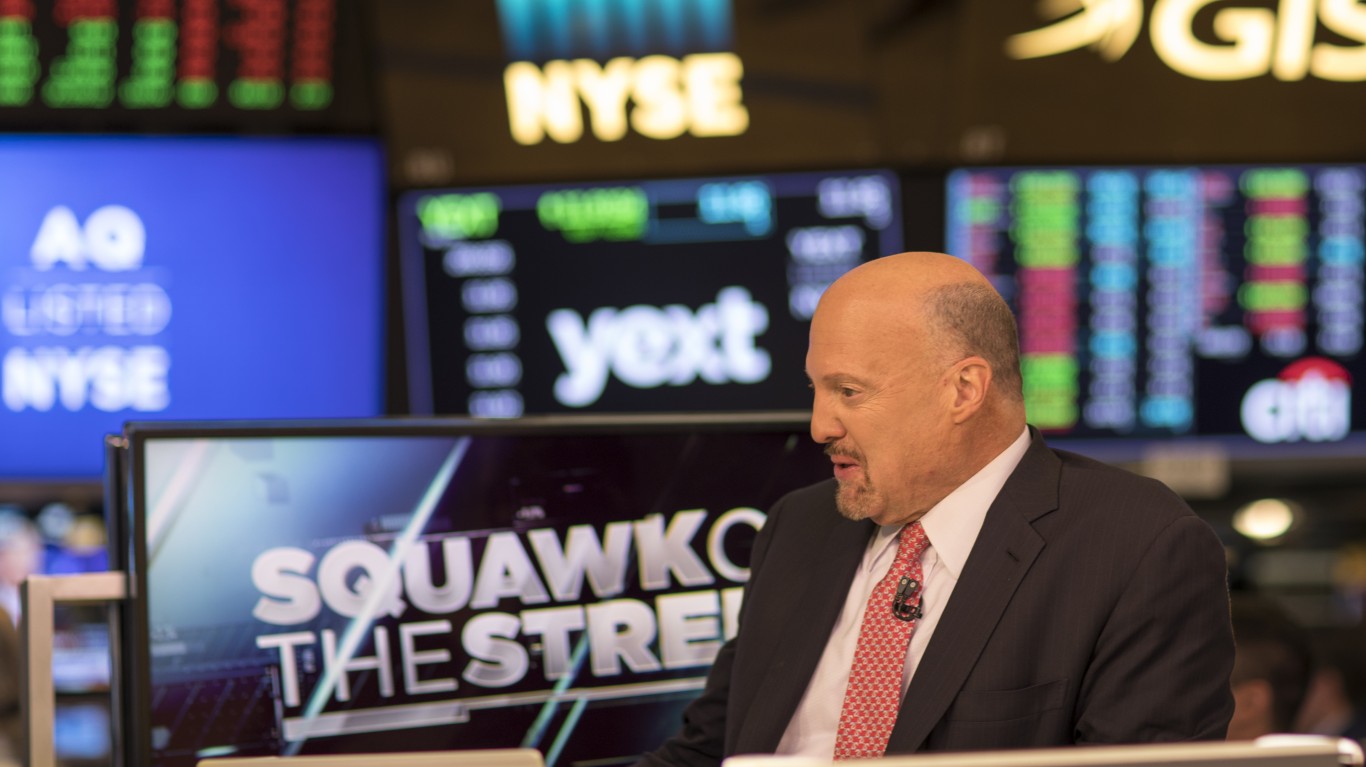
The problem is timing. On Squawk on the Street, David Faber laid out the math: the expanded Google custom-silicon agreement annualizes to roughly $18.5 billion a year, but Marvell acknowledged most of that revenue is not in the plan until 2029. Faber also pointed to Marvell’s August 18 8-K detailing warrants for Alphabet (NASDAQ:GOOGL) to purchase 58.9 million shares of common stock at $206.58, tied to future revenue milestones. Matt Murphy told analysts, “Most of this is comprehended already in next year. The big impact would be, you know, in 29 and beyond.”

Cramer’s Case: Don’t Fade the October 6 Catalyst
Cramer’s argument is that delayed revenue still lands, and the thesis holds as long as the ramp arrives. He told viewers not to bet against Marvell going into the October 6 analyst meeting, citing CEO Matt Murphy’s track record of “compelling” presentations, Murphy’s $1 million insider buy, and Murphy’s line: “I am the signal. They are the noise”. Murphy’s own words back the setup: “AI-related bookings remain exceptionally robust, and we expect our revenue growth to accelerate further through the remainder of fiscal 2027.”
The macro backdrop helps. NVIDIA guided Q3 revenue to $108 billion and fiscal 2028 growth of approximately 70%, with Jensen Huang calling supply a bottleneck. Marvell sits inside that ecosystem through NVLink Fusion and combined optical solutions with UAL and ESUN switches. The traits that showed up early in past monster tech runs are the same ones we cataloged in a free Next Nvidia playbook.

What to Watch Next
Context matters. Marvell is still up more than 136% year to date and more than 227% over one year. This is a pullback inside a monster run. Cramer acknowledged the binary risk plainly: “Marvell is a very expensive stock unless everything works.” The October 6 Investor Day is where Murphy is expected to reset the long-term target model and detail revenue through fiscal 2029 and beyond. That is the date to circle.
Contact [email protected] for any questions or corrections.
Joel South covers large-cap stocks, dividend investing, and major market trends, with a focus on earnings analysis, valuation, and turning complex data into actionable insights for investors.
He brings more than 15 years of experience as an investor and financial journalist, including 12 years at The Motley Fool, where he served as an investment analyst, Bureau Chief, and later led the Fool.com investing news desk. He has also co-hosted an investing podcast and appeared across TV and radio discussing market trends.