Sundar Pichai’s Credibility Crisis: The AI Model That Never Came
Sundar Pichai promised a flagship AI model in June, prediction markets already declared it dead by August, and Google just shipped something else entirely. What that substitution reveals about DeepMind's internal chaos and Alphabet's cloud ambitions is the story investors…

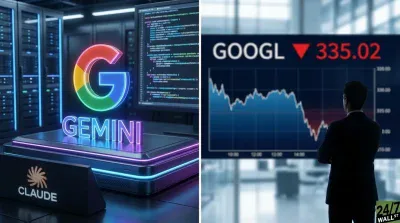
Google is reportedly about to ship a new coding model that its own engineers say they prefer to Anthropic’s Claude Opus for internal work. That is a real development for developer mindshare, but it is also not the model Sundar Pichai promised earlier this year, and the gap between shipping cadence and shipping substance is starting to matter to the stock.
Alphabet (NASDAQ:GOOG | GOOG Price Prediction, NASDAQ:GOOGL) closed at $335.02 on September 1, 2026, down 5.93% over the past month even as the year-to-date figure sits at 7.17%. The one-year return is still 57.8%, so this is the kind of manageable pressure that surfaces when a leadership team keeps promising a step change and delivers steady, incremental releases instead.
What CNBC’s Sigalos Actually Said
On CNBC, reporter MacKenzie Sigalos summarized Wall Street Journal reporting on the impending release. “Google’s AI team is set to release a new model 3.8 flash. This apparently has upgraded coding capabilities.”
She continued: “It could come as soon as tomorrow, and the company’s engineers telling the Journal that they actually prefer it to Anthropic’s Opus model in terms of performing internal coding tasks.” Then the important qualifier: “This is not 3.5 Pro, which Alphabet CEO Sundar Pichai promised back in June. Nor is this Gemini Forge, the real step change that we have been waiting for from Gemini.”
And the organizational overhang: “This comes amid an exodus of talent from the DeepMind lab as we see this big reorg internally.” The internal-engineer preference counts as suggestive evidence at best. It is self-reported and unbenchmarked, filtered through a newspaper.
Why a Cheap Coding Model Matters for Cloud Margins
A fast, cheap Flash model that outperforms a leading rival on coding tasks matters because coding is where inference costs get paid. Developers who lean on a model all day generate volume, and volume is where Google Cloud captures margin. Pichai told investors that Gemini models now process 22 billion API tokens per minute, and that the Gemini App has 950 million monthly active users.
Cloud revenue is where this shows up first. Google Cloud grew 82% in the second quarter to $24.77 billion, and Pichai said “nearly 90% of the Fortune 100” now use Gemini Enterprise. Details are in the Q2 8-K exhibit.
Consolidated revenue was $119.8 billion, up 24.23% year over year, with operating income of $40.77 billion. The problem is what sits underneath: capex hit $44.9 billion in the quarter, free cash flow turned negative at -$5.86 billion, and long-term debt jumped from $46.5 billion to $98.2 billion. Buybacks were suspended.
Credibility Is Slipping at DeepMind
A missed or delayed flagship is as much a management question as a technology one. Pichai committed to Gemini 3.5 Pro in June, and prediction markets on Polymarket had already resolved against a Pro release by August 31, 2026, with the “no release” outcome winning with an accuracy score of 0.971. A Flash 3.8 release by September 30 was priced at probability 0.991, so the market expected exactly this substitution.
DeepMind departures compound concerns because frontier model quality is concentrated in a small group of researchers, and a reorganization during a competitive sprint tends to cost momentum. Microsoft has its own silicon coming, Meta keeps open-sourcing capable models, and Anthropic, which Google itself funds, is why Claude sits atop many developer stacks.
The earnings reactions have been complicated too. Every one of the last 12 quarters was a beat, yet the average one-day reaction was -0.48%. The Q2 report carried a 199.41% surprise, and shares still fell 7.13% that session.
Is GOOG Stock a Buy?


At a P/E of 17x, Alphabet is cheaper than Microsoft (NASDAQ:MSFT) and Meta (NASDAQ:META) on forward earnings, cheaper than Amazon (NASDAQ:AMZN) on almost any measure, and it owns the only rival stack that competes credibly with Anthropic and OpenAI in coding, search, and cloud at once. Analysts show 58 buys and 6 holds with a target of $428.07.
The AI capex is real and the flagship is late, but a coding model developers actually reach for is likely worth more to cloud economics than a headline benchmark win (all that spending also has to be powered, cooled and networked by somebody, which is the whole point of our free report on seven AI infrastructure suppliers behind the buildout, here), which is why the setup remains constructive despite the noise around delayed flagships.
Contact [email protected] for any questions or corrections.
Omor Ibne Ehsan is a writer at 24/7 Wall St. He is a self-taught investor with a focus on growth, cyclical, and dividend equities that have strong fundamentals, value, and long-term potential. He also has an interest in high-risk, high-reward investments such as penny stocks.