“Schrodinger’s Strait:” Why Hormuz Now Exists in a State of Permanent Uncertainty
Nobody agrees on how much oil is actually moving through the Strait of Hormuz right now, not the government, not the satellite trackers, and not the tanker CEOs navigating the chaos. That uncertainty is minting fortunes for some and shutting…

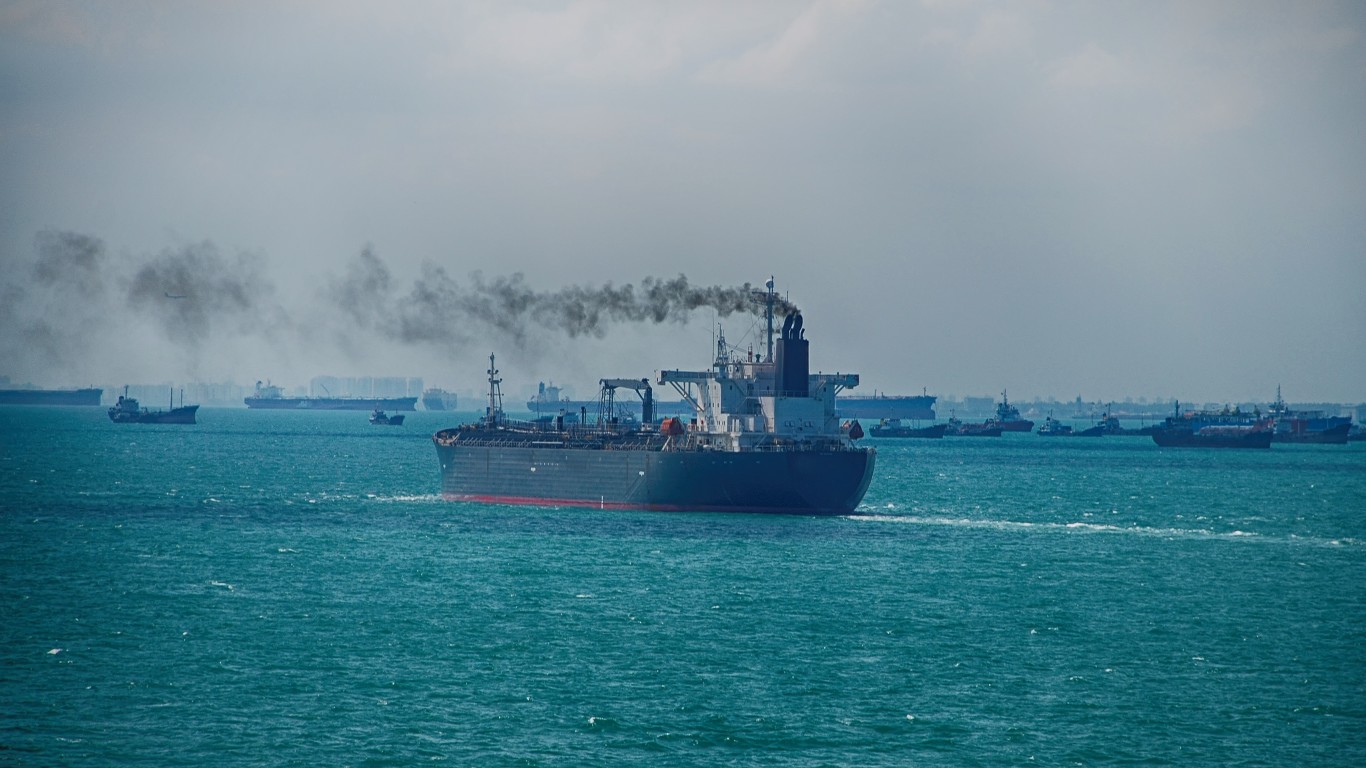
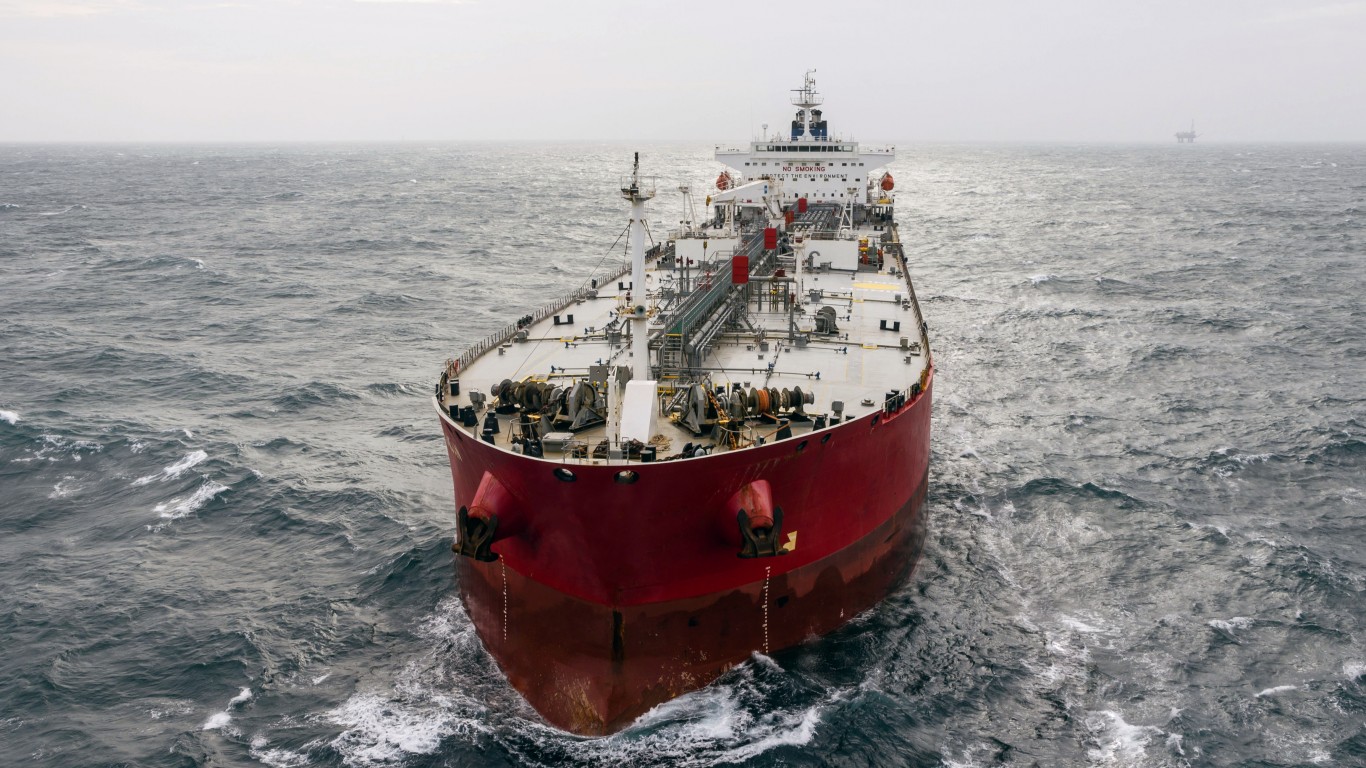
Just how much oil is flowing through the Strait of Hormuz today since the start of the Iran war 187 days ago? No one can seem to agree. American Petroleum Institute vice president Mason Hamilton captured the mood of the crude tanker market in a single X post last month: “Might as well rename it Schrodinger’s Strait.”
Energy Secretary Chris Wright says 17 million barrels moved through Hormuz on a recent Monday, close to the pre-war run rate of roughly 20 million barrels. Kpler counted five ships that day. TankerTrackers.com has logged 4.9 million barrels per day since mid-July, versus a pre-conflict baseline of about 120 vessels per day. The White House attributes the gap to US Navy night escorts invisible to commercial satellites and ships turning off their transponders. Trackers cannot verify it.
That is the paradox Teekay Tankers (NYSE:TNK) CEO Kenneth Hvid described on the July 30 call. “Transit through the vital Strait of Hormuz waterway collapsed in March, before undergoing a partial recovery in June after the U.S. and Iran signed a framework agreement aimed at ending hostilities. However, renewed hostilities at the start of July, including attacks on vessels transiting the Strait of Hormuz, have led to a collapse of the agreement and a sharp slowdown in movement through the strait.” Windows open and close. Nobody agrees on what is actually flowing.
Record Rates From Permanent Ambiguity
Hvid called Q2 spot rates “the highest ever”: Suezmax at $109,200 per day and Aframax/LR2 at $74,100 per day. TNK posted EPS of $6.47 on $379.51 million in revenue, a 62.97% YoY jump. Free cash flow from operations hit roughly $200 million against a breakeven of approximately $9,700 per day. Cash sits at over $1.2 billion with no debt. Shares are up 73.81% year to date.
The safety cost is real. “We haven’t been transiting south through the Red Sea for a long time. We haven’t gone into the Strait of Hormuz. That’s a decision we’ve made. Some people have, we have not,” Hvid said. He added: “The sheer number of ports that we consider unsafe today, that’s definitely at a higher number today than I can recall we’ve ever had.” Rerouted cargoes, trapped tonnage, and idle ships waiting outside Hormuz are propping up rates for the vessels still moving.
Partial Q3 Visibility With Big Exposure Left
TNK has locked in Q3 Suezmax rates at $104,800 per day and Aframax/LR2 at $59,900 per day, with only 44% of spot days booked. The rest is exposed to whichever version of Hormuz proves true. DHT Holdings (NYSE:DHT) CEO Svein Moxnes Harfjeld, whose VLCC fleet posted Q2 spot earnings of $162,600 per day, was blunter when asked when normal operations resume: “The simple answer, I don’t know.” DHT has already booked 58% of Q3 spot days at $152,700 per day and stayed out of the Persian Gulf entirely. Shares are up 85.69% YTD.

Hvid’s summary of the operating environment reads like a Schrodinger reference of its own: “The world is getting a lot more complex and much more dynamic because these windows, they open and close.” Investors are being paid handsomely because nobody, including the government and the trackers, can agree on what is inside the box.
Contact [email protected] for any questions or corrections.
After two decades of patrolling the dark corners of suburbia as a police officer, Rich Duprey hung up his badge and gun to begin writing full time about stocks and investing. For the past 20 years, he’s been cruising the markets looking for companies to lock up as long-term holdings in a portfolio while writing extensively on the broad sectors of consumer goods, technology, and industrials. Because his experience isn’t from the typical financial analyst track, Rich is able to break down complex topics into understandable and useful action points for the average investor. His writings have appeared on The Motley Fool, InvestorPlace, Yahoo! Finance, Money Morning, and, of course, 24/7 Wall St. He has been featured in both U.S. and international publications, including MarketWatch, Financial Times, Forbes, Fast Company, and USA Today.